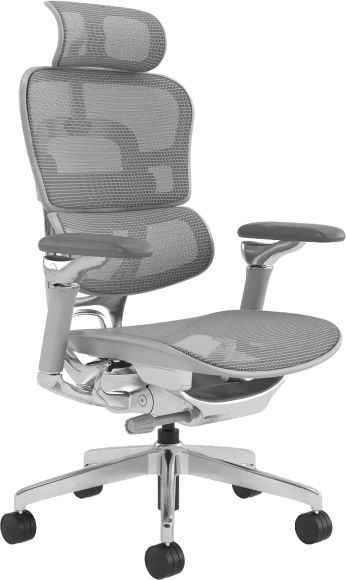
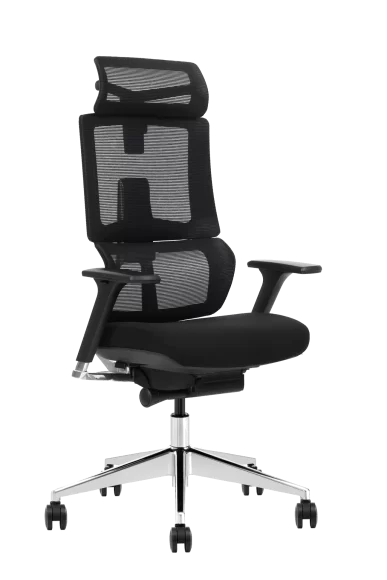
Not every chair marketed as “ergonomic” provides suitable support, adjustment or verified product quality. Some models use the label mainly as a sales term while offering limited fitting range, weak structural components or features that do not work well for different users.
The most important ergonomic chairs to avoid are not defined by one particular style. Buyers should avoid chairs with unsuitable materials, unverified gas lifts, unstable bases, poorly positioned headrests, unsupportive seats or lumbar supports that cannot be adjusted to the user.
This guide explains six warning signs for individual buyers, office procurement teams, distributors and commercial seating projects. For a complete selection process, also see our guide on how to choose an ergonomic chair.
Quick Guide: Ergonomic Chair Warning Signs
| Warning Sign | Why It Matters | What Buyers Should Check |
|---|---|---|
| Unsuitable materials | May create heat, cleaning or durability problems | Climate, usage level, upholstery and material specification |
| Unverified gas lift | Affects height adjustment and structural reliability | Manufacturer, markings and model-specific documentation |
| Unstable base | Can reduce stability and service life | Material, construction, caster fit and chair test information |
| Poorly positioned headrest | May push the head forward or fail to support the user | Height, angle, depth and removability |
| Unsupportive seat | May compress, deform or fit the user poorly | Seat dimensions, foam quality, edge shape and recovery |
| Excessive lumbar support | Can create a hard pressure point instead of balanced support | Height, depth, flexibility and adjustment range |
1. Avoid Chairs With Materials Unsuitable for the Workspace
Chair materials affect airflow, surface temperature, cleaning, appearance and long-term performance. No single material is automatically suitable for every office.
Mesh can provide greater ventilation in warm or high-density workspaces, while foam and upholstered seats generally provide a softer surface and more choices in color and texture. Leather and PU surfaces may be easier to wipe but can feel warmer during extended sitting.
Avoid choosing a chair based only on a material label such as “mesh,” “leather” or “high-density foam.” Buyers should verify:
- Expected daily sitting time
- Office temperature and ventilation
- Cleaning and stain-resistance requirements
- Mesh tension or foam recovery
- Upholstery abrasion and colorfastness information
- Whether replaceable seat or backrest components are available
Review our office chair materials guide for a more detailed comparison of mesh, fabric, foam, leather, PU, plastic and metal components.
2. Avoid Chairs With Unverified Gas Lift Cylinders
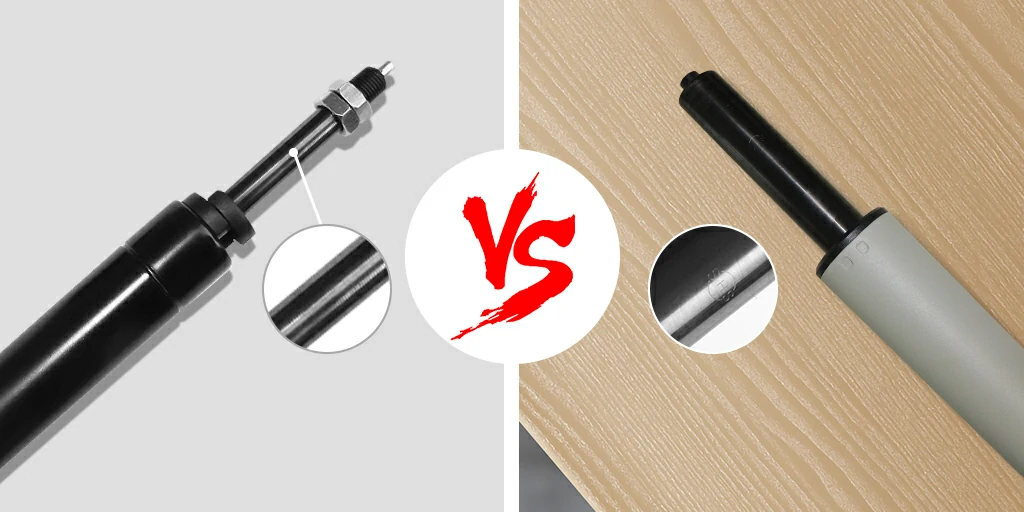
The gas lift connects the chair mechanism to the base and controls seat-height adjustment. It is a structural component, so buyers should not accept vague descriptions such as “certified gas lift” without supporting information.
Avoid chairs when the seller cannot provide basic details about the cylinder. Commercial buyers should request:
- Gas lift manufacturer or traceable supplier information
- Product class or specification where applicable
- Permanent identification or production markings
- Applicable component test documentation
- Compatibility with the selected mechanism and base
- The minimum and maximum seat height produced by the complete assembly
A component document does not prove that the complete chair has passed every office-chair requirement. Where complete-chair testing is required, the report should identify the tested model, configuration, standard, laboratory, report number and date.
3. Avoid Chairs With Untested or Unstable Bases
Most swivel office chairs use a five-star base to distribute the load and provide caster mounting points. Nylon, aluminum and steel bases can all perform reliably when correctly designed and manufactured.
The material name alone does not establish quality. Avoid chairs with visible cracks, deformation, weak welds, uneven floor contact, loose caster sockets or inconsistent molding.
For project and distribution orders, check:
- Base material and reinforcement structure
- Overall base diameter
- Compatibility with the gas lift and caster stems
- Surface finish and visible manufacturing defects
- The manufacturer’s recommended user capacity
- Applicable test information for the complete chair or tested component
Do not treat a laboratory static-load value for one base or component as the chair’s normal user-weight capacity. Static tests, component tests and complete-chair performance evaluations describe different conditions.
Learn how the base, gas lift, mechanism and casters work together in our guide to the main parts of an office chair.
4. Avoid Chairs With Poorly Positioned Headrests
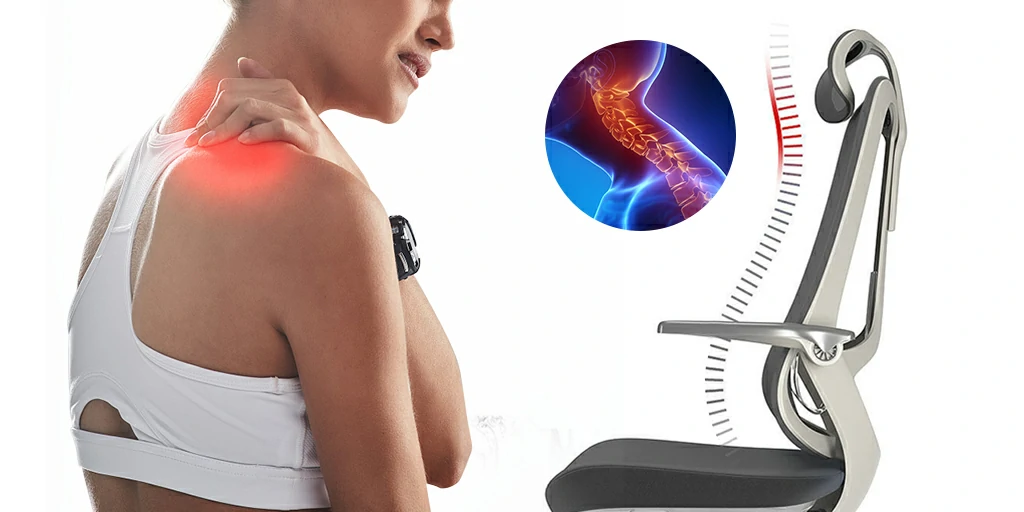
A headrest should support the user when required without continuously pushing the head forward. A fixed headrest that fits one person may interfere with another user because body height, torso length and preferred recline position vary.
Avoid a headrest when:
- It contacts the back of the head during normal upright work and pushes it forward
- Its height cannot reach the intended support area
- The angle creates a concentrated pressure point
- It blocks comfortable backrest use
- It cannot be removed or adjusted for shared users
Headrests are not mandatory for every task chair. For many users, backrest and lumbar fit are more important during upright keyboard work. A headrest is most useful when it supports the user appropriately during recline or rest positions.
5. Avoid Chairs With Unsupportive Seat Cushions
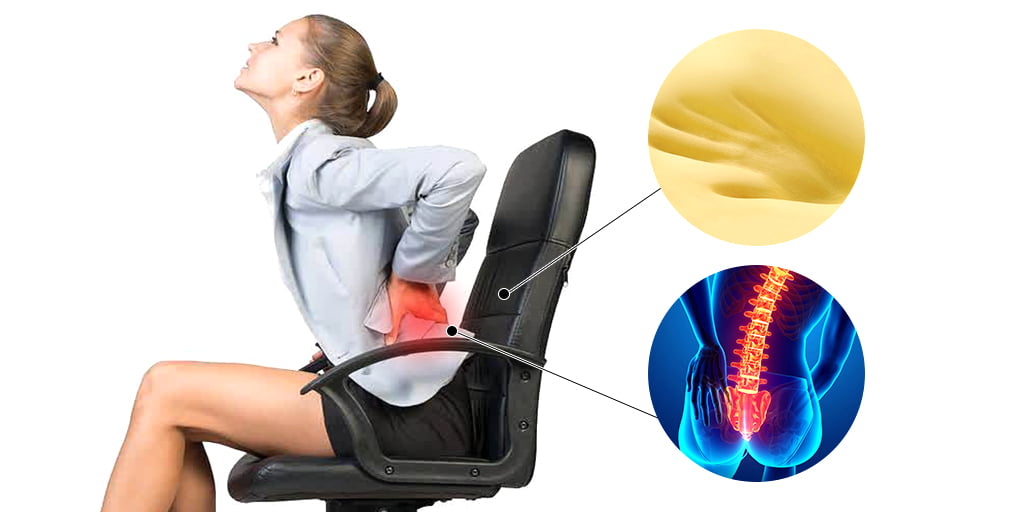
A seat should support the user without feeling unstable, excessively hard or permanently compressed. Initial softness does not necessarily indicate long-term comfort or quality.
Avoid chairs with seats that:
- Bottom out easily under normal use
- Develop an uneven or permanent depression
- Have a hard front edge that presses behind the knees
- Are too deep or too shallow for the intended users
- Use foam or mesh specifications the supplier cannot explain
Buyers should compare usable seat width, effective depth, front-edge construction, foam density or mesh tension, and recovery after repeated use. For a mixed workforce, seat-depth adjustment can provide a better fit across different thigh lengths.
See the desk chair dimensions guide for measurement methods and commercial specification examples.
6. Avoid Chairs With Excessive or Non-Adjustable Lumbar Support
Lumbar support should follow and support the lower-back area without creating a hard, localized pressure point. More prominent lumbar support is not automatically better.
Avoid a chair when the lumbar section:
- Pushes the user noticeably forward from the backrest
- Contacts the wrong area of the back and cannot be repositioned
- Collapses or loses support under light pressure
- Creates discomfort during a normal seated trial
- Has no suitable adjustment range for shared users
Useful adjustment may include lumbar height, depth or firmness, depending on the chair design. Fixed lumbar support can still work when the backrest shape and dimensions fit the intended user group, but it should be evaluated on an assembled sample rather than judged from photographs.
How to Evaluate an Ergonomic Chair Before Buying
- Define the application: Record sitting time, workstation type, user range and expected daily usage.
- Check dimensions: Confirm seat height, depth, width, backrest height, armrest spacing and overall footprint.
- Test the adjustments: Make sure controls are accessible and the ranges create meaningful changes.
- Review the structure: Inspect the mechanism, gas lift, base, casters and structural connections.
- Verify materials: Request mesh, foam and upholstery specifications where relevant.
- Request evidence: Match test reports and product claims to the actual proposed model.
- Approve a sample: Evaluate a complete assembled chair before confirming a commercial order.
No single chair will fit every person perfectly. Commercial projects may need a broadly adjustable standard model plus a limited number of petite, big and tall or specialist chairs for users outside the main fitting range.
Ergonomic Chairs to Avoid FAQs
Does the word “ergonomic” prove that a chair is suitable?
No. Buyers should evaluate dimensions, adjustment ranges, structural components, materials and applicable documentation rather than relying on the product label alone.
Should buyers always choose the chair with the most adjustments?
Not necessarily. Adjustments are useful only when their ranges suit the intended users and the controls are easy to operate. A simpler chair with appropriate dimensions may perform better than a complex chair with limited or impractical adjustments.
Is a Class 4 gas lift enough to prove chair safety?
No single component establishes the performance of the complete chair. The gas lift, mechanism, base, casters, backrest and other structures must be compatible, and any complete-chair claim should be supported by documentation for the applicable model.
Are mesh chairs better than cushioned chairs?
Neither is universally better. Mesh provides greater airflow, while cushioned seats offer a softer initial feel and more upholstery options. Construction quality, dimensions and adjustment matter more than the material category alone.
Should an office chair always have a headrest?
No. Headrests are optional for many task applications. When included, the headrest should fit the user and should not push the head forward during normal working posture.
Avoid Unsupported Claims, Not One Particular Chair Style
The ergonomic chairs to avoid are those that cannot provide an appropriate fit, stable construction or verifiable product information. Focus on seat dimensions, lumbar support, headrest position, material performance, gas lift documentation, base stability and the quality of the complete chair assembly.
For commercial sourcing, compare complete samples and model-specific documentation before making a bulk purchasing decision. Explore VASEAT’s ergonomic office chair range, or contact VASEAT to discuss seating requirements for projects, distribution, OEM or wholesale supply.