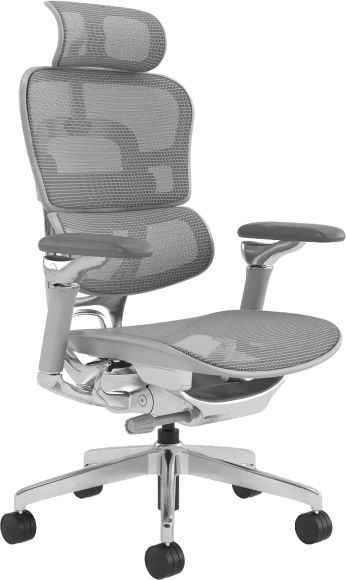
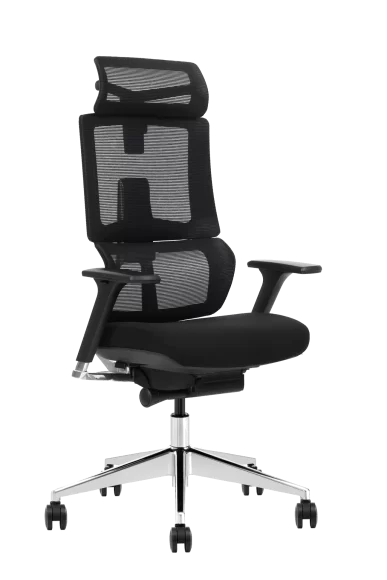
Yes — and to understand why ergonomic commands a premium, it helps to examine what top ergonomic chair manufacturers actually engineer differently from standard seating producers. An ergonomic chair typically costs 2–5× more upfront, but it lasts 2–3× longer, dramatically reduces back and neck complaints, and delivers measurable productivity gains that dwarf the initial investment.
The real question isn’t whether ergonomic chairs are worth the premium — it’s understanding exactly where that extra money goes so you can make a confident purchasing decision.
The Real Price Gap — and Why the Sticker Price Lies
A decent standard office chair runs $50–$200. A quality ergonomic chair lands between $250 and $800, with premium models climbing higher. That gap looks painful on a purchase order. But sticker price is the wrong metric.
Standard chairs average 2–4 years before the gas cylinder fails, the foam compresses permanently, or the base cracks. Ergonomic chairs from reputable manufacturers routinely last 7–12 years — many backed by warranties of 5 years or more. When you calculate cost per year of use, the numbers converge quickly. A $100 standard chair lasting 3 years costs $33/year. A $450 ergonomic chair lasting 10 years costs $45/year. That’s a $12/year difference — roughly the price of two coffees — for dramatically better support, adjustability, and build quality.
If you’re curious about what determines how long any office chair actually lasts, our practical lifespan guide for office chair buyers breaks down the key variables.
Head-to-Head Comparison: Ergonomic vs. Standard Chairs
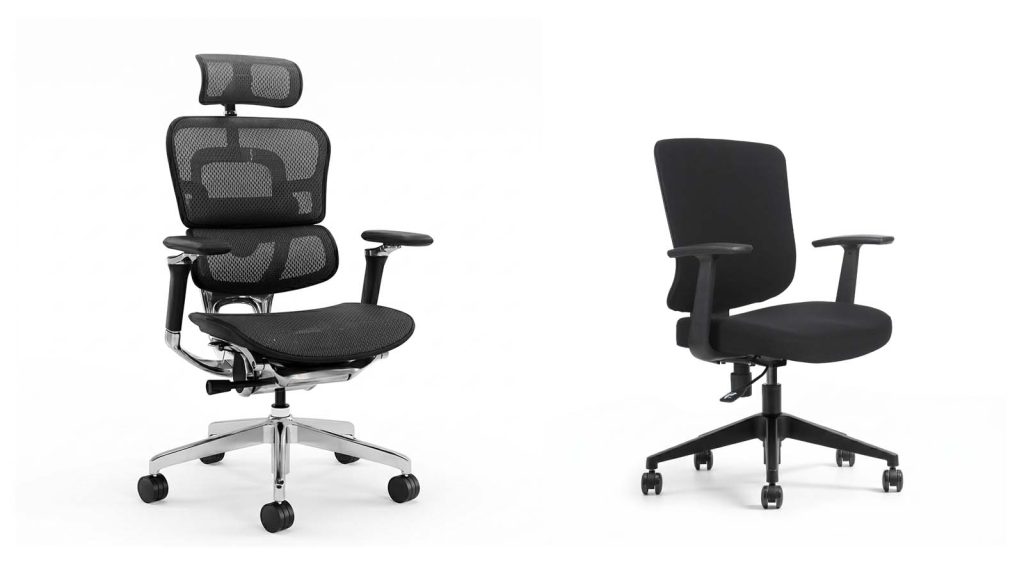
Before we dig into the details, here’s a quick snapshot of how these two categories stack up across the criteria that actually matter:
| Criteria | Ergonomic Office Chair | Standard Office Chair |
|---|---|---|
| Typical Price Range | $250–$800+ | $50–$200 |
| Average Lifespan | 7–12 years | 2–4 years |
| Lumbar Support | Adjustable, contoured | Fixed or none |
| Adjustability Points | 5–10+ adjustments | 1–3 adjustments |
| Daily Comfort (8+ hrs) | Excellent | Poor to moderate |
| Warranty (typical) | 5–12 years | 1–2 years |
| Cost Per Year of Use | $40–$80 | $25–$100 |
| Best For | Full-time desk workers | Light-use or guest seating |
The takeaway? Standard chairs win on initial cost. Ergonomic chairs win on virtually everything else — especially when the seat is occupied for extended periods daily.
What “Ergonomic” Actually Means (and What It Doesn’t)
Here’s a dirty secret: “ergonomic” isn’t a regulated term. Any manufacturer can slap it on a box. So what separates a genuinely ergonomic chair from marketing fluff?
The Non-Negotiable Features
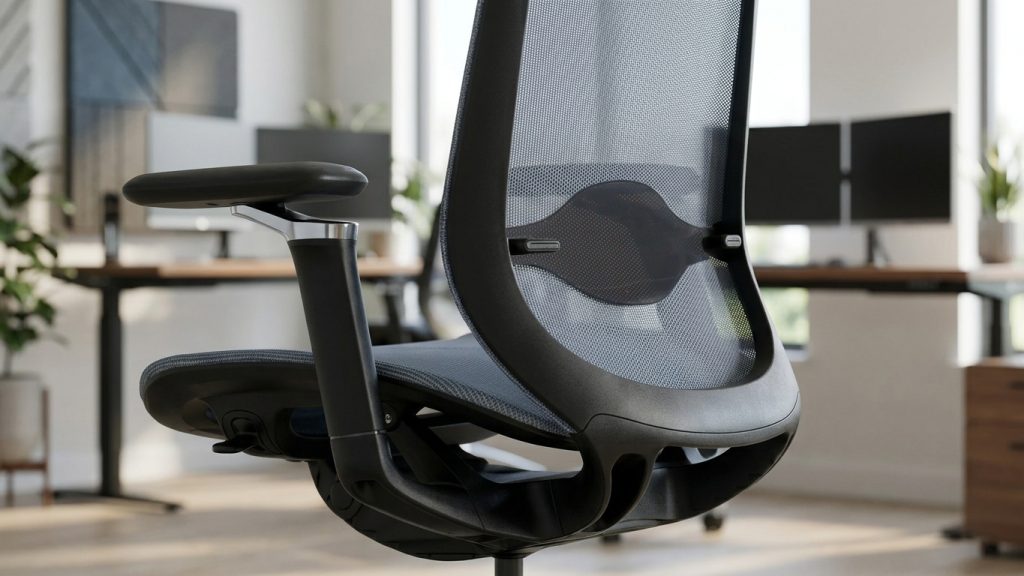
- Adjustable lumbar support — not just a fixed curve, but a mechanism that moves up/down and in/out to match different spine shapes.
- Seat depth adjustment — lets you position the front edge so it doesn’t press into the backs of your knees (a major circulation issue with standard chairs).
- Multi-dimensional armrests — at minimum height-adjustable; ideally also pivoting and sliding to support different arm positions.
- Adjustable seat height with a range that accommodates the 5th to 95th percentile of users.
- Synchronized tilt mechanism — the seat and backrest move together in a calibrated ratio, encouraging natural movement rather than locking you in one position.
What Standard Chairs Typically Offer
A standard chair usually gives you gas-lift height adjustment, maybe a tilt lock, and fixed armrests. That’s it. The backrest is a single molded shape — if it doesn’t happen to match your spine, you’re out of luck.
When evaluating chairs, our guide on 10 key factors to look for in an office chair walks through each adjustment point in detail.
The Health ROI: Numbers That Change the Conversation
Most people frame this as a comfort decision. It’s actually a health decision — and the financial implications are significant.
Back Pain Is Expensive
The American Chiropractic Association estimates that Americans spend at least $50 billion annually on back pain treatment. For employers, musculoskeletal disorders (MSDs) are the single largest category of workplace injury costs. A single workers’ compensation claim for a back injury averages $30,000–$50,000 in direct costs.
Ergonomic seating doesn’t eliminate back problems — but peer-reviewed research consistently shows it reduces the incidence and severity of lower-back discomfort by 40–60% compared to non-adjustable seating. For a company outfitting 50 workstations, spending an extra $300 per chair ($15,000 total) to prevent even one serious back injury claim is a clear financial win.
Real-World Example: A Mid-Size Accounting Firm
Consider a 120-person accounting firm that replaced its aging standard chairs with ergonomic task chairs during a 2024 office renovation. Within 12 months, employee-reported neck and lower-back complaints dropped by 52%, and the HR team documented a 15% reduction in sick days related to musculoskeletal issues. The chair upgrade cost roughly $48,000 — the estimated savings from reduced absenteeism alone exceeded $30,000 in the first year. By year two, the investment had paid for itself.

When a Standard Chair Is Actually the Right Call
Not every seat in your building needs a $500 chair. Being honest about use cases saves money without sacrificing employee wellbeing.
Guest and Reception Seating
Visitors sit for 15–45 minutes. They don’t need adjustable lumbar depth. A well-built office guest chair with good foam density and a supportive backrest does the job perfectly at a fraction of the cost.
Shared or Hot-Desk Light-Use Stations
If a workstation is used less than 3 hours per day — think a quick-check kiosk or a breakout area — a mid-range standard chair with basic height adjustment is often sufficient. The key threshold is sustained daily use: once someone is in a chair for 4+ hours regularly, the ergonomic investment becomes critical.
Conference Rooms
Meeting chairs prioritize aesthetics, stackability, and easy movement. Ergonomic mechanisms add weight and cost that don’t align with how conference seating is used. A purpose-built conference room chair is the smarter choice here.
Material Quality: Where the Extra Money Actually Goes
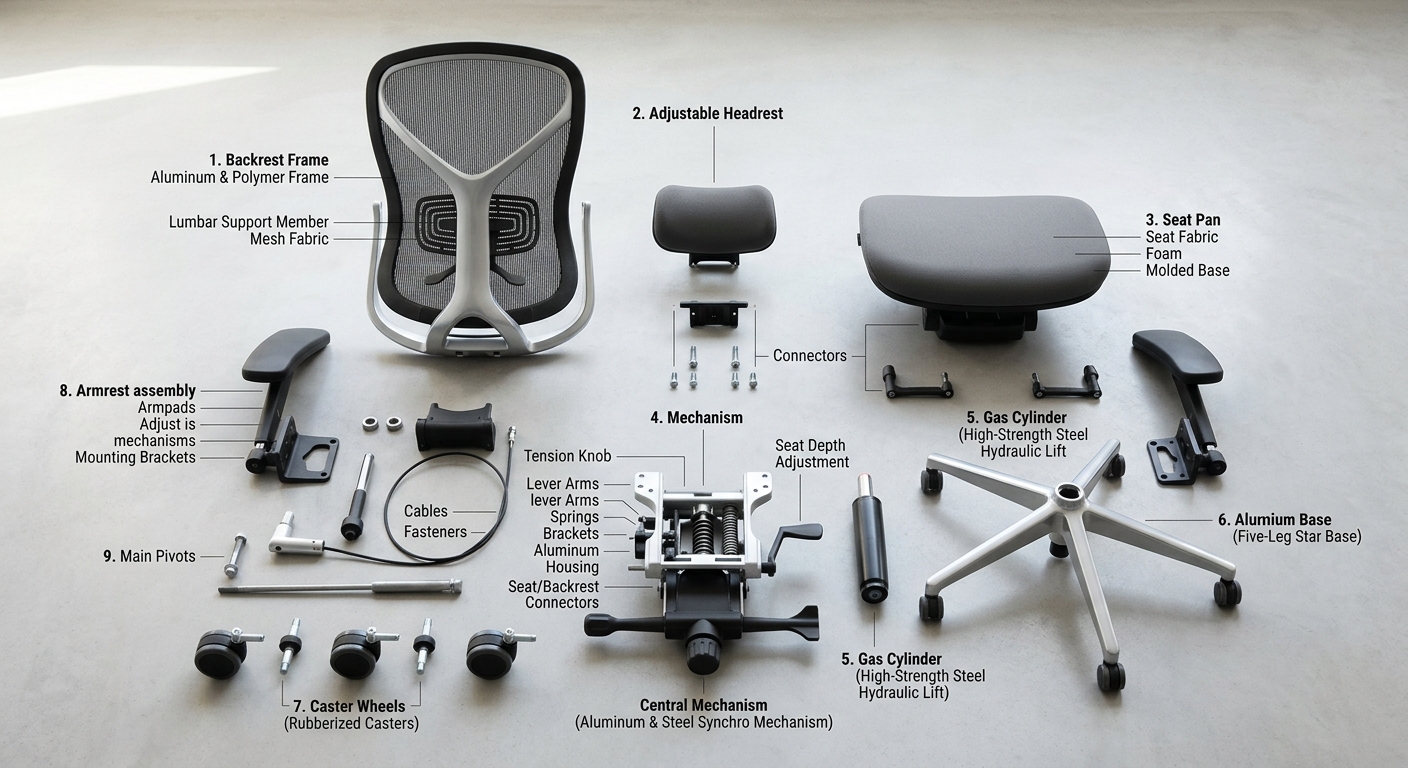
Crack open a $100 standard chair and a $500 ergonomic chair, and the engineering differences are immediately visible.
Frame and Base
Standard chairs typically use injection-molded nylon bases and lightweight steel frames. Ergonomic chairs use reinforced nylon or aluminum alloy bases rated for higher weight capacities and longer fatigue cycles. The gas cylinder in an ergonomic chair is usually a Class 3 or Class 4 piston — standard chairs often use Class 2, which is why the sinking chair problem is so common with budget models.
Foam and Upholstery
Standard chairs use 30–35 kg/m³ density foam that compresses noticeably within 12–18 months. Ergonomic chairs use 45–55 kg/m³ molded foam or skip foam entirely in favor of engineered mesh that maintains consistent tension for years — explore our ergonomic mesh chairs for commercial and wholesale sourcing. The fabric or mesh choice also matters — ergonomic chairs more often use breathable, abrasion-resistant textiles rated for 100,000+ double rubs (Martindale or Wyzenbeek testing), while budget chairs may use fabrics rated at 15,000–30,000.
Mechanism Complexity
A basic swivel-tilt mechanism has 5–8 moving parts. A synchronous tilt mechanism with seat-depth slider and adjustable lumbar has 25–40 precision components. That engineering costs more to design, tool, and assemble — but it’s what enables the chair to adapt to different bodies rather than forcing bodies to adapt to the chair.
The Productivity Factor Most Buyers Overlook
Comfort isn’t a luxury — it’s a productivity multiplier. And the data backs this up more strongly than most people realize.
A 2019 study published in the International Journal of Industrial Ergonomics found that workers provided with ergonomic seating showed a 17.7% increase in productivity over a 12-month period compared to a control group using standard chairs. The mechanism is straightforward: discomfort is distracting. When you’re shifting in your seat every 20 minutes, adjusting your posture to relieve pressure points, or standing up because your back aches — you’re not focused on work.
The Math for Employers
An employee earning $50,000/year produces roughly $240 of value per working day. A 10% productivity improvement (conservative compared to the study above) adds $24/day — or roughly $6,000/year. The price difference between a standard and ergonomic chair is typically $200–$500. That means the productivity ROI pays back the chair upgrade in the first two to four weeks of use.
Even if you’re skeptical of the exact percentages, the directional conclusion is hard to argue with: uncomfortable workers produce less.
How to Evaluate Ergonomic Chairs Without Overpaying
Not all ergonomic chairs are created equal, and a higher price doesn’t automatically mean better ergonomics. Here’s how to cut through the noise.
Test the Adjustments — All of Them
Sit in the chair and try every adjustment. If you can’t figure out how to use a feature within 10 seconds, most employees won’t use it either. The best ergonomic chairs make adjustments intuitive. If you’re comparing different chair types, our breakdown of task chairs vs. office chairs clarifies which category fits different work styles.
Ask About the Mechanism by Name
Manufacturers should be able to tell you the exact mechanism type — synchro-tilt, knee-tilt, weight-activated, etc. Vague answers like “ergonomic tilt” are a red flag. The mechanism is the heart of the chair; if a seller can’t specify it, move on.
Check Warranty Terms Carefully
A 10-year warranty on the frame but only 2 years on the mechanism and gas cylinder isn’t really a 10-year warranty. The parts most likely to fail (cylinder, mechanism, casters) should be covered for at least 5 years on a genuinely well-built ergonomic chair.
Don’t Pay for Features You Won’t Use
Headrests, coat hangers, heated seats, built-in speakers — these add cost without adding ergonomic value. Focus your budget on the core adjustability features that affect posture and comfort during sustained sitting.
Mesh vs. Foam: A Sub-Decision That Matters
Within the ergonomic category, you’ll face another choice: mesh or cushioned seating. Both can be excellent — the right pick depends on your environment and preferences.
Mesh chairs excel in warm climates or offices without strong air conditioning. They maintain consistent support without heat buildup and don’t compress over time. High-quality engineered mesh (like the elastomeric polymers used in premium chairs) provides graduated support — firmer where you need it, more flexible where you don’t.
Foam-cushioned ergonomic chairs feel more luxurious initially and tend to be preferred in cooler environments or by users who find mesh too firm. The trade-off is that even high-density foam will eventually compress — typically showing noticeable wear at the 5–7 year mark.
We’ve covered this choice in depth in our mesh vs. cushion office chair comparison if you want to dig deeper into the pros and cons of each.
Making the Smart Investment for Your Workspace
The ergonomic vs. standard debate isn’t really about chairs — it’s about how you value the people sitting in them. For any seat occupied 4+ hours daily, ergonomic chairs deliver superior value through longer lifespan, fewer health complaints, higher productivity, and lower total cost of ownership. For light-use, guest, and conference seating, standard chairs remain perfectly appropriate.
The smartest approach? Audit your seating by use case. Invest in ergonomic chairs where they’ll be used heavily, and allocate standard or purpose-built chairs everywhere else. This targeted strategy maximizes your budget without compromising employee wellbeing.
At Vaseat, we design and manufacture ergonomic seating that balances genuine adjustability with competitive pricing — because we believe the health benefits of proper ergonomic support shouldn’t require a luxury-tier budget. Explore our full range of ergonomic office seating solutions to find the right fit for your project.