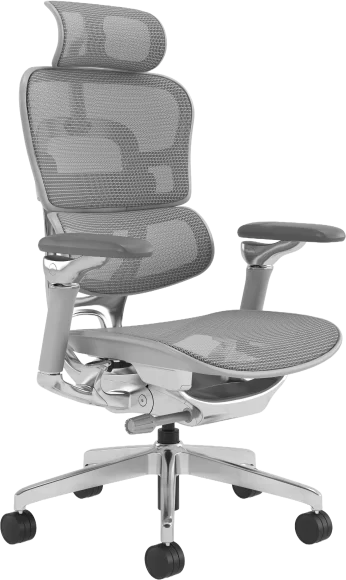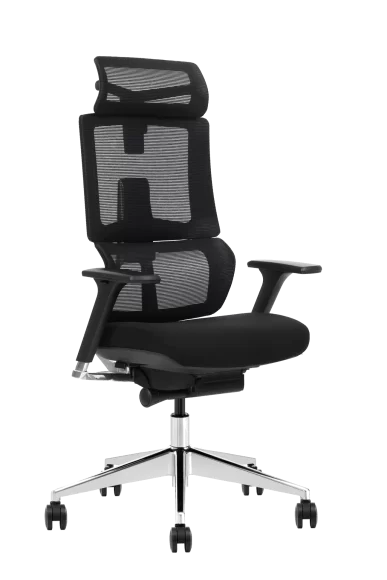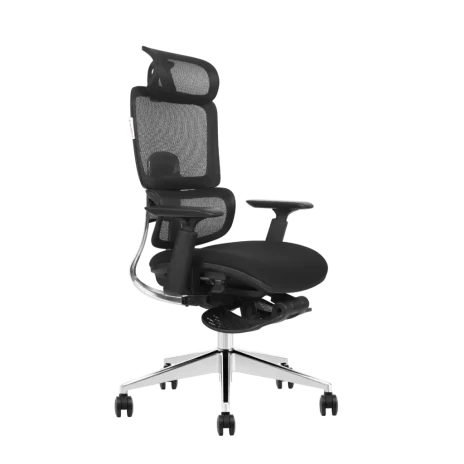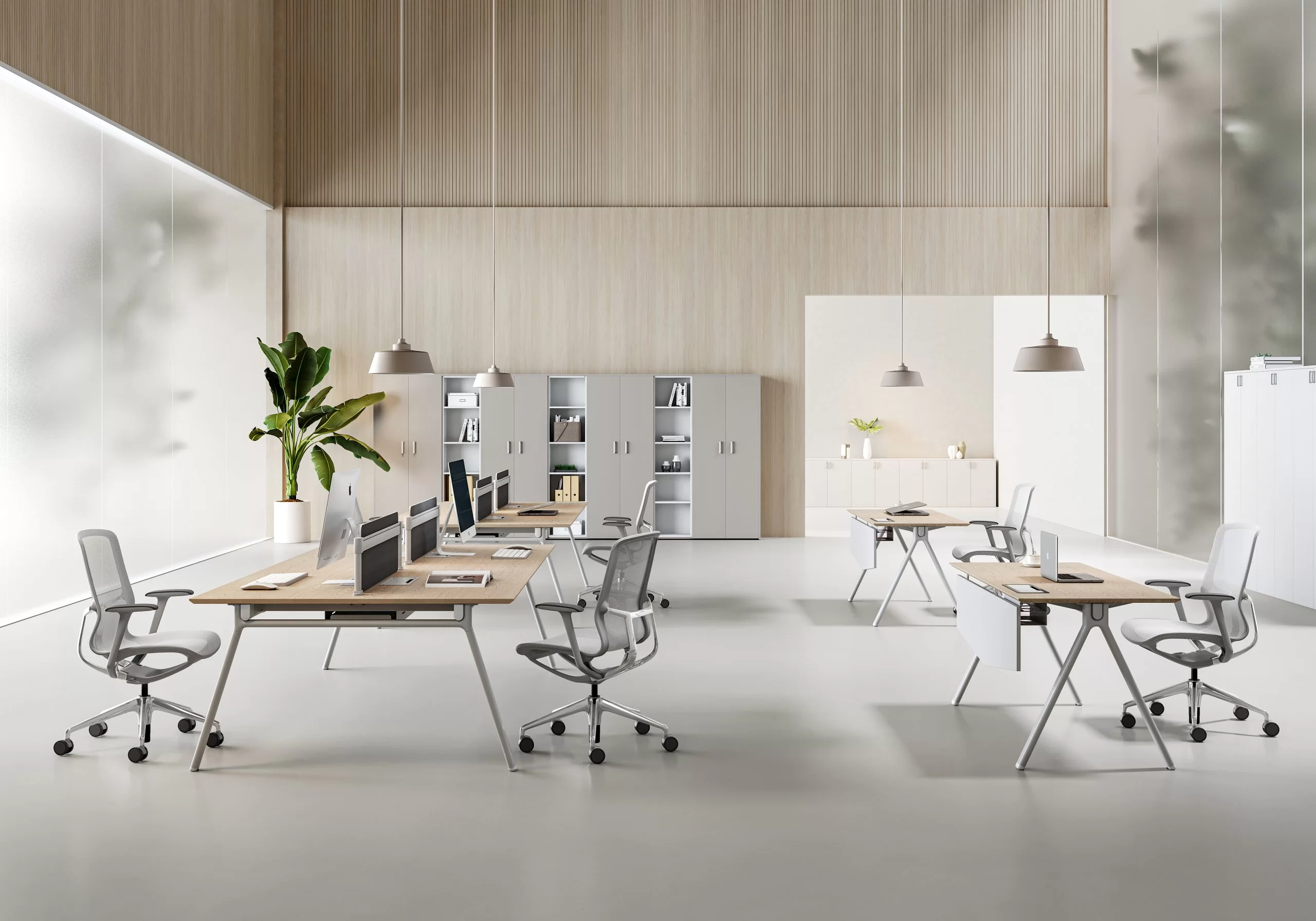

Most people compare drafting chair vs office chair by appearance. The real difference shows up only after you sit down and start working.
Drafting chairs are designed for elevated work surfaces. Office chairs are designed for standard desk height. Choosing the wrong one usually leads to poor posture, unstable foot support, or unnecessary fatigue.
This guide breaks down the practical differences so you can choose based on desk height, working posture, and daily task type, not marketing labels.
What a Drafting Chair Is Designed For
A drafting chair is built for workstations that sit higher than a standard desk.
Typical examples include standing desks set to seated height, drafting tables, lab benches, cashier counters, and industrial workstations.
Key design characteristics:
- Taller seat height range
- Built-in foot ring or footrest
- Upright sitting posture
- Easier transition between sitting and standing
A drafting chair allows your hips to stay level with or slightly above your knees when working at elevated surfaces, reducing forward lean.
What an Office Chair Is Designed For
An office chair is optimized for standard desk height, usually around 28–30 inches.
It supports long-duration seated work such as typing, screen-based tasks, meetings, and general office use.
Key design characteristics:
- Lower seat height range
- Full foot contact on the floor
- Backrest optimized for reclined support
- Armrests aligned with standard desk height
Office chairs focus on comfort during prolonged sitting rather than vertical mobility.
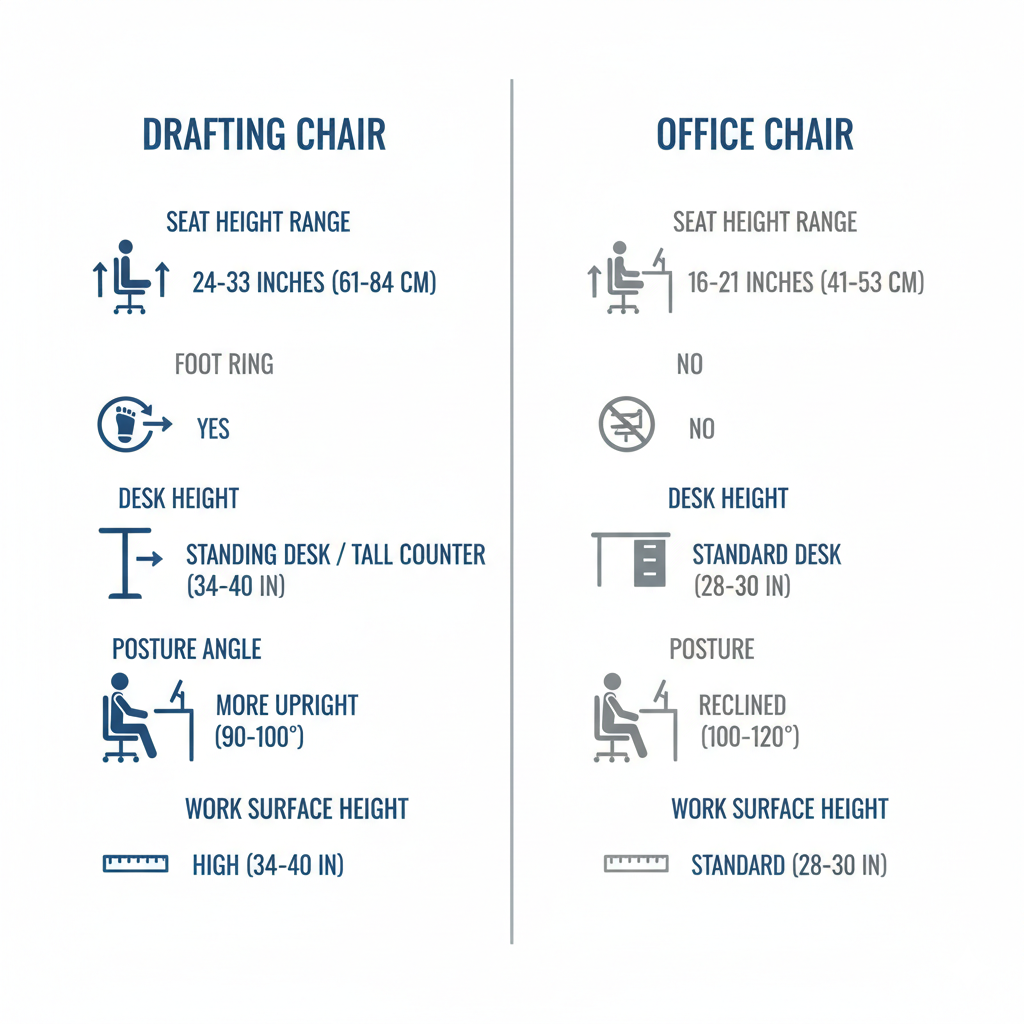
Drafting Chair vs Office Chair at a Glance
| Feature | Drafting Chair | Office Chair |
|---|---|---|
| Seat height | Higher, extended range | Standard range |
| Foot support | Foot ring required | Floor-supported |
| Desk compatibility | Standing desks, tall tables | Standard desks |
| Sitting posture | More upright | Slight recline |
| Sit–stand transition | Easier | Limited |
| Typical use time | Short to medium sessions | Long sessions |
Desk Height Is the Real Deciding Factor
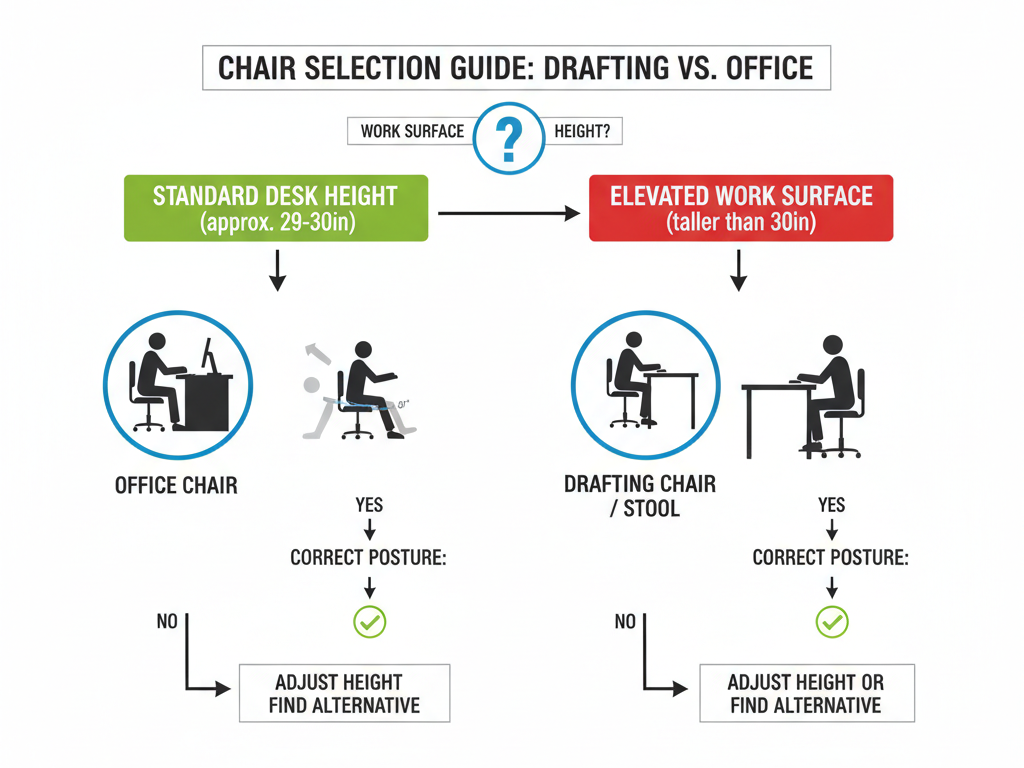
The most common mistake is choosing a chair before confirming desk height.
When a Drafting Chair Makes Sense
- Your desk surface is above 34 inches
- You use a standing desk in seated mode
- Your work involves frequent posture changes
- You need clear leg movement under the desk
A standard office chair will feel unstable or too low in these situations.
When an Office Chair Makes Sense
- Your desk height is standard
- You sit for long, uninterrupted periods
- You rely heavily on armrest support
- Your feet rest flat on the floor naturally
Using a drafting chair at a normal desk often causes dangling legs and pressure under the thighs.
Posture and Ergonomics: How They Differ in Daily Use
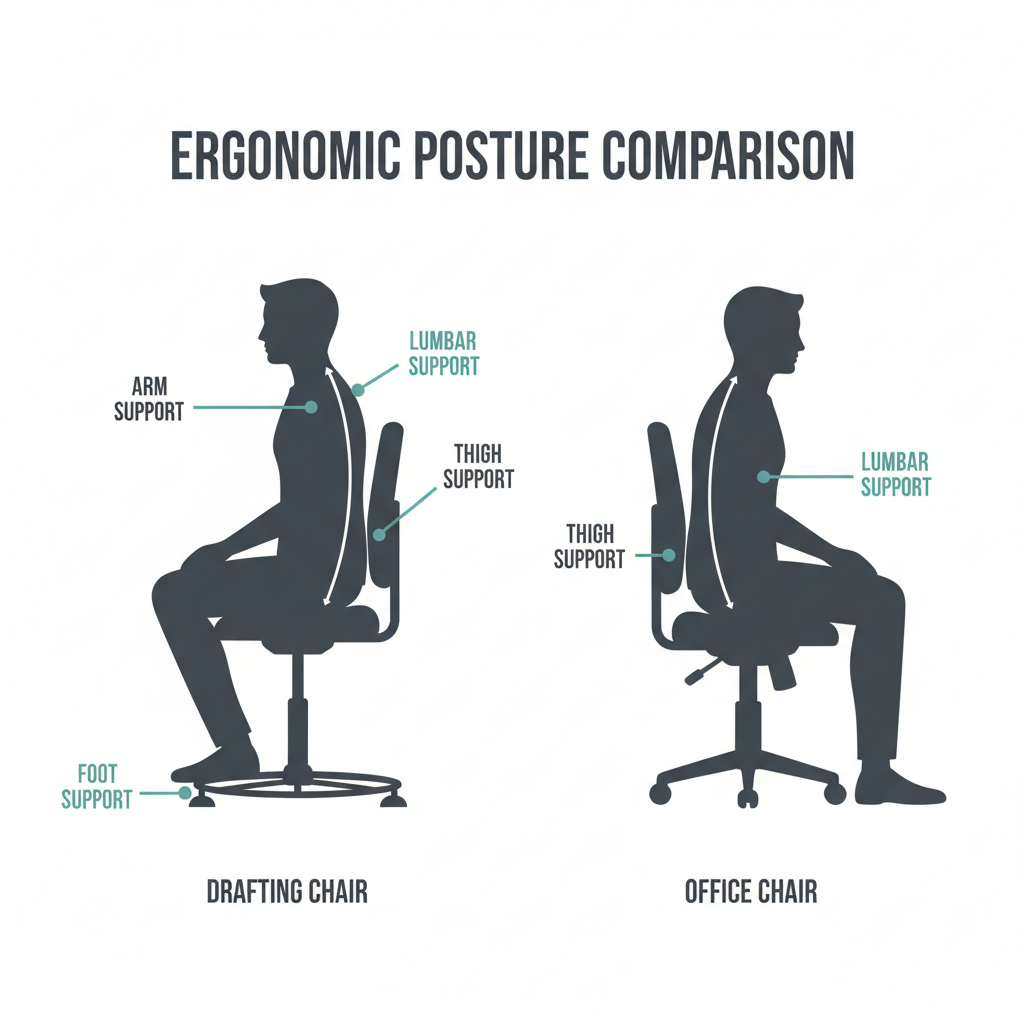
Drafting chairs encourage a more vertical torso position. This reduces forward lean but places more demand on core stability.
Office chairs allow more recline, distributing body weight across the backrest and seat pan. This is better for extended computer work but less flexible for active movement.
Neither is inherently more ergonomic. Ergonomics depends on whether the chair matches the workstation height and task pattern.
Foot Support Matters More Than the Chair Itself
Foot support is the most overlooked difference.
- Drafting chairs require a stable, height-adjustable foot ring
- Office chairs rely on direct floor contact
Without proper foot support, even a high-quality drafting chair becomes uncomfortable within minutes.
If you consider a drafting chair, always evaluate the foot ring position range and stability.
Common Myths About Drafting Chairs
Myth: Drafting chairs are just taller office chairs
They are structurally different due to center-of-gravity and foot support design.
Myth: Drafting chairs are only for designers
They are widely used in labs, factories, studios, retail counters, and sit-stand offices.
Myth: Office chairs can work fine at standing desks
Only if the standing desk can lower into a true seated height range.
How to Choose Between a Drafting Chair and an Office Chair
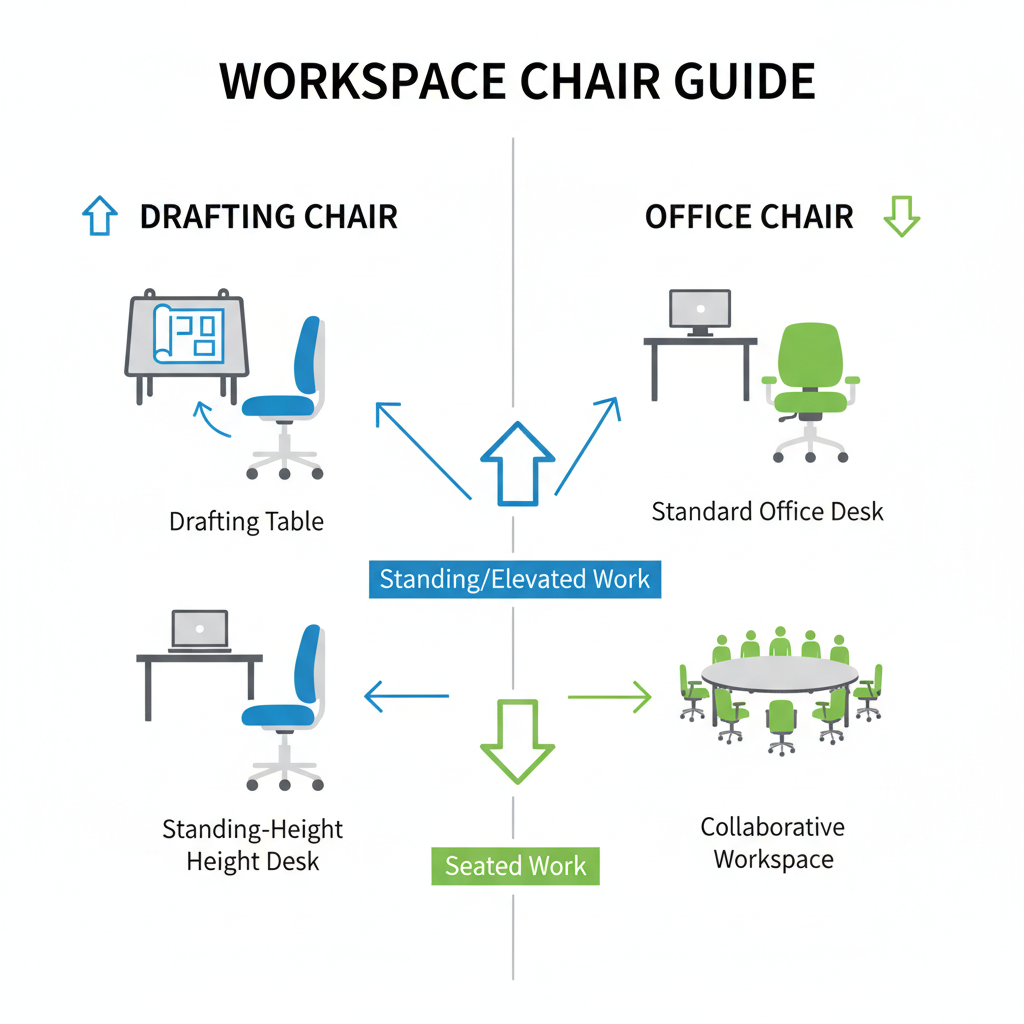
Choose a drafting chair if:
- Your work surface is elevated
- You alternate between sitting and standing
- You need open leg space and vertical mobility
Choose an office chair if:
- Your desk is standard height
- You sit for long sessions
- Back support and recline matter more than height
If your setup changes frequently, desk adjustability may matter more than the chair itself.
Final Takeaway
The difference between a drafting chair vs office chair is not about comfort claims or style. It comes down to how high you work, how long you stay seated, and how often you change posture.
A drafting chair supports elevated work surfaces and frequent movement. An office chair supports standard desks and long, continuous sitting. When the chair matches the workstation, posture improves and fatigue drops without extra adjustments.
Choose based on your setup first. Comfort follows.