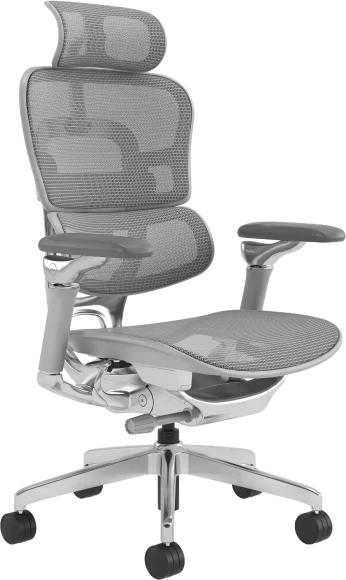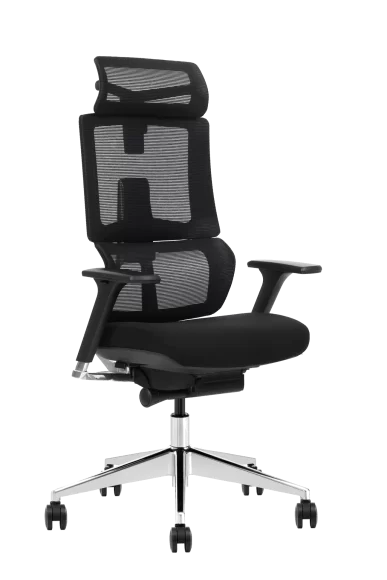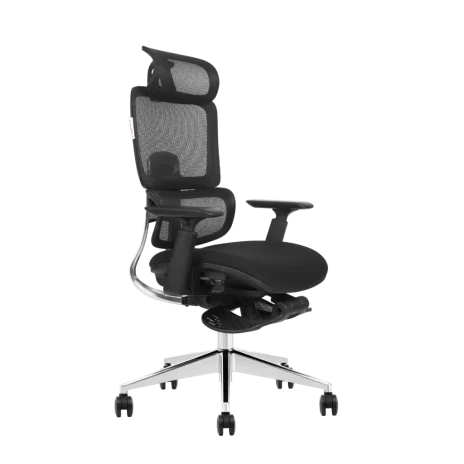
The acoustic performance of an office chair comes down to three things: caster material, mechanism friction, and backrest structure — and almost none of these appear on a standard spec sheet. Buyers evaluate chairs for lumbar support, weight capacity, and warranty terms, then wonder six months later why the open-plan floor sounds like a symphony of clicks, squeaks, and rolling wheels. In acoustically sensitive layouts, the chair is a noise source you can actually control before installation, not after.
Why Open-Plan Acoustics Made Chairs a Procurement Issue
Open-plan offices removed the walls that used to absorb and block sound. What’s left is a shared soundscape where every chair squeak, caster roll, and gas-lift hiss travels across the floor uninterrupted. Facility teams spend thousands on acoustic ceiling panels and sound-masking systems, then furnish the space with 300 chairs that individually generate low-level noise all day.
Here’s the math nobody runs during procurement: a single hard-caster chair rolling across vinyl flooring produces roughly 45-55 decibels of transient noise. Multiply that by dozens of movements per hour across a 200-seat floor, and you’ve built a constant low hum that raises baseline stress and makes speech intelligibility worse in nearby meeting pods. This isn’t a comfort issue — it’s a workplace acoustics issue that started with the chair spec, not the ceiling tile.
Caster Material: The Single Biggest Noise Variable
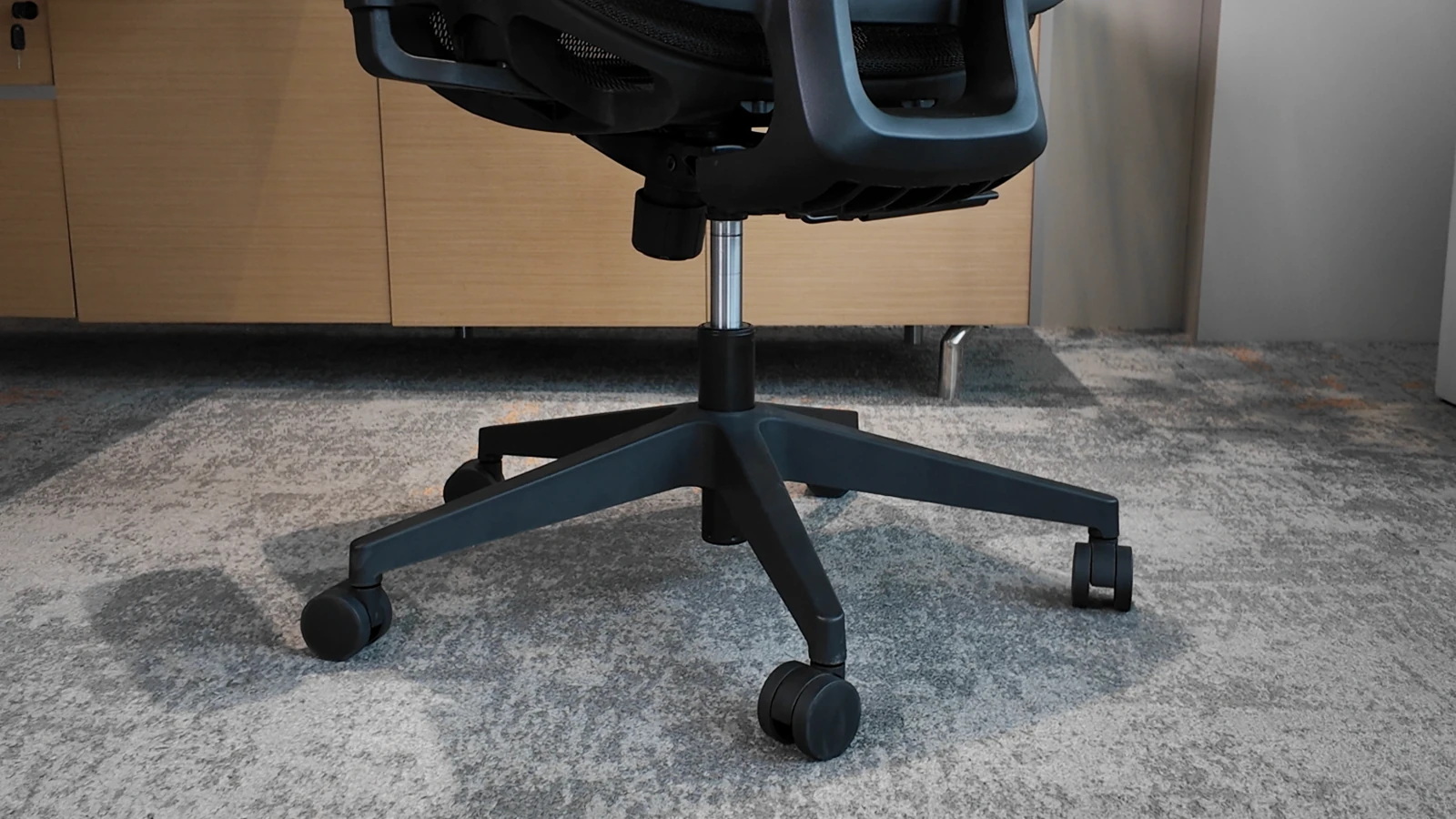
If you fix one thing on this list, fix the casters. Hard nylon wheels on hard flooring are the loudest combination in office seating, full stop. They transmit every seam, cable channel, and floor imperfection straight into an audible click-clack.
Dual-wheel PU-coated casters solve this by compressing on contact instead of bouncing off the surface. The difference is measurable — PU casters typically cut rolling noise by 8-12 decibels compared to hard nylon on the same floor. For buyers specifying mixed flooring (carpet tile in workstations, hard flooring in walkways), that difference compounds across hundreds of daily chair movements.
Don’t assume all soft casters are equal, either. Cheap PU coatings degrade within 12-18 months of heavy rolling, exposing the harder core underneath and returning the noise problem right when the warranty clock is running out. This is a topic worth reading in full — see our facilities audit checklist for how to test caster wear before it becomes a floor-wide complaint.
Mechanism Friction: The Click Nobody Budgets For
Tilt mechanisms with exposed springs and dry pivot points produce a distinct metallic click every time someone leans back or adjusts tension. It’s a small sound in isolation. Multiply it by 40 people per floor doing it dozens of times an hour, and it becomes background static that erodes concentration.
Enclosed mechanism housings — where the spring, pivot, and tension knob sit inside a sealed metal or composite shell — dampen this almost entirely. The trade-off is cost: enclosed housings run higher per-unit than exposed synchro-tilt units, but the acoustic payoff is immediate and doesn’t degrade with age the way caster coatings do.
For a deeper technical breakdown of how these mechanisms function beyond noise, our synchro-tilt mechanism guide covers the engineering side buyers should understand before comparing quotes.
Mesh vs. Foam: Which Absorbs Sound Better?
Tensioned mesh backrests do something foam-and-fabric backs can’t — they let sound pass through the weave instead of reflecting it back into the room. A rigid, plastic-backed fabric chair acts like a small sound-bouncing panel scattered across the floor plan. A mesh backrest, by contrast, is acoustically porous.
This doesn’t make mesh a soundproofing material — nobody should claim that. But in aggregate, across a 150-chair floor, mesh backrests contribute measurably less reflected noise than solid-backed alternatives, which matters in rooms already fighting reverberation from glass partitions and hard ceilings.
We’ve covered the durability side of this comparison in our mesh vs. foam materials breakdown, but the acoustic angle is rarely discussed — worth factoring in if your project includes open collaboration zones near workstation clusters.

Real-World Case: A Coworking Operator’s Noise Complaint Audit
A coworking operator running three floors in a converted warehouse noticed member complaints spiking about noise near hot-desk zones — despite installing acoustic ceiling baffles months earlier. An audit traced roughly 40% of the ambient noise complaints to chair movement: hard casters on polished concrete, combined with exposed-spring tilt mechanisms on their budget task chairs.
The fix wasn’t a full chair replacement. They swapped casters to dual-wheel PU on the 60 units nearest the quiet zones and phased in enclosed-mechanism chairs during the next reorder cycle. Complaint volume dropped noticeably within a month — proof that the acoustic fix was cheaper than another round of ceiling treatment. For more on how operators balance this kind of trade-off, see our coworking seating strategy piece.

Where Acoustic Priority Should Sit in Your Spec Sheet
Acoustic performance shouldn’t outrank weight capacity or lumbar adjustability — but it deserves a line item, especially for projects involving call centers, coworking floors, or training rooms adjacent to focus zones. Rank it appropriately:
- Tier 1 (must-spec): Weight capacity, seat height range, lumbar support type
- Tier 2 (project-dependent): Caster material, mechanism housing type, mesh vs. foam backrest
- Tier 3 (nice-to-have): Armrest padding sound dampening, glide-pad options for stationary chairs
For open-plan corporate floors, coworking operators, and training rooms, Tier 2 acoustic specs should move up the priority list even if they add a modest per-unit cost. The alternative is a facility-wide noise complaint six months post-installation that no amount of ceiling treatment fully solves.
What to Ask Your Manufacturer Before the Next Bulk Order
Most manufacturers won’t volunteer acoustic data — you have to ask specifically. Bring these questions into your next sourcing conversation or factory visit:
- What caster material and wheel diameter is standard on this model, and is PU-coating an available upgrade?
- Is the tilt mechanism housing enclosed or exposed, and what’s the cost delta?
- Has the mesh tension been tested for sag or noise change after cycle testing?
- Can you provide decibel-level testing data for caster rolling noise on hard flooring?
Few chair factories run formal acoustic testing, so treat any confident answer with mild skepticism and ask for physical samples to test on your actual flooring type. Reviewing chair components in detail before your factory conversation will help you ask sharper, more specific questions instead of relying on marketing language.