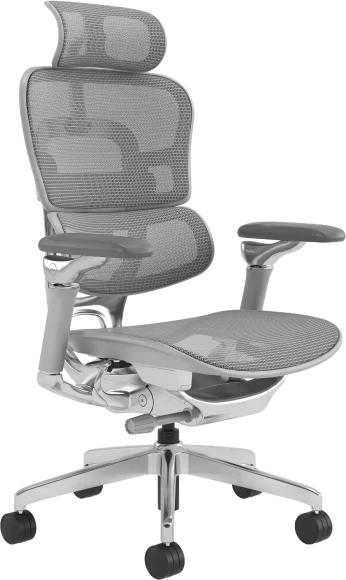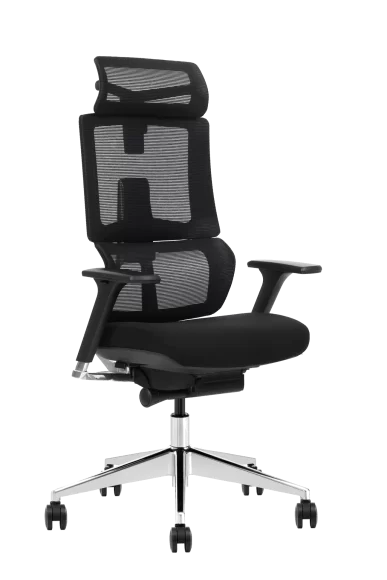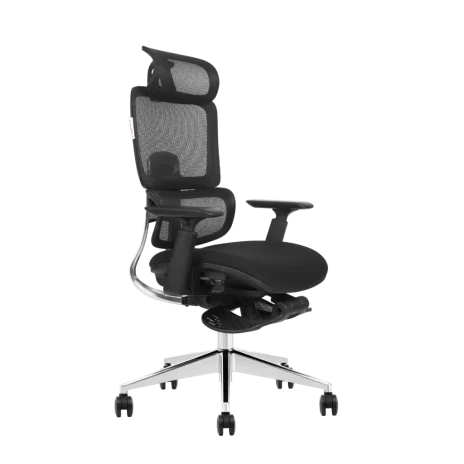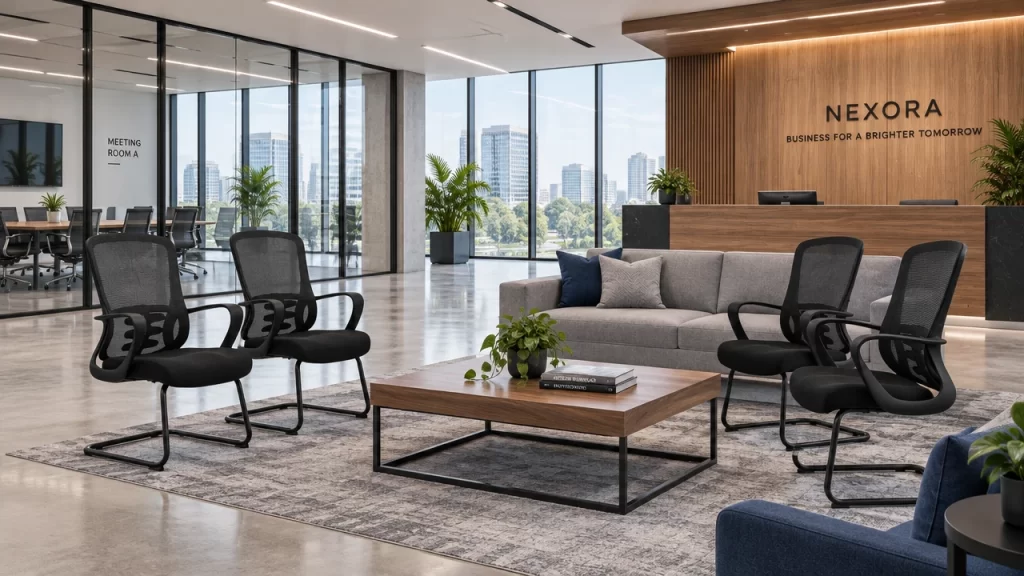
Banks need at least three different seating specs under one roof: durable task chairs for tellers who sit and stand constantly, presentable visitor chairs that reinforce trust in the lobby, and ergonomic seating for back-office staff who log eight-hour shifts. Getting one right and neglecting the others is the most common mistake procurement teams make — and it shows up fast in complaints, replacement costs, or a lobby that just doesn’t feel like a place you’d trust with your money.
Why Bank Seating Isn’t Just “Office Furniture”
A bank branch is really four or five micro-environments stacked into one building. The teller line sees constant motion and public visibility. The lobby is pure brand messaging — customers judge the institution’s stability partly by what they sit on while waiting. Private offices need to feel calm and authoritative for loan discussions. And somewhere in the back, operations staff are grinding through spreadsheets on chairs nobody from marketing ever thinks about.
Treating all of that as one generic furniture order is how branches end up with mismatched chairs that either look cheap in the lobby or fall apart at the teller line within a year. Procurement teams that separate these zones early save themselves a lot of rework later — see our office seating audit checklist for a structured way to map zones before ordering.
Teller Stations: Small Footprint, High Wear
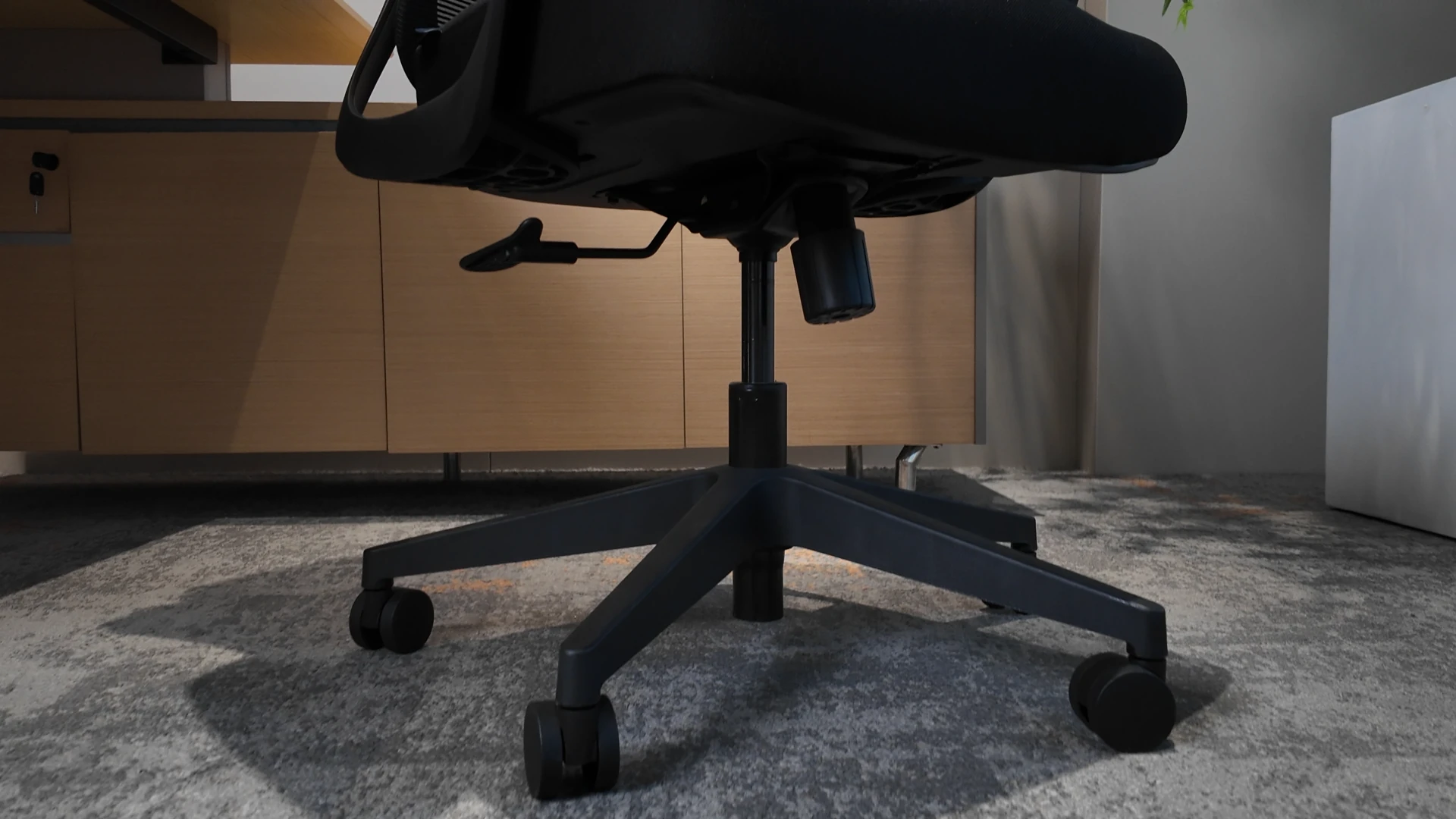
Teller chairs take more physical abuse per year than almost any other seat in the building, and most branches under-spec them. Tellers shift between sitting and half-standing dozens of times a shift, often reaching sideways to counters or cash drawers. A chair with a narrow base or weak gas cylinder will show sag or wobble within 12-18 months under that pattern.
What actually matters here
- Compact base diameter — teller stations are tight; a standard 700mm base can clip counters or neighboring chairs.
- Class 3 or Class 4 gas cylinder — frequent height cycling wears cheaper cylinders fast. Check our office chair cylinder guide before specifying.
- Waterfall seat edge — reduces thigh pressure during the constant sit-to-stand motion tellers do all day.
A mid-sized regional bank we’ve seen replace their teller seating went from a generic swivel stool to a proper task chair with a reinforced base — branch managers reported fewer complaints about squeaking and sinking within the first quarter.
The Lobby Is a Brand Statement, Not Just Waiting Room Filler
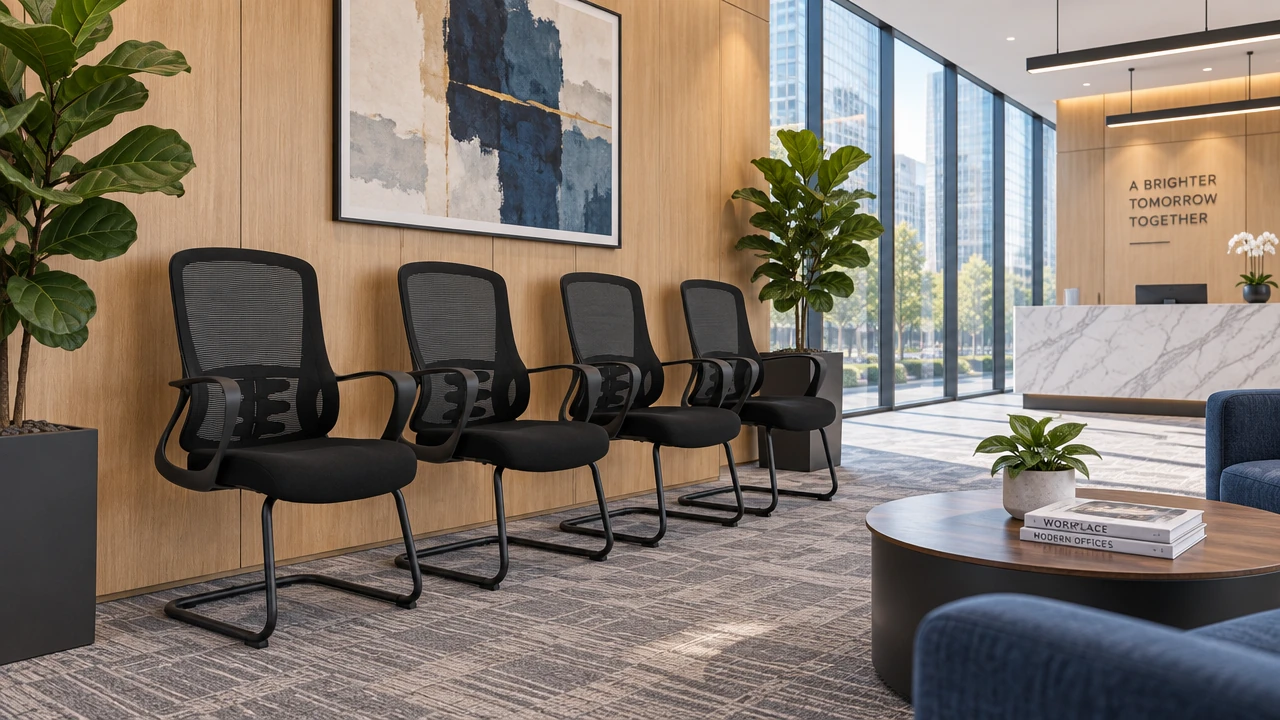
Customers form an opinion about a bank’s stability within seconds of sitting down — and an unstable, wobbly, or worn visitor chair undercuts that instantly. Financial institutions tend to underspend here because lobby chairs aren’t used all day, but they’re seen by every single customer who walks in.
Stacking vs. fixed-leg visitor chairs
Branches with flexible event space (financial literacy seminars, community meetings) benefit from stackable visitor chairs that store easily. Branches with a fixed, formal waiting area do better with heavier fixed-leg chairs upholstered in a color matched to brand guidelines. Either way, upholstery choice matters more than most buyers assume — leather vs. mesh is a real decision point here, since leather-look PU reads as more “premium” to walk-in customers even though mesh is more breathable.
Private Advisory Offices: Comfort That Signals Authority
The chair a loan officer or financial advisor sits in during a client meeting quietly signals institutional confidence — or the lack of it. This isn’t the place for a bare-bones task chair. High-back executive seating with adjustable lumbar support and armrests is standard here, and for good reason: these are often 45-60 minute sit-down meetings where visible discomfort undermines the conversation.
The distinction between high-back and mid-back chairs actually matters in this context — high-back models project more authority behind a desk, which is part of why they’re the default in private banking suites even though mid-back chairs are perfectly ergonomic.
Back-Office Operations: The Zone Everyone Forgets
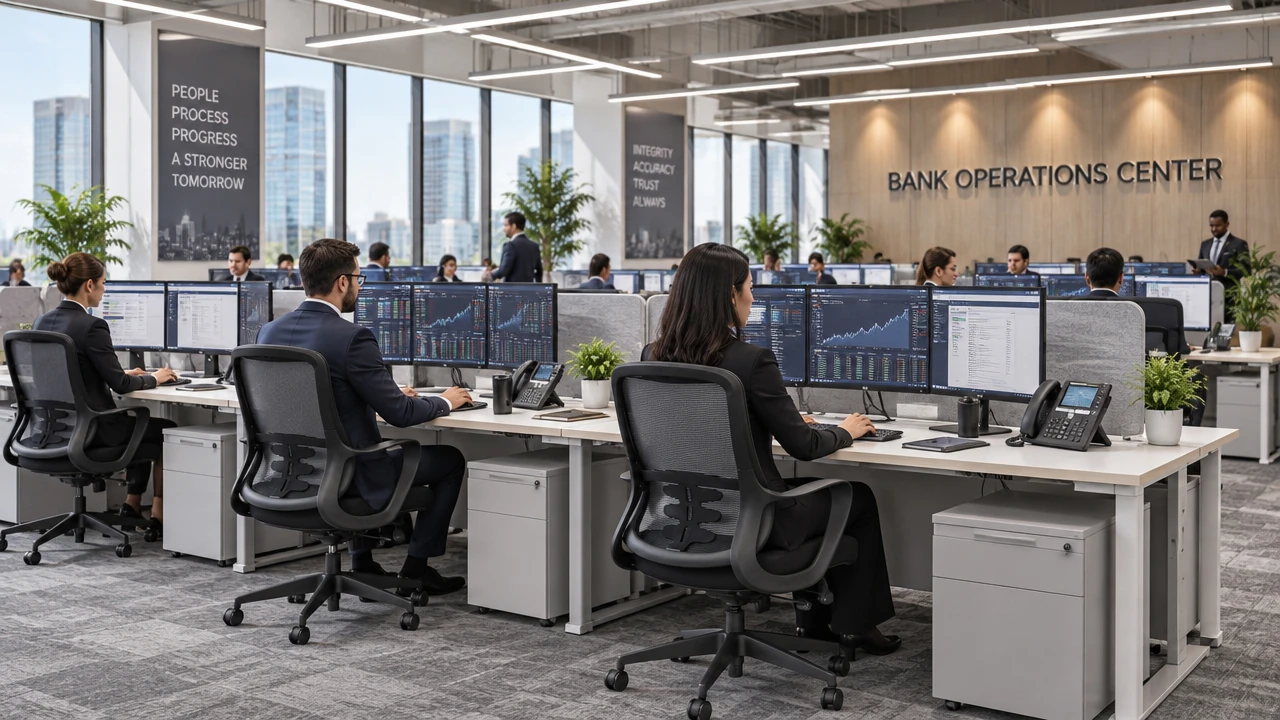
Loan processing, compliance, and operations staff sit longer and more continuously than almost anyone else in the branch — often 7-8 hours with minimal movement. Yet back-office seating is frequently the last budget line item, inheriting whatever chairs weren’t good enough for the lobby.
This is a mistake. Poor lumbar support and fixed seat depth in this zone drive real productivity losses — see our breakdown of ergonomic chair advantages for the data on this. A proper mesh task chair with synchro-tilt and adjustable lumbar costs marginally more upfront but avoids the churn of replacing chairs every 18 months, which we cover in more detail in how long an office chair should actually last.
Security Considerations Most Buyers Overlook
Security in bank seating isn’t about locks — it’s about stability, sightlines, and materials that don’t create hazards. Chairs near cash-handling zones should have locking casters or glide feet rather than free-rolling casters, reducing the chance of a chair sliding unexpectedly during a stressful incident. Frames should avoid sharp protrusions in tight teller spaces. And upholstery in customer-facing zones should be fire-rated and easy to clean — bank lobbies get more foot traffic and spills than a typical corporate office.
A practical example
A regional credit union redesigning three branches specified locking casters for every teller chair after a near-miss incident where a rolling chair shifted during a register audit. It’s a small spec change, but one that rarely makes it onto a furniture RFP unless someone specifically asks for it.
Consistency Across Branches Matters More Than Perfection in One
Banks with multiple branches face a different problem than single-location buyers: keeping seating specs consistent across locations that were fitted out at different times. Inconsistent chair models across a branch network create uneven brand impressions and make maintenance a headache — spare parts and warranty claims get complicated when every branch has a different chair.
This is where working with a single wholesale supplier who can maintain consistent specs, colors, and replacement parts across a multi-branch rollout pays off. If you’re evaluating suppliers for a multi-location project, our guide on vetting regional office furniture suppliers outlines the right questions to ask, even outside that specific market.