A squeaky desk chair can be more than just annoying—it disrupts focus, breaks the flow of meetings, and often raises a bigger question: Is something wrong with my chair?
As an office chair manufacturer with years of experience in ergonomic seating design and quality testing, we regularly troubleshoot noise issues caused by wear, friction, and mechanical tolerance. In real-world use, most chair noise issues are not defects, but predictable results of long-term movement and load.
This guide explains why desk chairs squeak, how to fix a squeaky desk chair step by step, and how to prevent chair noise long-term.
Why Is My Desk Chair Squeaking?
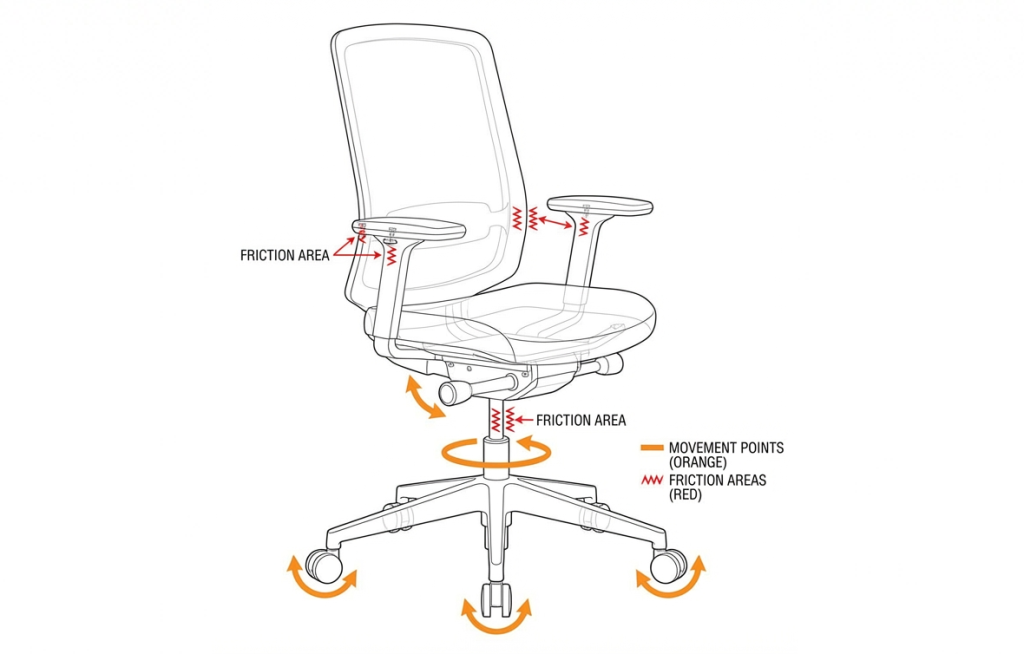
A squeaky desk chair is almost always the result of friction, loosened fasteners, or material fatigue. Daily movement—swiveling, leaning, reclining—gradually stresses multiple joints.
In our testing and after-sales inspections, the causes below account for the vast majority of squeaky desk chair complaints.
Most Common Causes of a Squeaky Desk Chair
In most cases, squeaking comes from specific parts of a chair that experience frequent movement and load.
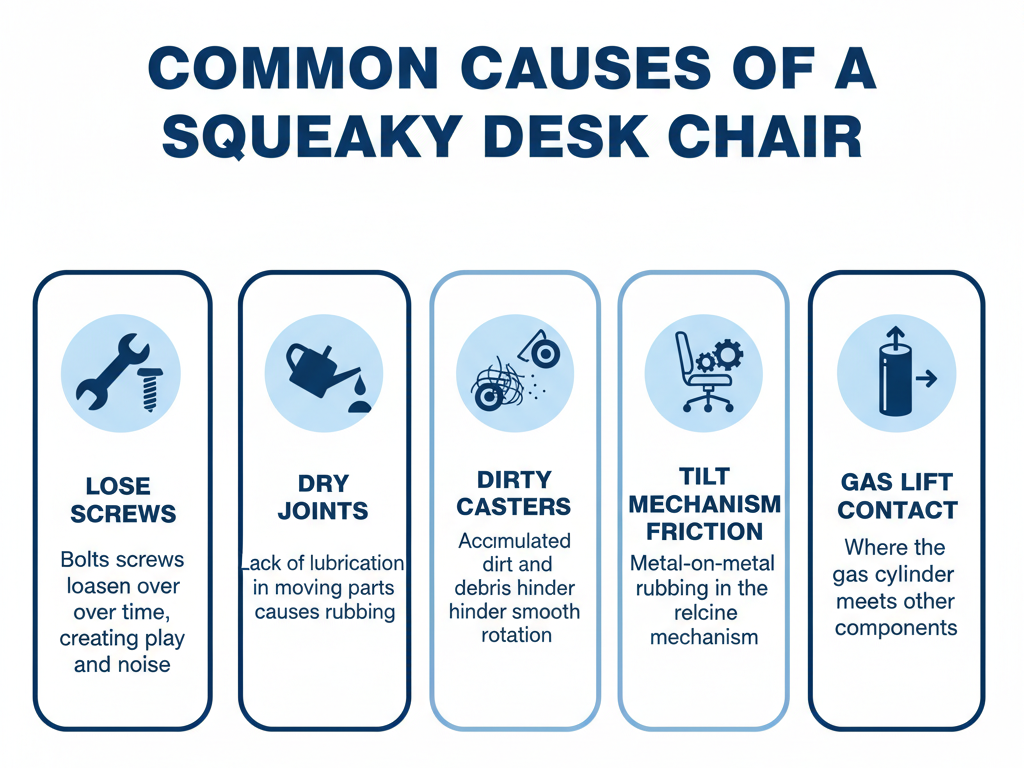
Loose screws or bolts
Small gaps between fasteners and frames create metal-on-metal noise. This is the single most common cause we encounter during routine inspections.
Dry or unlubricated moving parts
Tilt mechanisms, swivel plates, and pivot points require lubrication to remain silent.
Dirty or worn casters (chair wheels)
Hair, dust, and debris inside the caster axle are a frequent noise source.
Tilt or recline mechanism friction
Especially common in chairs with thinner steel or plastic load-bearing parts.
Gas lift or cylinder contact points
Less common, but noise can occur where the cylinder meets the base or seat plate.
How to Fix a Squeaky Desk Chair (Step-by-Step)
In our experience, over 80% of chair noise issues are resolved with basic tightening and lubrication, without replacing any parts.
Tighten All Screws and Bolts
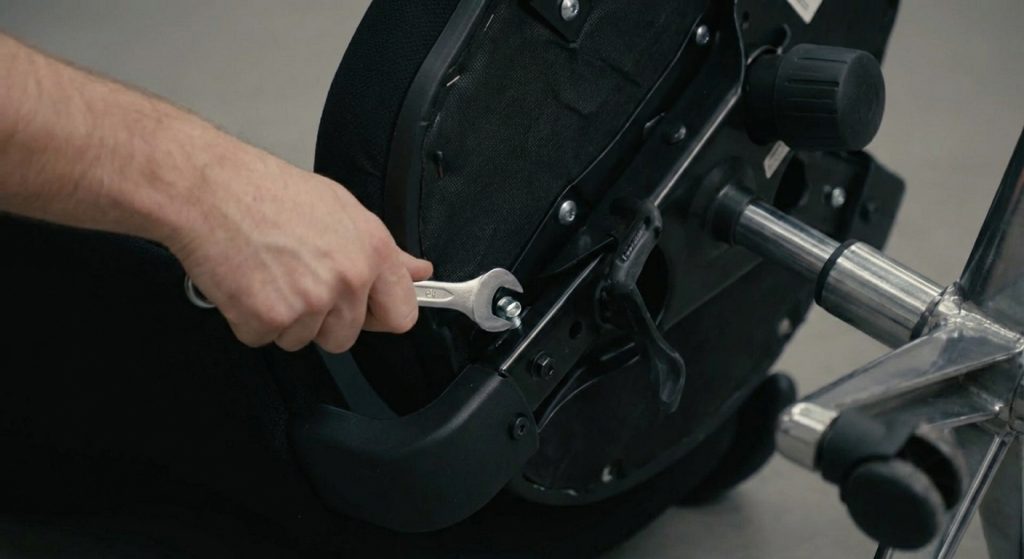
This should always be your first step.
- Turn the chair upside down
- Use an Allen key or screwdriver
- Tighten screws under the seat, armrests, and base
Even slightly loose hardware can cause surprisingly loud squeaks. We often find that users underestimate how much movement a chair experiences during normal daily use.
Lubricate All Moving Metal Parts
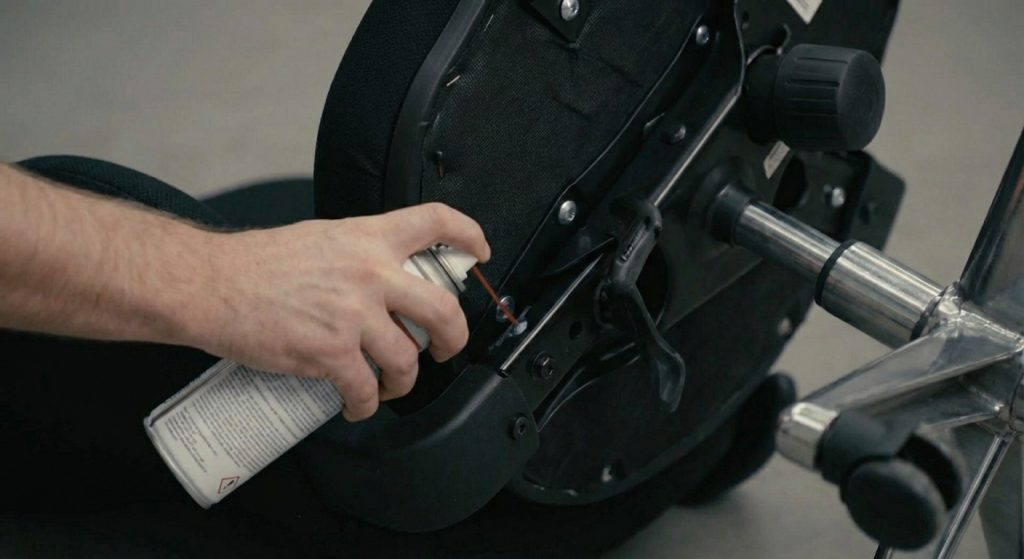
If tightening doesn’t help, friction is the likely culprit.
Recommended lubricants:
- Silicone spray (best overall)
- White lithium grease (long-lasting)
- Light machine oil (temporary fix)
Focus on:
- Tilt and recline pivot points
- Swivel plate under the seat
- Metal-to-metal contact areas
Avoid spraying fabric, mesh, or foam. Proper lubrication not only reduces noise, but also slows long-term wear.
Remove and Clean the Casters
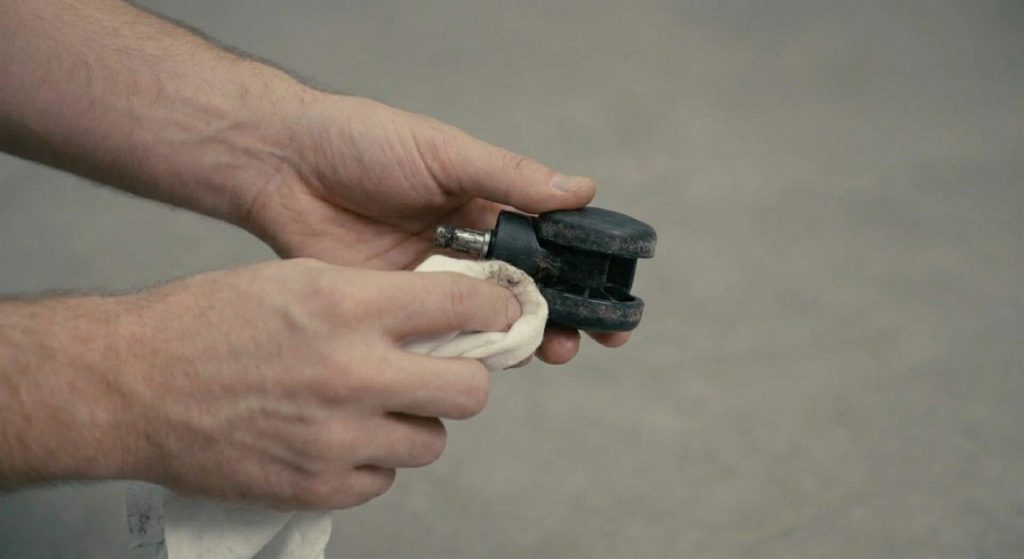
Chair wheels are a major noise source that’s often overlooked.
- Pull casters straight out (most are press-fit)
- Remove hair and debris from the axle
- Apply a small amount of lubricant
Replace damaged casters if rolling feels rough. Caster-related noise is especially common in home offices with carpet or pet hair.
Inspect the Tilt and Recline Mechanism
If your desk chair squeaks when leaning back:
- The tilt spring and pivot joints are usually responsible
- Apply lubricant evenly
- Rock the chair gently to distribute it
This area handles the highest load during use. Because of this load concentration, even small tolerance changes can create audible noise over time.
Check for Structural Wear
If noise persists after cleaning and lubrication:
- The seat plate or internal mechanism may be worn
- Budget chairs often use thinner steel that flexes over time
- Replacing the mechanism—or the chair—may be the safest option
At this stage, noise is often a symptom of material fatigue rather than maintenance neglect.
How Desk Chair Design Affects Squeaking
From a manufacturing perspective, chair noise is rarely random—it’s closely tied to design and materials.
Key Design Factors That Influence Noise
Steel vs plastic tilt mechanisms
Plastic components wear faster and develop friction points.
Manufacturing tolerances
Poorly controlled tolerances allow micro-movement that causes squeaks.
Material thickness
Thicker steel components flex less and stay quieter over time.
Load distribution
Chairs designed near their weight limit squeak sooner under daily use.
This is why two desk chairs with similar designs and prices can age very differently after one or two years of regular use.
How to Prevent a Desk Chair From Squeaking
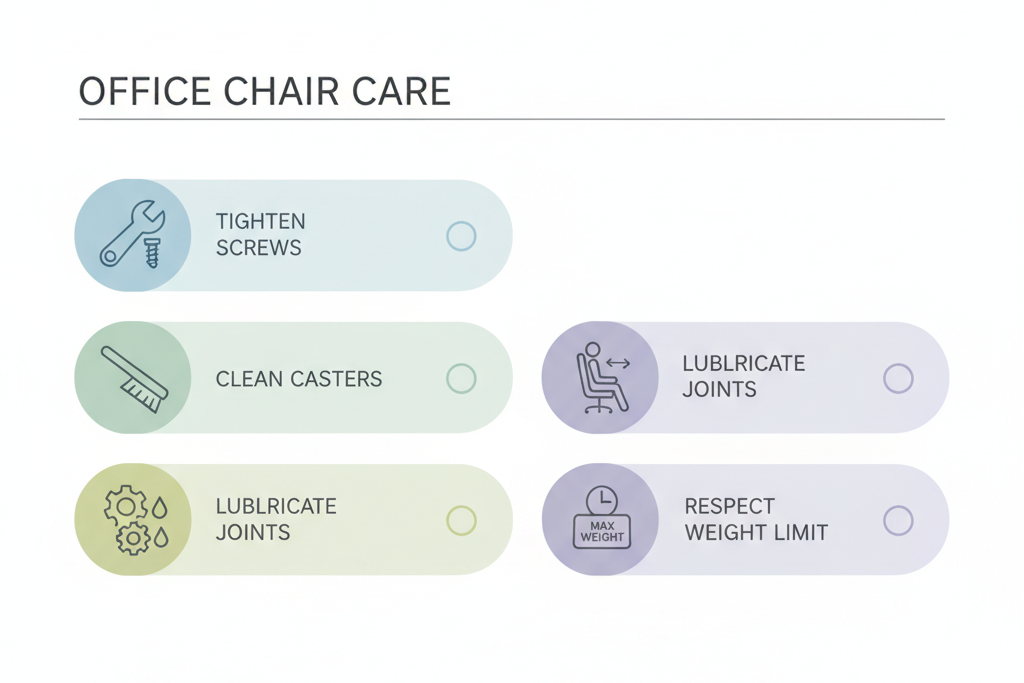
Preventive maintenance dramatically extends a chair’s quiet lifespan.
Best Practices
- Tighten fasteners every 3–6 months
- Clean casters regularly
- Lubricate moving parts once or twice per year
- Stay within the chair’s rated weight capacity
In dry environments, lubrication becomes even more important.
Does a Squeaky Desk Chair Mean Poor Quality?
Not necessarily.
Even high-quality office chairs can squeak if:
- They’re used heavily
- Maintenance is neglected
- The environment is very dry
However, persistent squeaking in a relatively new chair may indicate:
- Lower-grade mechanisms
- Thin load-bearing components
- Poor long-term durability
Noise is often an early warning sign.
When Should You Replace a Squeaky Desk Chair?
Replacement is usually the better option if:
- The squeak comes from inside the gas lift
- Structural parts are bent or cracked
- The chair feels unstable when reclining
- Repairs only work temporarily
At this point, noise reflects mechanical fatigue, not simple friction.
How to Choose a Quiet Desk Chair (Buyer Tips)
If you’re upgrading, look beyond appearance.
- Steel tilt mechanisms instead of plastic
- Verified weight ratings
- Precision-fitted components
- Long-term user reviews
- Compliance with standards such as BIFMA or EN
Well-built chairs stay quieter for years with minimal maintenance.
Frequently Asked Questions About Squeaky Desk Chairs
Why does my desk chair squeak only when I lean back?
This almost always points to the tilt mechanism or tension spring, which needs lubrication or tightening.
Can WD-40 fix a squeaky desk chair?
It can help short-term, but silicone spray or lithium grease lasts much longer.
Is it safe to keep using a squeaky chair?
If the chair feels stable, it’s usually safe. Noise combined with wobbling or sudden movement is a warning sign.
Final Thoughts
A squeaky desk chair is frustrating—but in most cases, it’s easy to diagnose and fix. Regular maintenance, proper lubrication, and sound mechanical design make a bigger difference than price alone.
When squeaking keeps returning despite repairs, it often signals internal wear. Choosing a chair built with reinforced steel mechanisms and controlled tolerances can save both time and long-term cost.