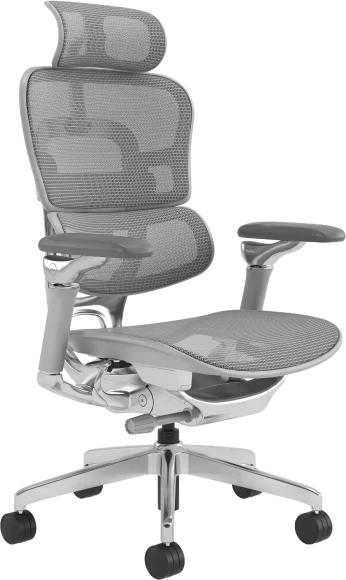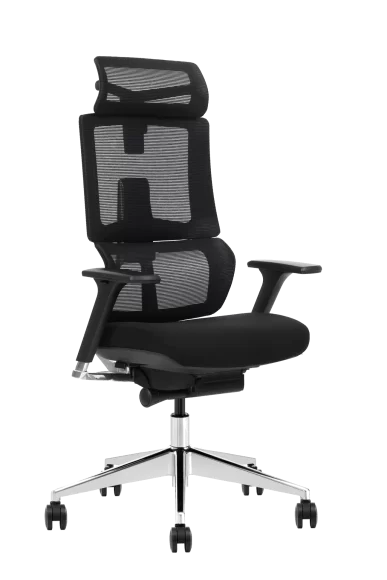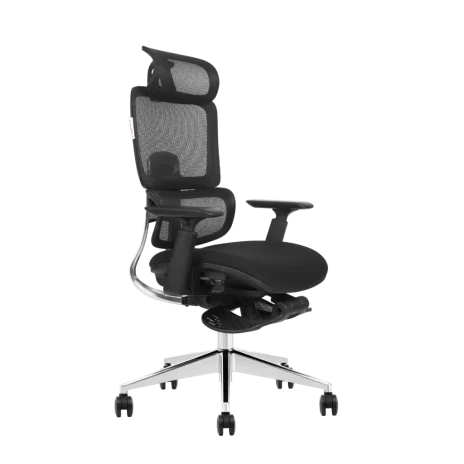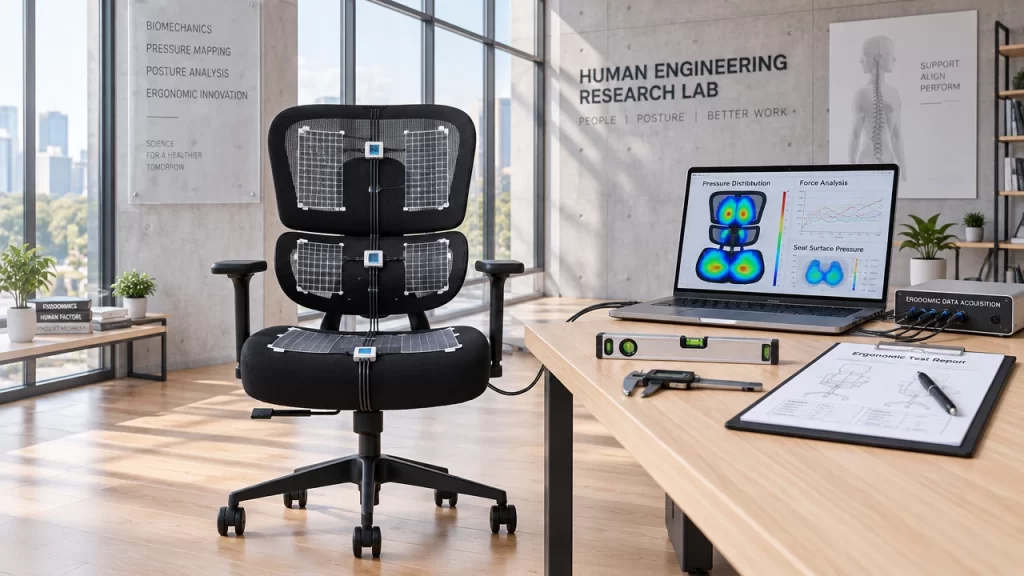
Evaluating an office chair sample means putting it through the same stress a real user will over 2-3 years — not just sitting in it for five minutes and calling it comfortable. That means testing the mechanism under repeated load, checking mesh recovery after sustained pressure, inspecting weld points on the base, and confirming the gas lift holds under the top of its rated weight capacity. Skip this and you’re not evaluating a sample — you’re just admiring a chair.
Why a Five-Minute Sit-Test Tells You Almost Nothing
Most buyers sit in a sample for a few minutes, nod, and move on. That’s the single biggest mistake in bulk chair procurement. A chair can feel perfectly fine for five minutes and still fail within six months of daily 8-hour use.
What actually matters is how the chair behaves after sustained load — not first contact. Mesh that feels taut on day one can stretch permanently after weeks of repeated sitting if the weave density is too low. Foam that feels plush initially can lose 30% of its rebound within a year if the density is under 45kg/m³. None of that shows up in a quick sit-test.
The Minimum Test Window
Keep the sample in your office — not the showroom — for at least two weeks. Rotate it among 3-4 different employees of different heights and weights. Ask them to use it as their actual daily chair, not a novelty. This is the only way to surface issues like armrest height problems or lumbar positioning that only bother certain body types.
Test the Mechanism Like You’ll Use It a Thousand Times
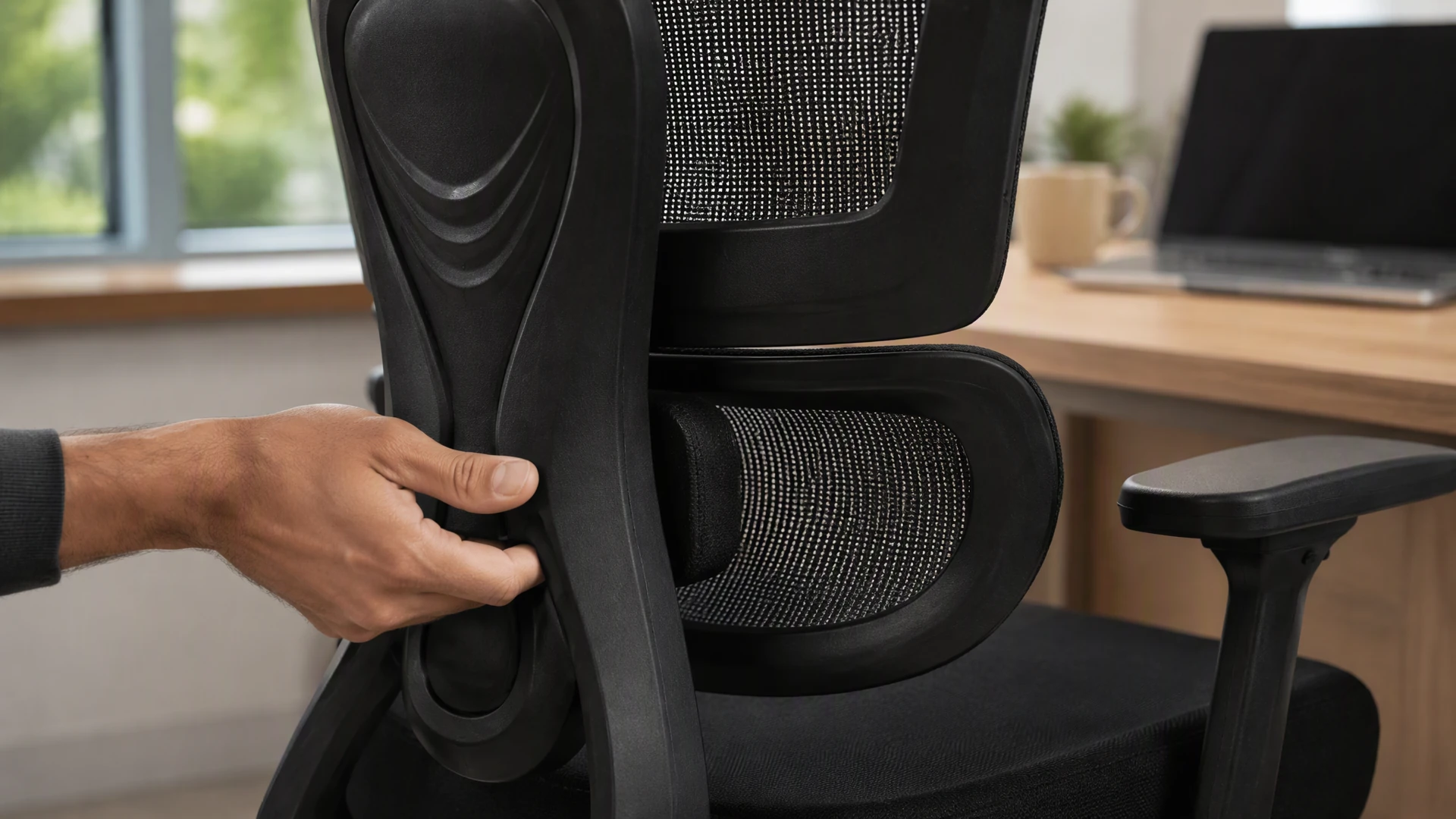
The tilt mechanism is the part that fails first on cheap chairs — and it’s the part most buyers forget to stress-test. Push the backrest to full recline, hold it, and release. Do this 20-30 times in a row. Listen for clicking, grinding, or a sudden drop in resistance. That’s the mechanism telling you its internal spring or locking gear is undersized.
Check every lock position, not just the extremes. A synchro-tilt mechanism should hold firmly at each notch without slipping when someone leans back with their full body weight. If it slips even once during your test, imagine that happening 50 times a day across 200 units — that’s a warranty claim waiting to happen.
For a deeper look at how these mechanisms are built internally, see our breakdown of chair components and structure.
Load-Test the Gas Lift Beyond the Rated Weight
A Class 3 gas lift is rated for roughly 120kg of continuous pressure; a Class 4 for up to 150kg. Here’s the test most importers skip: sit the heaviest person on your team in the sample chair and leave it fully loaded for 30 minutes. Then check if the seat height has sunk even slightly.
Sinking under sustained load — even 5-10mm — means the cylinder seal is substandard. That’s the kind of defect that won’t show up in a quick bounce test but will absolutely surface after three months of daily use across a training room or call center floor.
If your project involves heavier average users or 24-hour shift seating, push suppliers for documentation on weight capacity ratings before you even get to sample stage.
Mesh and Foam: What Recovery Rate Actually Reveals
Press your thumb into the mesh backrest and hold for 10 seconds. Release it. A quality mesh weave should snap back to its original shape within 1-2 seconds. If it stays indented or wavy for longer, the yarn tension or weave pattern is too loose — and it will sag visibly within 12-18 months of daily use.
Same logic applies to foam seats. Sit for 10 minutes, then check the cushion. High-density foam (above 45kg/m³) will show minimal permanent compression. Cheaper foam under 35kg/m³ often shows a visible dent that takes minutes to recover, if it recovers at all.
Real-World Example
A distributor sourcing 300 mesh chairs for a coworking client once approved a sample based on how it felt in the showroom. Six months later, 40% of units showed visible backrest sag — because the sample was tested for comfort, not recovery. That’s a costly lesson in skipping the recovery test. For more on this exact failure mode, see our guide comparing mesh vs. foam durability.
Inspect the Base and Casters Under Real Floor Conditions
Don’t test casters on the showroom’s polished concrete floor if your buyer’s actual environment is carpet, or vice versa. A caster designed for hard floors will roll poorly and wear faster on thick carpet, and a soft carpet caster will scratch and slide on tile or hardwood.
Flip the sample over and inspect the base weld points. Look for clean, consistent welds without excess flux residue or visible gaps. Spin each caster by hand — it should rotate freely with no grinding sound. Then push the loaded chair sideways across the floor type your client actually uses. If it wobbles or one leg lifts slightly, the base isn’t level or the leg lengths are inconsistent — a manufacturing defect that will multiply across a bulk order.
Check Armrests, Headrests, and Adjustment Range Separately
Adjustable parts fail differently than structural ones — usually through worn-out locking mechanisms rather than sudden breakage. Move the armrest height adjustment up and down 15-20 times. It should lock firmly at every notch, not just the top and bottom. Loose or slipping locks after limited cycles predict failure well before the chair’s expected lifespan.
If the sample includes a headrest, adjust both height and angle repeatedly. Check if the tilt angle holds under light pressure, not just when unloaded. This matters more than it seems — a headrest that drifts backward under head pressure will generate complaints fast, especially in high-back chair specs aimed at executive or training room use.
Request Multiple Samples From Different Production Batches
One sample proves the design works. It doesn’t prove the factory can replicate that quality consistently across a 500-unit run. Ask your supplier for 2-3 samples pulled from different production dates or batches, not the same polished demo unit shown at trade shows.
Compare stitching consistency, mesh tension, and mechanism smoothness across the samples. Noticeable variation between units is an early warning sign of loose quality control — a much bigger risk once you’re ordering containers, not pieces. This is also a good moment to revisit your supplier vetting process; our guide on leading office chair manufacturers covers what separates consistent factories from inconsistent ones.
Document Everything Before You Sign Off
Take dated photos and short videos of every test — the tilt cycling, the load test, the recovery test, the caster roll. This documentation becomes your reference point when the bulk shipment arrives. If units don’t match the approved sample, you have proof, not just a feeling that something’s off.
Write a short spec sheet noting exact measurements: seat height range, seat depth, armrest height range, backrest recline angle, and weight rating. Keep this alongside your notes from the chair type selection process so procurement and quality control are working from the same document.