.jpg)
A wobble stool is not a magic posture fix. It is a sitting tool that adds controlled movement, which can reduce static loading and help you stay more alert during desk work. The right one feels stable when you need it and mobile when you want it. The wrong one feels like a constant fight for balance or a chair that never quite matches your desk height.
This guide shows you how to choose the best wobble stool for your setup, then gives clear recommendations by use case so you can buy with confidence.
What the Best Wobble Stool Needs to Do
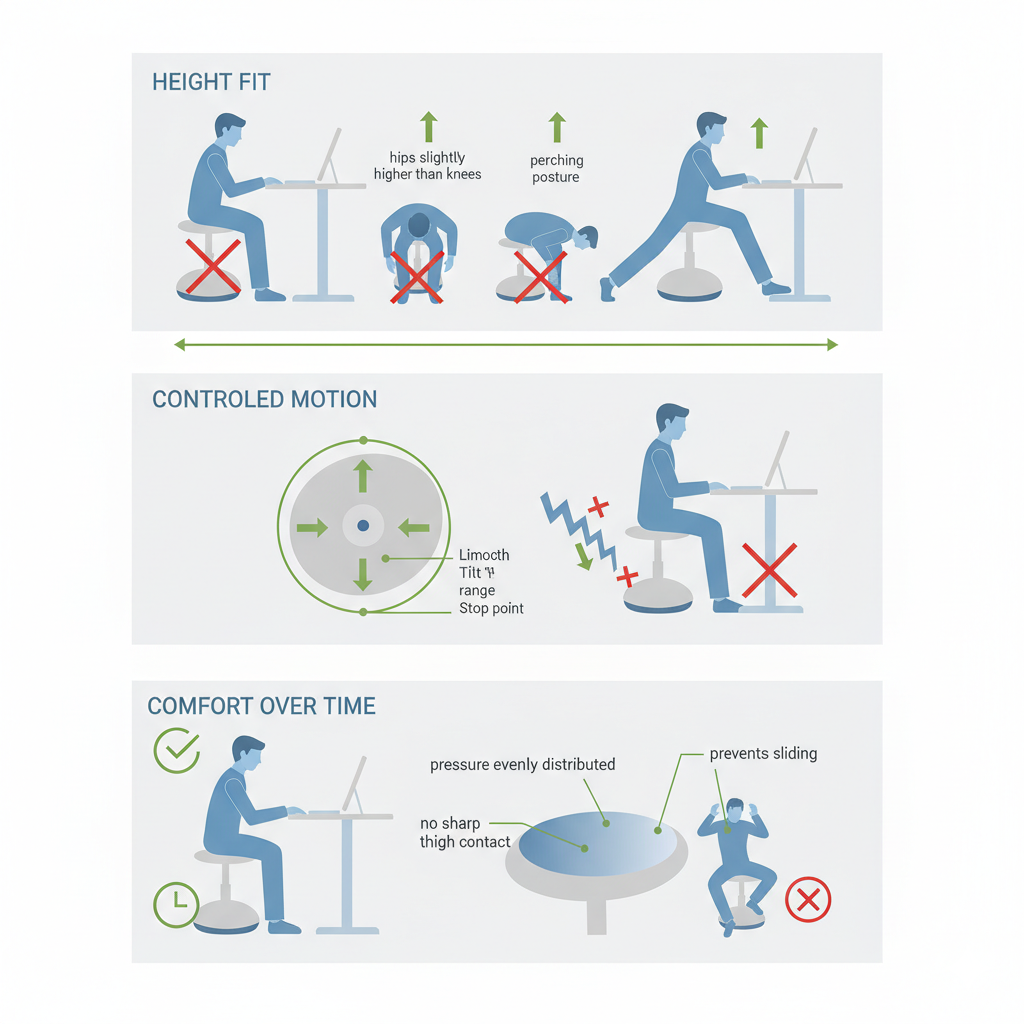
A good wobble stool succeeds on three things: height fit, motion control, and comfort over time.
Height Fit That Matches Your Desk and Body
If the stool height range does not match your desk height, everything else becomes a compromise.
- For standard desks, you need a height range that supports feet flat on the floor with knees near 90 degrees.
- For standing desks, you need enough height to perch with hips slightly higher than knees, without forcing you to point your toes—or choose an adjustable standing desk chair if you prefer a fully supported seat with a backrest at counter height.
- For shared spaces, wider height adjustment is more important than decorative features.
A stool that is too tall leads to dangling feet and thigh pressure. A stool that is too low can encourage a rounded back and neck strain.
Motion That Is Controlled, Not Chaotic
The best wobble stool lets you move without feeling unstable.
- Smooth multidirectional tilt is suitable for most desk work.
- A defined stop or limited tilt can be better if you want more stability.
- Motion should be quiet and predictable, not springy or jerky.
If you constantly brace with your legs, you are not getting the intended benefit. You are simply creating more tension.
Comfort That Holds Up After the First 10 Minutes
Short demonstrations can be misleading. What matters is whether you can work on the stool during real sitting sessions.
- The seat shape should distribute pressure rather than create hot spots.
- Edge design matters because hard edges can press into the thighs.
- The surface material should reduce sliding without feeling sticky.
- Some people need mild cushioning, while others prefer a firmer seat that helps keep the pelvis neutral.
The Key Features That Separate a Good Wobble Stool From a Bad One
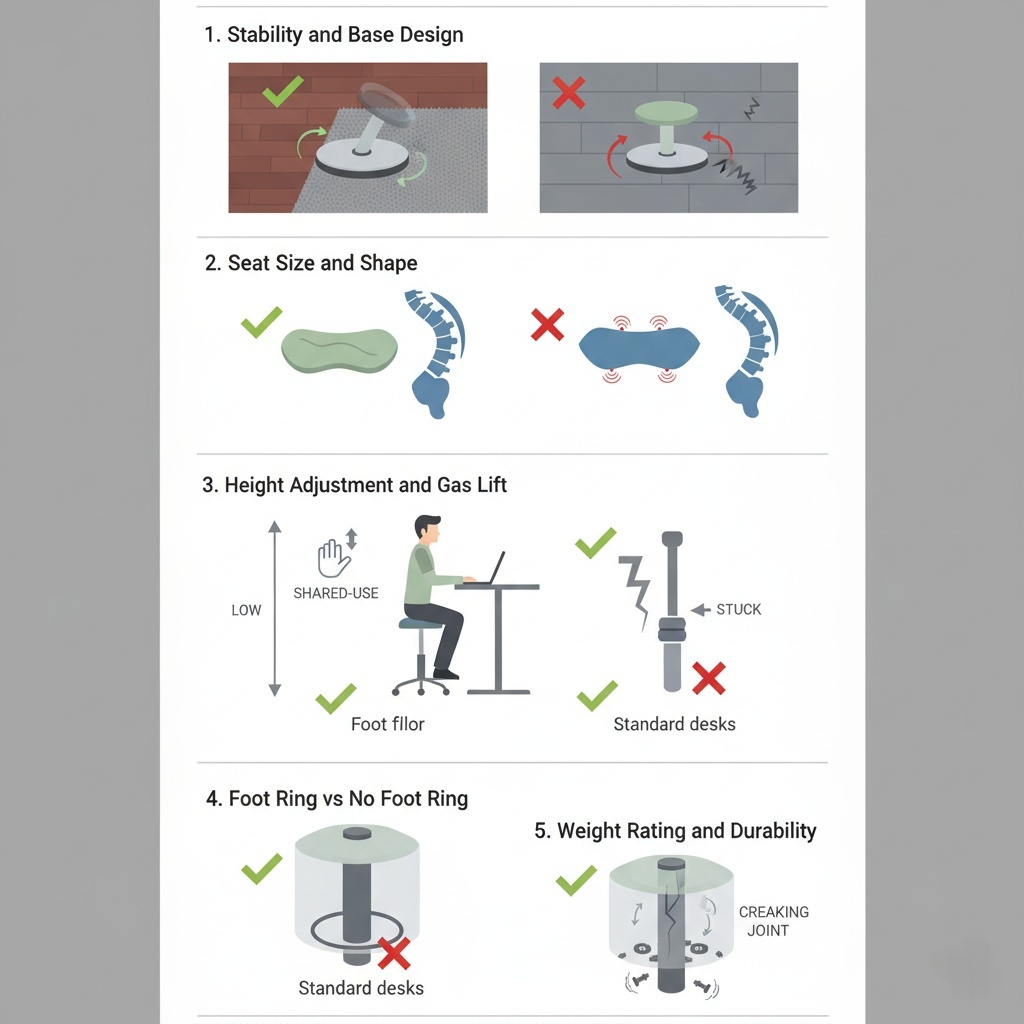
Use these factors as your buying checklist.
Stability and Base Design
The base determines how safe the stool feels and how well it works on your floor.
- A wider base usually feels more stable.
- Non-slip contact is essential on smooth floors.
- On carpet, choose a base that does not sink or snag.
If you plan to shift around while typing, stability matters more than maximum wobble range.
Seat Size and Shape
Seat shape changes how your hips and spine align.
- A gently contoured seat can help keep the pelvis in a more neutral position.
- A very small seat can feel unstable or create pressure points.
- A larger seat can be more comfortable but may reduce freedom of movement.
If you have a larger frame or sit for longer periods, prioritize a supportive seat shape.
Height Adjustment and the Right Gas Lift
Height range is one of the most common reasons users are dissatisfied with a wobble stool.
- Check the minimum seat height first if you are shorter.
- Check the maximum seat height first if you are using a standing desk.
- A smooth, reliable lift matters more than decorative design.
If the stool will be shared, choose a model with a clear height range and easy adjustment.
Foot Ring or No Foot Ring
A foot ring is not always optional. Whether you need one depends on the desk and seat height.
- For taller sitting positions, a foot ring can reduce ankle and thigh strain.
- For standard desk height, many users prefer keeping their feet on the floor.
If your feet are not supported, your core and legs may fatigue quickly.
Weight Rating and Durability
A wobble stool experiences constant micro-movements that place repeated stress on joints and fasteners.
- Look for solid construction and tight component tolerances.
- Avoid designs that wobble at the center post or already feel loose.
- Check that the weight rating suits the intended user and expected frequency of use.
Best Wobble Stool for Adults
The best wobble stool for adults should match the user’s body height and desk setup, provide controlled movement, and remain stable during typing and focused work. For most adults, a suitable height range and secure base matter more than maximum wobble or decorative features.
When comparing wobble stools for adults, prioritize the following:
- Suitable seat height: Your feet should remain supported without excessive pressure beneath the thighs.
- Controlled movement: The stool should allow small posture changes without forcing you to constantly brace for balance.
- Stable base: The base should remain secure on the intended floor surface during normal movement.
- Appropriate weight capacity: The seat, gas lift, center post and base should support the intended user and expected frequency of use.
- Comfortable seat shape: The seat and edge design should distribute pressure without creating discomfort during normal work sessions.
Adults using a wobble stool for desk work should normally treat it as an alternative seating option rather than an all-day replacement for a supportive office chair. Start with shorter sessions and increase usage only when the stool remains comfortable, stable and easy to control.
Best Wobble Stool for Office Work at a Standard Desk
Choose a stool that is stable, quiet, and comfortable for typing and mouse work.
What to prioritize
- Moderate wobble range
- Stable base for your floor type
- Supportive seat and comfortable edge design
- Easy height adjustment for quick changes
Who this is best for
- People who sit in 30- to 90-minute blocks
- People who want light movement without distraction
- People who alternate between a chair and stool during the day
A helpful setup tip
Use the wobble stool as a rotation tool, not an all-day chair. Many people do best with 20 to 60 minutes at a time before switching back to a supportive chair.
Best Wobble Stool for a Standing Desk and Perching
Perching is different from sitting. You need enough height and the right kind of support.
What to prioritize
- A height range that matches your standing desk
- A foot ring or another reliable source of foot support
- A seat that does not force you to slide forward
- Controlled wobble that does not distract from focused work
Who this is best for
- People who stand for much of the day and want seated breaks
- People who want a more open hip angle and less static standing
- People who complete focused work at a standing desk
A helpful setup tip
Set the stool so your hips are slightly higher than your knees. If you feel pressure at the front of the thighs, lower the stool or choose a model with a softer seat edge.
Best Wobble Stool for Kids and Classrooms
For children, safety and appropriate height matter more than adult-style active sitting claims.
What to prioritize
- Correct height for child-sized desks
- A stable base that resists tipping
- Easy-to-clean and durable surfaces
- Controlled motion rather than extreme wobble
Who this is best for
- Children who benefit from subtle movement during seated tasks
- Classrooms where stools are shared and moved frequently
- Home-learning setups where space is limited
A helpful setup tip
If a child has to hook their feet around the base to feel stable, the stool is too tall or too unstable for the current setup.
Best Wobble Stool for Small Spaces and Home Offices
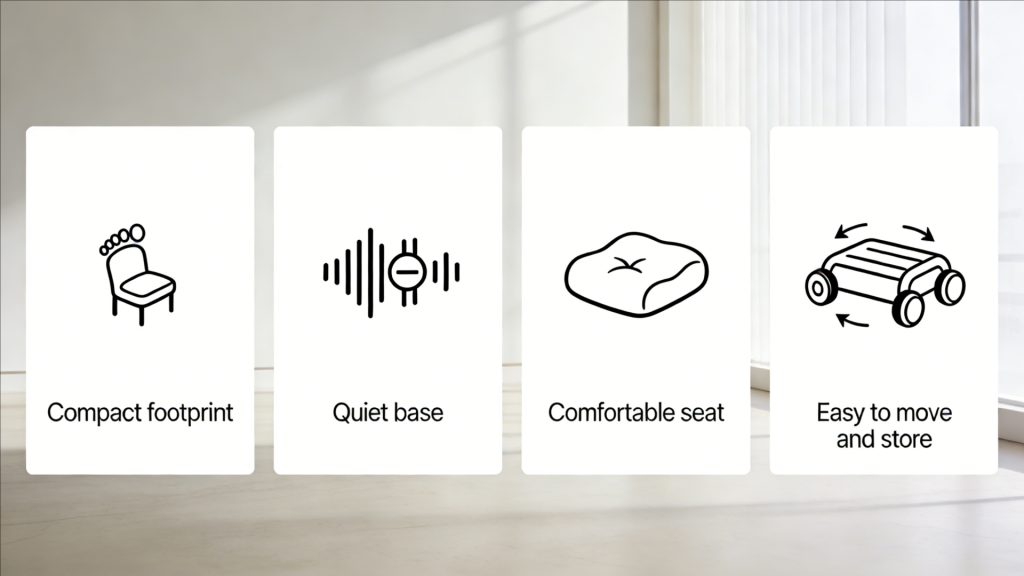
If your desk area is tight, the best choice is often the simplest stool that fits the available space.
What to prioritize
- Compact footprint
- Quiet base that does not scuff floors
- A seat that remains comfortable without bulky padding
- Easy movement and storage
Who this is best for
- Small apartments
- Multi-purpose rooms
- People who want an extra seat that also functions as active seating
A helpful setup tip
Measure the clearance under your desk, including the desk apron. Some stools look compact but need more space to tilt freely.
Best Wobble Stool for Active Sitting and Core Engagement
If your main goal is movement, choose a stool that encourages motion without forcing you into constant instability.
What to prioritize
- Smooth multidirectional tilt
- Enough wobble range to shift weight comfortably
- A seat surface that helps keep you centered
- A base that stays planted during movement
Who this is best for
- People who feel stiff after prolonged sitting
- People who want frequent micro-movement while working
- People who already have a supportive chair and want another movement option
A helpful setup tip
Active sitting works best when you remain relaxed. If you are gripping with your toes or clenching your hips, reduce the wobble range or choose a more stable design.
Wobble Stool vs. Balance Ball vs. Kneeling Chair
If you are deciding between active seating options, match the tool to the task.
Wobble Stool
A wobble stool is generally best for desk work that requires focus and fine motor control.
- Advantages: Controlled movement, compact size, easy transitions, and compatibility with typing tasks.
- Limitations: It can create fatigue if used continuously throughout the day.
Balance Ball
A balance ball is usually more suitable for short movement breaks than long periods of focused desk work.
- Advantages: Allows larger movements and is available at many price levels.
- Limitations: Offers less stability and can make neutral typing posture harder to maintain.
Kneeling Chair
A kneeling chair may suit users who want a more open hip angle without multidirectional wobble.
- Advantages: Stable design and a more open hip position that may reduce slouching for some users.
- Limitations: It may place pressure on the knees and shins and provides less movement variety.
If you want an active seating option that fits practical desk work, a wobble stool is usually the most versatile choice.
Common Mistakes When Buying a Wobble Stool
Buying Based on Appearance Instead of Height Range
A visually appealing stool that does not fit your desk or body can quickly become unused furniture.
Confusing Wobble With Instability
More movement is not always better. If the stool makes it difficult to focus, you are unlikely to keep using it.
Ignoring Your Floor Type
Hard floors require reliable grip, while carpet requires a base that does not sink, catch or drag.
Expecting It to Replace a Supportive Chair All Day
Most people do better when they use a wobble stool as part of a seating rotation rather than as their only chair.
Skipping Comfort Testing
If the seat edge creates pressure beneath your thighs, extended use is unlikely to become comfortable simply through adaptation.
How to Set Up Your Wobble Stool for Immediate Comfort
- Set the height so your feet are supported and your knees remain comfortable.
- Sit slightly forward on the seat, then allow your hips to settle into a neutral position.
- Keep movement small at first. Use subtle weight shifts rather than continuous rocking.
- Use a timer during the first week. Start with 15 to 30 minutes, then increase the duration if the stool remains comfortable.
- If you feel strain, reduce the wobble range, adjust the height, or switch to a more stable chair.
If you have an existing injury or pain that worsens with active sitting, consider seeking professional guidance before increasing your usage time.
Best Wobble Stool Buying Decision in 60 Seconds
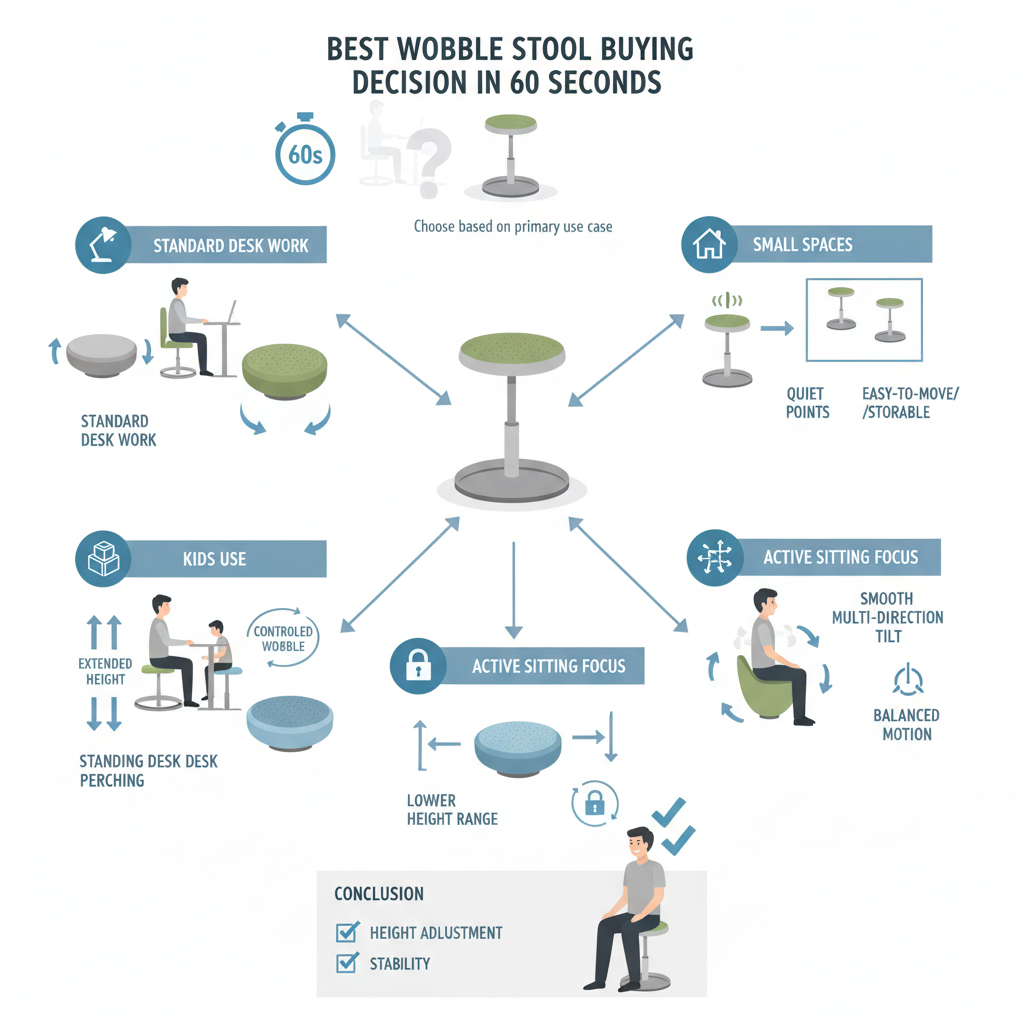
Choose based on your primary use case.
- Standard desk work: Stable base, moderate wobble, and a comfortable seat
- Standing desk perching: Higher adjustment range, foot support, and controlled wobble
- Children and classrooms: Correct height, safety-focused stability, and durable surfaces
- Small spaces: Compact footprint, quiet base, and easy storage
- Active sitting: Smooth tilt, suitable wobble range, and a secure seat feel
If you get the usable height range and base stability right, you are more likely to be satisfied with the purchase.
Commercial buyers can compare available sizes, finishes and configurations in VASEAT’s wobble stool range for office, education and project-based seating requirements.
Conclusion
The best wobble stool is the one that fits your desk height, supports your feet, and provides controlled movement without turning work into a constant balance exercise. Start with the usable height range and base stability, then compare seat comfort, weight capacity, and wobble behavior based on your actual daily tasks.
For most adults, a wobble stool works best as part of a seating rotation rather than an all-day replacement for an ergonomic office chair. Begin with short sessions, keep your movement relaxed, and switch seating positions when you notice fatigue or discomfort.
For commercial offices, classrooms, and furniture projects, contact VASEAT to discuss dimensions, finishes, order quantities, and customization requirements.