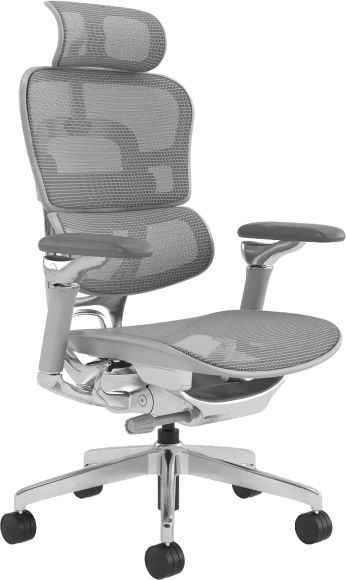
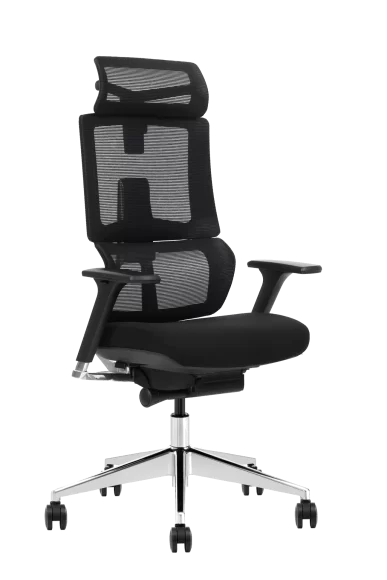
Seat depth is one of the fastest ways to make a chair or sofa feel instantly right or instantly wrong. When it is off, you usually feel it in three places first: the back of your knees, your lower back, and your ability to keep your feet stable on the floor. When it is right, you stop thinking about the seat and simply sit comfortably for longer.
This guide explains what seat depth really does to your body, how shallow and deep seats change posture, and how to confirm fit in under a minute.
What Seat Depth Actually Means When You Sit Down
Seat depth is the usable distance from the front edge of the seat to the back support area, measured along the sitting surface. On paper it is a number. In real life it is the space that decides whether you can sit back with support without compressing the back of your knees.
When you sit down and slide back to use the backrest, seat depth controls:
- How much of your thigh is supported
- Whether the seat edge presses into the back of your knees
- Whether you can keep your feet stable on the floor while staying supported
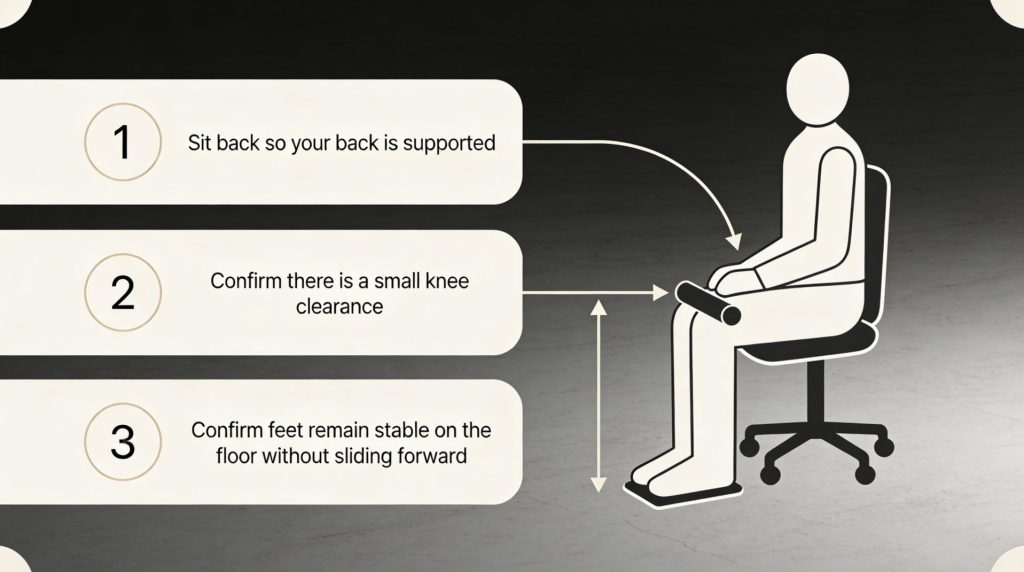
A practical fit check is simple: sit back so your back is supported, then keep a small clearance between the seat edge and the back of your knees. If there is no clearance, the seat is effectively too deep for that setup. If the clearance is excessive and your thighs feel under-supported, the seat may be too shallow.
Shallow vs Deep Seat Depth: What Changes in the Body
People often describe shallow seats as upright and deep seats as lounge-like. The better way to compare them is to look at what changes in your body mechanics.
Shallow seat depth
Shallow seats make it easier to:
- Keep feet flat and stable
- Maintain backrest contact without knee pressure
- Sit upright for work, meetings, and frequent posture shifts
The tradeoff is that if a seat is too shallow, it can reduce thigh support and concentrate pressure on a smaller area, which may feel tiring over longer sessions.
Deep seat depth
Deep seats can feel comfortable because they support more of the thigh, but only if your leg length matches the depth.
Deep seats tend to:
- Encourage relaxed, reclined sitting
- Support lounging positions and casual posture changes
- Feel more “sink-in” for leisure use
The common failure mode is this: if a seat is too deep, you must choose between knee comfort and back support. Many people solve it by perching forward, which reduces lumbar support and increases the likelihood of slouching or leaning.
Seat Depth and User Height: Why One Size Never Works
Seat depth does not truly map to height. It maps to leg length from the back of the pelvis to the back of the knee, plus your sitting style.
Two people with the same height can have different proportions. Add footwear, desk height, and whether a person sits upright or reclines, and “recommended depths by height” becomes unreliable.
That is why a fit-based approach works better:
- Sit back so your back is supported
- Confirm there is a small knee clearance
- Confirm feet remain stable on the floor without sliding forward
If the seat passes those checks, it will usually feel comfortable regardless of whether your height falls into a generic chart.
Fixed Seat Depth vs Adjustable Seat Depth
Fixed seat depth can be perfectly fine when the seating is chosen for a predictable user group and a consistent use case — for example, specifying an adjustable standing desk chair for a row of counter-height cashier stations where users share a defined height range. Many sofas and many standard chairs work well as fixed designs when the depth is matched correctly.
Adjustable seat depth matters when:
- Multiple users share the same chairs
- People sit for long sessions
- The chair is meant for upright work rather than reclining
- Back support is a key comfort feature that only works when you sit back
If you are buying for shared spaces, adjustable seat depth reduces the risk of mismatch and improves the chance that more people can sit back comfortably without knee pressure.
Choosing the Right Seat Depth by Use Case
Seat depth should match what people are doing while seated.
Long-duration desk work
Priorities:
- Back support must be usable for hours
- Feet must stay stable
- Knee pressure must be avoided
What usually works best is a moderate depth that lets you sit back with a small knee clearance. If chairs will be shared, adjustable depth is a practical advantage.
Meeting rooms and training rooms
Priorities:
- Comfortable upright sitting
- Easy entry and exit
- Works for different body types
These spaces typically benefit from a slightly shallower or moderate depth that supports upright posture without forcing people to perch forward.
Reception and waiting areas
Priorities:
- Broad comfort range
- Short to medium stays
- Durable, easy maintenance
A medium depth tends to work best. Avoid extreme depth unless the seating is intentionally lounge-oriented and you can provide back cushions without compromising stability.
Lounging and home relaxation
Priorities:
- Relaxed sitting
- Flexible posture
- Comfort without strict posture demands
Deeper seats can work well for lounging, especially when users can still sit back without knee compression. If the seat is intentionally deep and users are shorter, a supportive back cushion can improve comfort by reducing effective depth.
How to Check If a Seat Depth Fits You
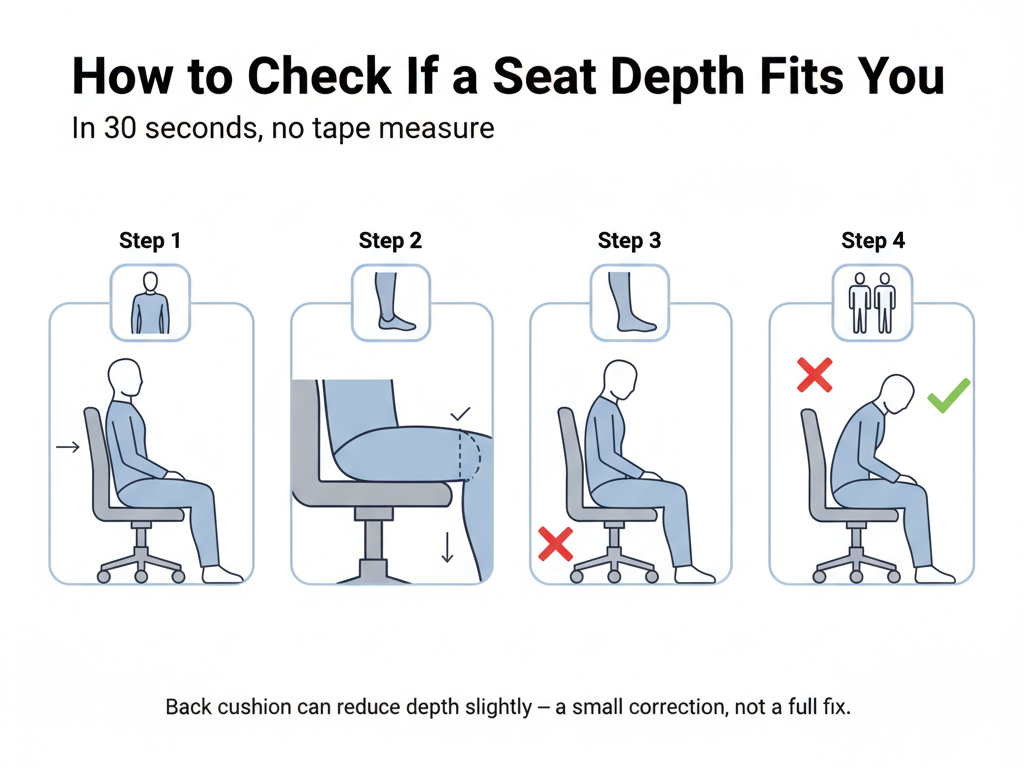
You do not need a tape measure.
- Sit all the way back so your back is supported.
- Check the space behind your knees. You want a small clearance, not contact pressure.
- Check your feet. They should rest stable on the floor without you sliding forward.
- Notice what your body is forced to do. If you must perch forward to avoid knee pressure, the seat is too deep for this setup. If you cannot get enough thigh support and feel like you are sliding off the front, the seat may be too shallow.
If the seat is slightly too deep and not adjustable, a supportive back cushion can reduce the effective depth. Treat this as a small correction, not a full rescue.
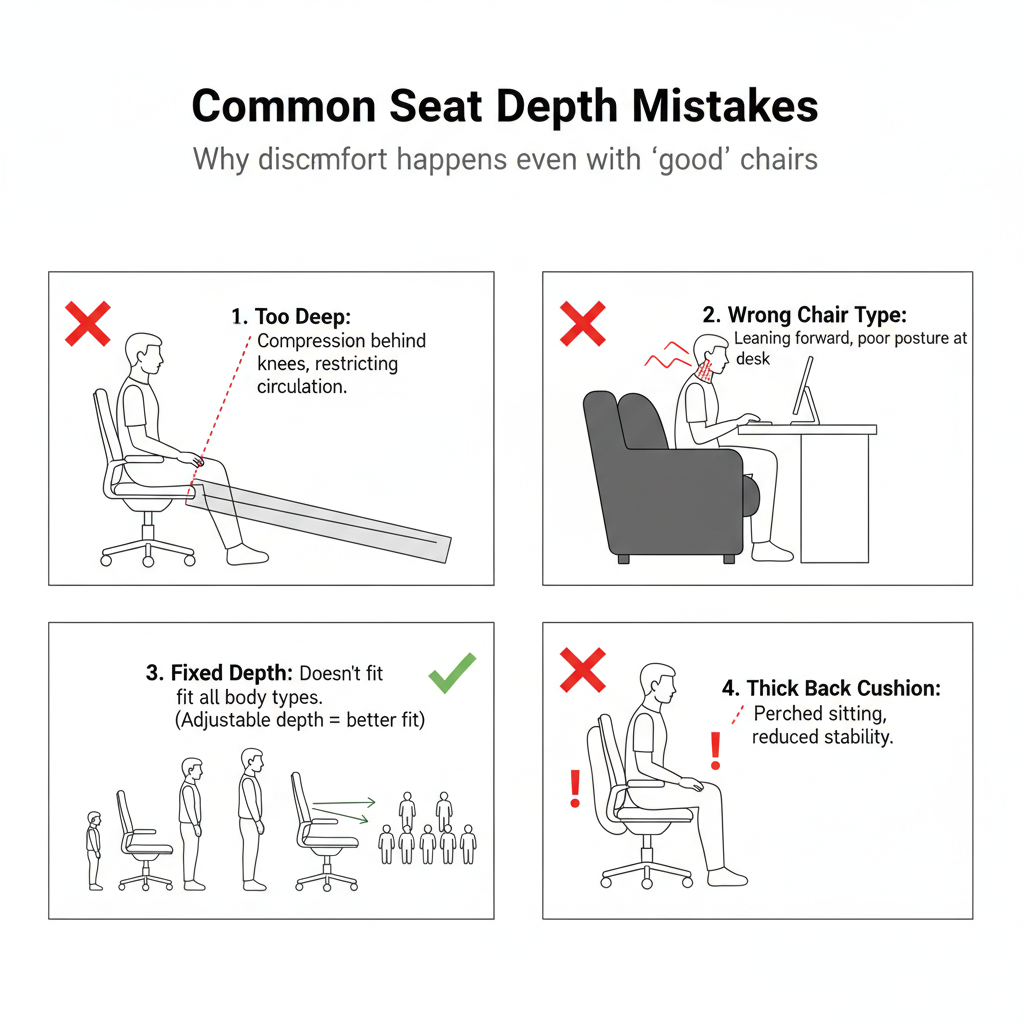
Common Seat Depth Mistakes That Cause Discomfort
Assuming deeper always means more comfortable
Deep can be comfortable only when you can still sit back with support without compressing the back of your knees.
Using lounge logic to choose task seating
A lounge-friendly depth can be a problem at a desk. If you cannot sit back comfortably, your shoulders and neck often compensate as you lean forward.
Ignoring shared use
If many people will use the same chair, fixed depth is a gamble. Adjustable depth improves fit across different body types.
Treating cushions as a default fix
Cushions can help correct a small mismatch, but they can also change posture, reduce stability, and create a perched position. Use them deliberately.
Conclusion
Seat depth is right when it lets you sit back with support while keeping the back of your knees pressure-free. If you feel pressure behind the knees, the seat is effectively too deep for that setup. If your thighs feel under-supported and you constantly shift forward, the seat may be too shallow.
Choose depth based on how the seat will be used. Work and meetings usually favor stable upright sitting and reliable back contact, while lounging can benefit from deeper, more relaxed seating. If a chair will be shared by many users, Adjustable seat depth is often the most reliable way to reduce mismatch and improve comfort for more people — and pairing the right seat depth with an office chair with footrest adds lower-leg support that matters most when the backrest is reclined.