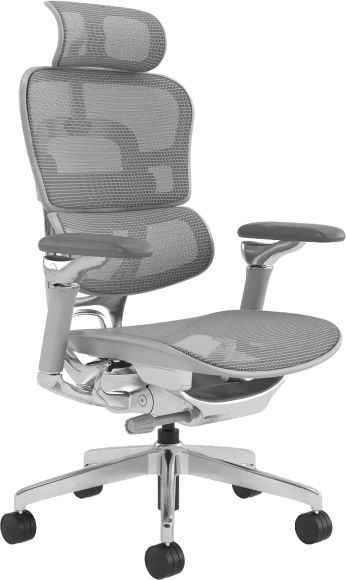
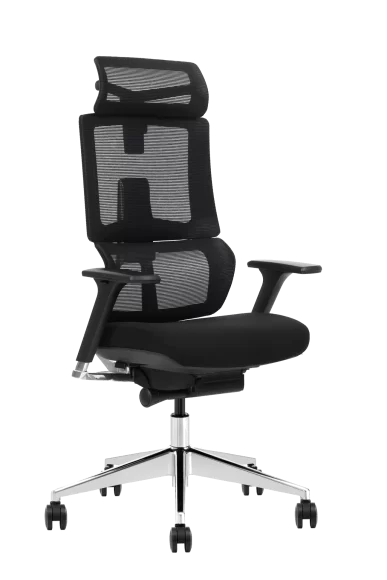
Conference chair breaking happens because organizations buy residential-grade seating for commercial-grade use, ignore weight capacity ratings, and skip maintenance entirely. The average conference chair endures 8–15 different users per day, constant swiveling, leaning back at extreme angles, and the occasional person who drops their full body weight into the seat — yet most buyers spec chairs as if they’ll sit in a quiet home office.
Fix five specific mistakes, and your conference chairs will last three to five times longer.
Mistake 1: Buying Residential-Grade Gas Cylinders for Commercial Traffic
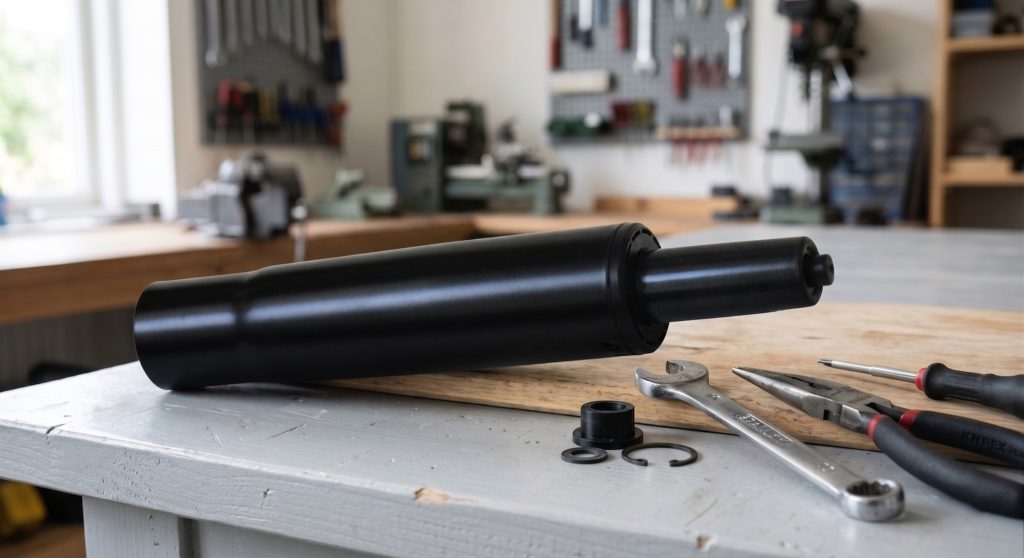
The gas cylinder is the single most common failure point in conference room chairs. It’s also the component buyers pay the least attention to. Here’s the problem: a Class 2 gas cylinder is designed for a single user sitting roughly 6–8 hours a day. Conference rooms don’t work that way. A chair in a busy meeting room might get sat in, stood up from, and height-adjusted 30–50 times daily — by people of wildly different weights.
What Actually Happens Inside the Cylinder
Every time someone sits down hard, the internal piston seal absorbs impact. Cheap cylinders use thinner seals and lower-grade nitrogen charges. After a few thousand cycles, the seal degrades, and the chair slowly sinks under load. You’ve seen it: someone sits down and the chair drifts to its lowest position over 30 seconds. That’s a dead cylinder.
The Fix
Specify Class 3 or Class 4 gas cylinders that meet BIFMA X5.1 testing standards. These are rated for 100,000+ cycles minimum. Yes, they cost more per unit — typically $5–$12 more at wholesale — but replacing an entire chair because the cylinder failed costs 10x that. When evaluating the best conference room chairs, always ask the manufacturer which gas cylinder class they use. If they can’t answer, walk away.
Mistake 2: Ignoring the Difference Between Static and Dynamic Weight Ratings
A chair rated for 120 kg doesn’t actually support 120 kg the way you think it does. Most manufacturers list static weight capacity — the load the chair can bear when someone sits perfectly still. Dynamic weight capacity, which accounts for shifting, leaning, bouncing, and dropping into the seat, is typically 30–40% lower.
Why This Matters in Conference Rooms Specifically
Conference chairs endure more dynamic stress than almost any other seating type. People lean back dramatically during long meetings. They tilt on two legs (yes, adults do this too). They push off the table edge with force. A 90 kg person dropping into a chair from standing height can generate a momentary force exceeding 200 kg on the base and casters.
For instance, a coworking space operator in Southeast Asia once told us they were replacing 15–20 conference chairs per quarter. Their chairs were rated at 100 kg static. The problem wasn’t that their members were heavy — the average user weighed around 75 kg. The problem was the dynamic loading from constant turnover: people sitting, standing, dragging chairs across the room, and leaning back aggressively. After switching to chairs rated at 150 kg static with reinforced aluminum bases, their replacement rate dropped to 2–3 chairs per quarter.
The Rule of Thumb
For conference rooms, buy chairs rated at least 30% above the maximum expected user weight. If your heaviest typical user weighs 100 kg, your chairs should be rated for 130 kg minimum. Understanding the parts of a chair and how they interact under load makes this decision much easier.

Mistake 3: Choosing the Wrong Base Material
The five-star base is the structural foundation of every swivel conference chair. It’s also where manufacturers cut costs most aggressively. Cheap nylon bases look identical to reinforced ones in photos and even in person — until they crack under stress six months later.
Nylon vs. Reinforced Nylon vs. Aluminum
Standard nylon (PA6) bases are fine for light-duty home use. For conference rooms, you need either glass-fiber reinforced nylon (PA6+GF30, which contains 30% glass fiber) or die-cast aluminum. The difference in material cost at manufacturing scale is surprisingly small — often just $3–$6 per base — but the durability gap is enormous.
Aluminum bases virtually never crack. They can deform under extreme abuse, but they fail gradually rather than catastrophically. A nylon base, by contrast, can snap without warning, potentially injuring the user. In a conference room where chairs are constantly dragged, bumped into table legs, and rolled over cable protectors, aluminum is the obvious choice.
How to Tell What You’re Getting
Weight is the quickest indicator. A standard nylon base weighs around 1.2–1.5 kg. A reinforced nylon base weighs 1.8–2.2 kg. An aluminum base weighs 2.5–3.5 kg. If the manufacturer won’t disclose the material composition, pick up the base. You’ll know immediately.
Mistake 4: Using the Wrong Casters for Your Flooring
Caster failure is the second most common conference chair breakdown after gas cylinder death. And it’s almost always caused by a mismatch between caster type and flooring material.
Hard Casters on Hard Floors: A Recipe for Cracking
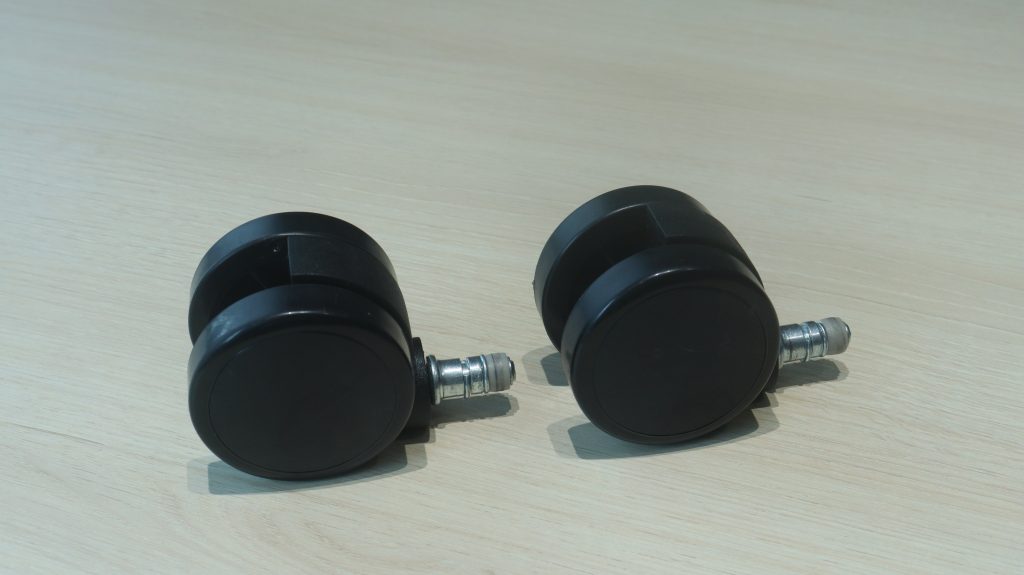
Standard hard nylon casters are designed for carpet. Roll them on tile, hardwood, laminate, or polished concrete — all common conference room floors — and two things happen. First, they slide uncontrollably, causing users to grip the table and torque the chair base at odd angles. Second, the hard plastic develops flat spots from constant rolling on hard surfaces, eventually cracking or seizing.
The Right Caster for Each Surface
- Carpet: Hard nylon or hard polyurethane casters (standard)
- Hardwood / laminate / tile: Soft polyurethane rubber casters (often called “soft-wheel” or “rollerblade-style” casters)
- Mixed flooring: Dual-durometer casters with a softer outer ring
Soft polyurethane casters cost roughly $1–$2 more per set of five at wholesale. They roll smoothly on hard floors, won’t scratch surfaces, and last 3–4x longer than hard nylon on the wrong surface. This is one of the cheapest upgrades you can make with the biggest durability payoff.
Mistake 5: Skipping Armrest Reinforcement on Chairs People Lean On
Conference room chairs take more armrest abuse than any other chair category. People use armrests to push themselves up from the table. They lean their full body weight on one arm while reaching across the table. They hook their feet on the armrest of the neighboring chair. And in stacking conference chairs, armrests are the first contact point when chairs are piled or nested.
The Weak Link: Armrest Mounting Points
Most armrest failures aren’t the armrest pad itself — it’s the mounting bracket where the arm connects to the seat shell or frame. Budget chairs use two small screws into particle board or thin plywood. Under repeated lateral force, those screws strip out. The armrest wobbles, then breaks free entirely.
What to Look For
Quality conference chairs use steel mounting plates with four or more through-bolts, or they integrate the armrest support directly into a steel or aluminum frame. If you’re evaluating chairs and can wiggle the armrest laterally with moderate hand pressure, that chair won’t survive six months of conference room use.
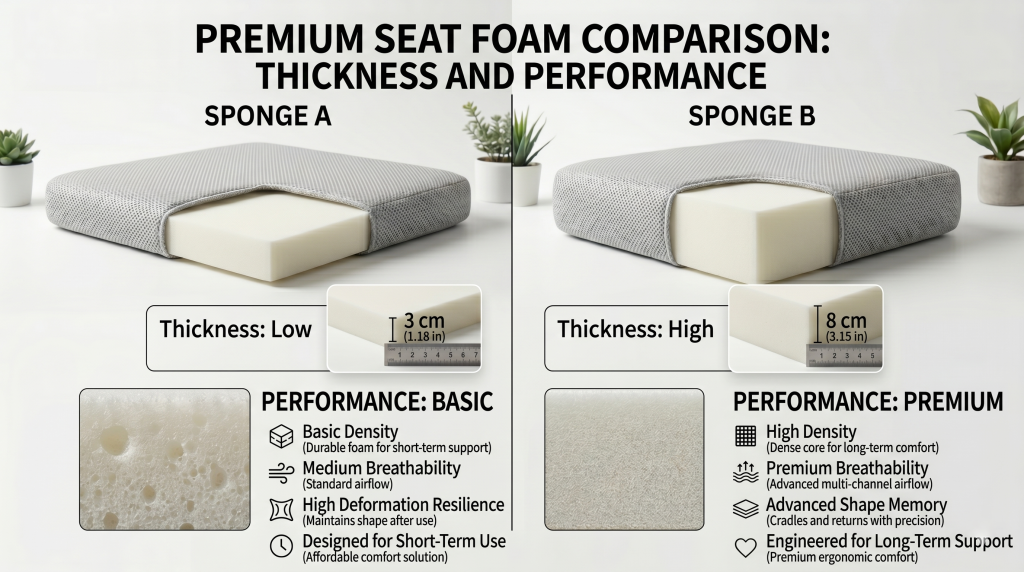
Mistake 6: Neglecting the Seat Foam Density
A conference chair that “breaks” doesn’t always mean a structural failure. Sometimes the chair is technically intact but completely unusable because the seat foam has compressed into a flat, uncomfortable pancake. In a corporate setting, that chair gets tossed in a storage closet and replaced — functionally, it broke.
Foam Density Numbers That Actually Matter
Seat foam is measured in kg/m³. Here’s the spectrum:
- Below 30 kg/m³: Cheap foam that compresses permanently within 6–12 months of daily use
- 30–45 kg/m³: Adequate for light-duty use (home offices, occasional seating)
- 45–55 kg/m³: Commercial-grade — appropriate for conference rooms
- 55+ kg/m³: High-density, used in 24/7 seating and heavy-use environments
For conference rooms, 45 kg/m³ is the minimum. Anything below that will show visible compression marks within a year. Cold-cure molded foam holds its shape better than cut foam of the same density because the cell structure is more uniform. Ask your supplier which process they use.
The Mesh Alternative
Mesh-seat conference chairs sidestep the foam degradation problem entirely. High-quality elastomeric mesh maintains consistent tension for years without sagging. The trade-off is a higher upfront cost and a different aesthetic. For organizations that want chairs to look pristine after five years, mesh is worth serious consideration. Explore the differences in chair types in our guide to choosing types of office chairs to see where mesh fits your needs.
Mistake 7: Zero Maintenance Protocol
Here’s a statistic that surprises most facilities managers: a simple quarterly maintenance check can extend conference chair lifespan by 40–60%. Yet fewer than 10% of organizations have any chair maintenance schedule at all.
The 15-Minute Quarterly Check
This isn’t complicated. It takes one person roughly 15 minutes per 10 chairs:
- Tighten all visible bolts: Armrest mounts, base-to-mechanism bolts, and backrest connections loosen over time. A quick pass with an Allen key or socket wrench prevents wobble from becoming a crack.
- Inspect casters: Remove each caster and clear wrapped hair, thread, and debris from the axle. A clogged caster creates drag that stresses the base unevenly.
- Test the gas cylinder: Sit in the chair and adjust the height. If it sinks more than 10 mm under load over 30 seconds, the cylinder is failing. Replace it proactively before it dies completely.
- Check the tilt mechanism: Engage and release the tilt lock. If it slips or makes grinding noises, the mechanism needs lubrication or replacement.
A Real-World Example
A mid-sized accounting firm with four conference rooms (32 chairs total) implemented a quarterly maintenance schedule after burning through two full sets of chairs in three years. After 18 months on the new protocol, they had replaced zero chairs. Their facilities coordinator estimated the maintenance time cost at roughly 2 hours per quarter — versus $8,000+ per year in replacement chairs previously.
Mistake 8: Specifying Style Over Structure
This is the mistake nobody wants to admit making. The design team picks a sleek, minimalist conference chair because it photographs beautifully for the company website. Six months later, the thin chrome legs are bending, the slim-profile seats are bottoming out, and the elegant cantilever frames are developing stress fractures.
Aesthetic Chairs Can Be Durable — But You Have to Ask the Right Questions
There’s nothing wrong with wanting conference chairs that look good. The mistake is treating aesthetics as the primary filter and durability as an afterthought. Before falling in love with a design, verify these three things:
- Does it carry a BIFMA or EN 1335 certification? These standards test real-world durability through tens of thousands of loading cycles. A beautiful chair without certification is a gamble.
- What’s the frame material and wall thickness? Thin-wall steel tubing (under 1.5 mm) bends. Thicker-wall tubing (2.0 mm+) or solid rod doesn’t.
- Is the upholstery commercial-grade? Residential fabrics rated below 25,000 Martindale rubs will pill and wear through quickly. Conference chairs need 40,000+ Martindale for fabric, or commercial-grade vinyl/leather.
When choosing between high-back and mid-back designs for your conference room, the structural considerations matter as much as the look. Our comparison of high back vs mid back chairs breaks down the practical differences.
How to Evaluate Conference Chair Durability Before You Buy
Knowing what breaks is half the battle. The other half is knowing how to test before committing to a purchase order for 50 or 100 chairs. Here’s a practical evaluation checklist:
The Five-Point Physical Test
- The Drop Test: Sit down hard from a standing position 10 times. Listen for creaks, pops, or metal-on-metal sounds. Check if the gas cylinder holds height after each drop.
- The Lean Test: Lean back as far as the mechanism allows, repeatedly, with force. Does the backrest feel solid, or does it flex with a plastic-creak sound?
- The Armrest Torque Test: Grip one armrest and push it laterally (side to side). Any movement beyond 2–3 mm indicates weak mounting.
- The Roll Test: Roll the chair across the intended floor surface for 30 seconds. Does it track straight? Do the casters spin freely? Any clicking or catching?
- The Lift Test: Pick the chair up by one armrest. A well-built chair holds together. A poorly built one creaks, flexes visibly, or has components that shift.
Request Test Data
Reputable manufacturers will provide BIFMA or EN test reports showing cycle counts for gas cylinders, bases, mechanisms, and casters. If a supplier can’t produce this documentation, that tells you everything you need to know about their quality control.
Stop Replacing — Start Specifying Correctly
Every conference chair that breaks prematurely is a purchasing mistake, not bad luck. The pattern is almost always the same: someone chose the cheapest option that looked acceptable, ignored the mechanical specifications, and skipped maintenance. Then the replacement cycle begins — and over five years, the organization spends more on cheap chairs than they would have on quality ones bought once.
The math is straightforward. A $60 conference chair that lasts 18 months costs $200 over five years (plus disposal and procurement time). A $150 commercial-grade chair that lasts seven years costs $150 total — and the people sitting in it are more comfortable the entire time.
If you’re sourcing conference room seating and want chairs engineered for real commercial use — not residential chairs dressed up for a catalog — reach out to the Vaseat team. We manufacture seating with Class 4 gas cylinders, reinforced bases, and commercial-grade foam densities as standard, not as upgrades. Because a chair that breaks isn’t a chair — it’s a liability.