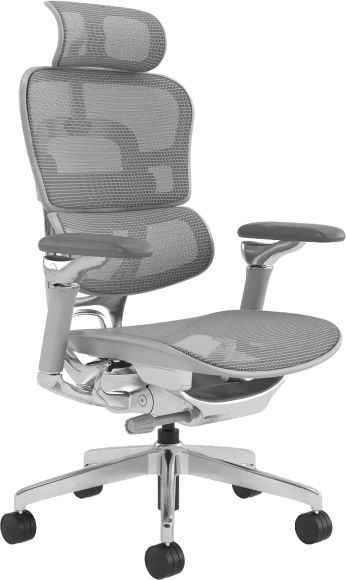
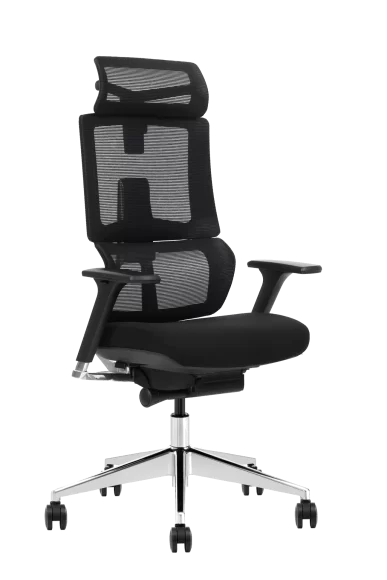
How long does office chair last in everyday use? Most office chairs last 3 to 10 years in real-world use. Budget chairs often fail in 1 to 3 years, while well-built ergonomic chairs — such as a BIFMA-certified ergonomic drafting chair — can hold up for 8 to 12 years or more when the core components are durable and the chair is used within its load rating.
The more useful way to think about lifespan is this: an office chair “expires” when it can no longer keep you in a stable, neutral posture. A chair can look fine and still be functionally worn out if the seat foam, gas lift, or tilt mechanism has degraded.
Typical lifespan of an office chair
If you want a quick benchmark, workplace ergonomics guidance often ties expected life to overall build quality, which is commonly reflected by warranty class.
A practical range you can use:
- 1–3 years: entry-level chairs with thin foam, light-duty mechanisms
- 5–8 years: mid-range task chairs with stronger base and better adjustment hardware
- 8–12+ years: higher-end ergonomic chairs with robust mechanisms and replaceable parts
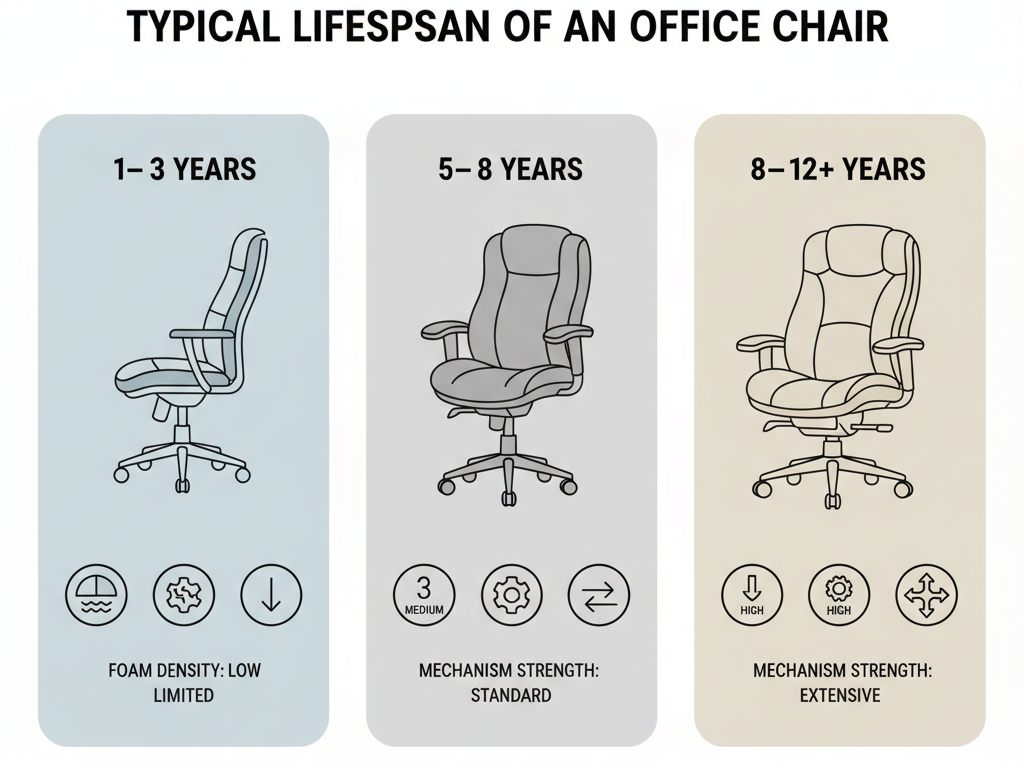
Office chair lifespan by quality level
Budget chairs: 1–3 years
These usually fail early because one weak link gives out first:
- gas lift starts sinking
- seat foam bottoms out
- casters bind or loosen
- plastic base fatigues or cracks
Mid-range ergonomic chairs: 5–8 years
These typically last longer because the mechanism and base are built for daily use:
- denser seat foam
- stronger tilt and recline hardware
- better fasteners that stay tight
High-end ergonomic chairs: 8–12+ years
This tier tends to last the longest because:
- critical parts are designed for higher cycle life
- components are often serviceable, such as gas lift, casters, arm pads
If you want a neutral “quality signal” to mention on a buyer page, you can reference whether a chair is tested to ANSI/BIFMA seating standards, which focus on durability and structural integrity for general office seating.
What actually determines how long an office chair lasts
Daily usage hours
Usage time is the simplest predictor of wear:
- 2–4 hours per day: most chairs last near the top of their range
- 8+ hours per day: foam compression and mechanism cycles accumulate fast
Load and user fit
Chairs wear out faster when:
- the user regularly exceeds the chair’s rated capacity
- the seat depth, back support, or armrest height does not match the user, which concentrates stress on fewer parts
If you sell or specify chairs for heavier users, it helps to know that BIFMA separates general-purpose chair testing from heavy-use categories.
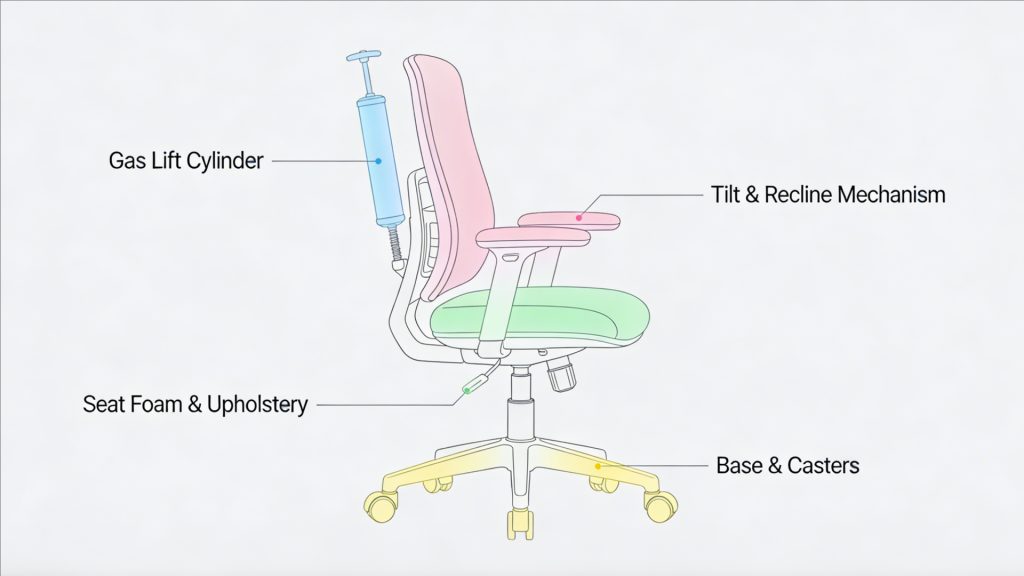
The four components that decide lifespan
Most chairs “die” in one of these areas:
- Gas lift cylinder
When the internal seal wears, the chair slowly sinks. This is the most common failure mode in everyday office chairs. - Tilt and recline mechanism
If the tilt lock slips, the recline becomes uneven, or the mechanism develops play, posture support degrades even if nothing looks broken. - Seat foam and upholstery
Foam compression set leads to a hard, flattened seat. That often shows up as hip discomfort and difficulty staying upright. - Base and casters
Cheap plastic bases fatigue over time, especially on hard floors with frequent rolling.
Signs your office chair is reaching the end of its life
A chair should be replaced when it can no longer adjust correctly or maintain stable support.
Look for these signals:
- The chair sinks while you sit
This usually points to gas lift seal failure. - Tilt lock will not hold, or recline feels uneven
That indicates the mechanism is wearing or loosening. - Seat cushion feels flat or hard
If you feel the base through the cushion, the foam has lost its support. - Wheels stick, wobble, or stop rolling smoothly
Worn casters increase effort and can make the chair feel unstable. - More aches and fatigue during normal work
Workplace ergonomics guidance commonly treats discomfort changes as a replacement flag when the chair is no longer providing adequate support.
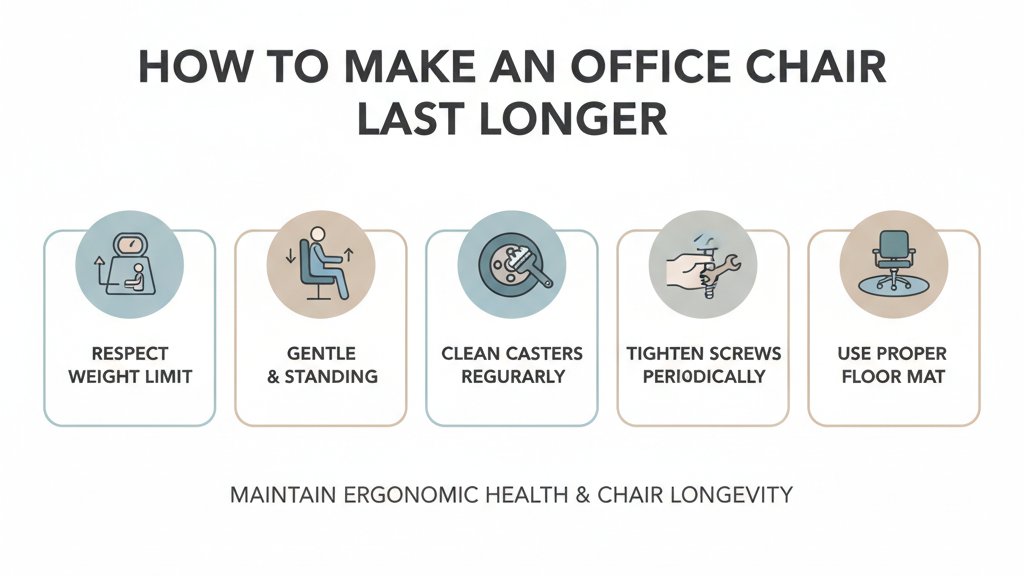
How to make an office chair last longer
You can often add years of service life with simple habits:
- Keep the chair within its rated load
- Avoid dropping into the seat
- Clean casters and remove hair and debris every few months
- Tighten screws once or twice per year
- Use the chair on an appropriate surface or floor mat to reduce caster and base stress
When replacement makes more sense than repair
Repair can be worth it when the chair has a solid frame and mechanism and only one serviceable part is failing.
A simple rule:
- Repair if the issue is casters, arm pads, or a gas lift on a chair with proven build quality
- Replace if the base is cracked, the mechanism is loose, or the seat structure is failing
If you want a conservative, widely usable line for a blog, you can cite the idea that higher-quality chairs, often implied by longer warranties, tend to have longer real-life expectancy.
Quick answer you can reuse on product pages
An office chair typically lasts 3 to 10 years. Budget chairs often last 1 to 3 years, mid-range ergonomic chairs commonly last 5 to 8 years, and well-built ergonomic chairs can last 8 to 12 years or more when used within the rated load and maintained.