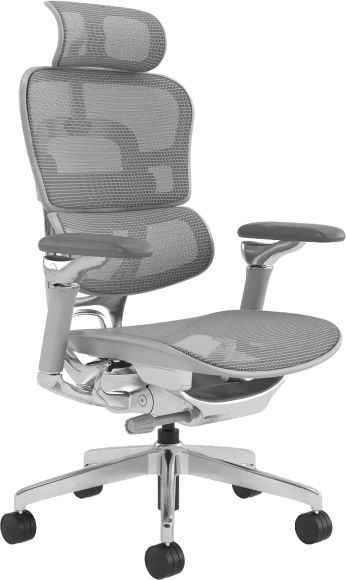
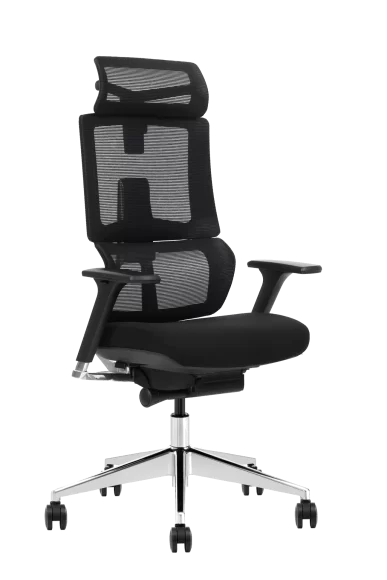
A synchro-tilt mechanism is one of the most common chair mechanism types, but it is only one way to control how a chair tilts, locks, and responds to your body. Synchro-tilt reclines the backrest and seat together at a fixed ratio, usually 2:1, while multi-tilt lets you adjust seat angle and back angle independently, and self-weighing uses a calibrated spring or cam to match recline resistance to the sitter’s body weight automatically — no tension knob required.
Get this choice wrong and the chair feels stiff, sloppy, or just plain wrong within a week. Get it right and most users forget the mechanism is even there. Here’s what’s actually happening inside that gray steel box.
Why the Mechanism Is the Most Important Part of the Chair
If you stripped the foam, mesh, and trim off ten office chairs, the differences between a $120 chair and a $900 chair would mostly live in one component: the mechanism. It’s the part doing real mechanical work every time someone leans back, shifts, or sinks into a stretch.
A cheap mechanism has stamped sheet-metal arms, nylon bushings, and a single torsion spring rated for maybe 50,000 cycles. A premium mechanism has die-cast aluminum housing, hardened steel pivots, sealed bearings, and BIFMA-tested cycle counts north of 300,000. That’s the difference between a chair that squeaks in eight months and one that’s still tight after a decade.
This is also why we always tell buyers: when you’re comparing chairs, ask about the mechanism spec before you ask about the upholstery. Fabric is easy to upgrade. A failed mechanism means the chair is scrap.
Synchro-Tilt: The Industry Workhorse
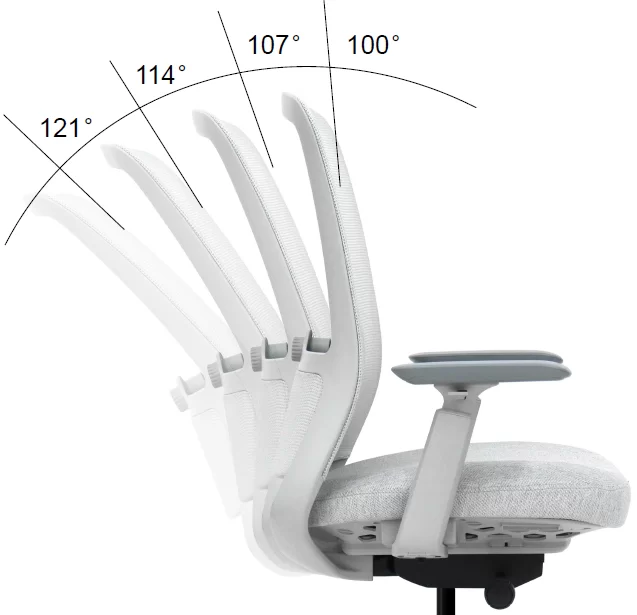
Synchro-tilt is the most common mechanism in mid-range task chairs, and there’s a reason — it’s a smart compromise. When you lean back, the backrest reclines roughly twice as far as the seat tilts up. That 2:1 ratio keeps your thighs supported and your feet on the floor while opening your hip angle, which reduces compression on the lumbar discs.
How it works internally
A single coil or torsion spring resists the recline. A pivot point in the rear of the housing links the seat pan and the backrest carrier, so they move together but at different angular rates. A tension knob — usually three to five turns from soft to firm — compresses the spring more or less.
Where synchro-tilt falls short
The tension knob is the weak point. A 55 kg user and a 95 kg user need radically different settings, and most people never adjust it after day one. Result: half your office is fighting the chair. For a deeper look at why proper setup matters, see our guide on how to choose an ergonomic chair.
For example, a regional accounting firm we worked with rolled out synchro-tilt chairs to 80 staff and got complaints from petite users that the recline was “impossible to push.” The fix wasn’t a new chair — it was a five-minute walkthrough on the tension knob. Eighty percent of the complaints disappeared.
Multi-Tilt: When You Need Independent Control
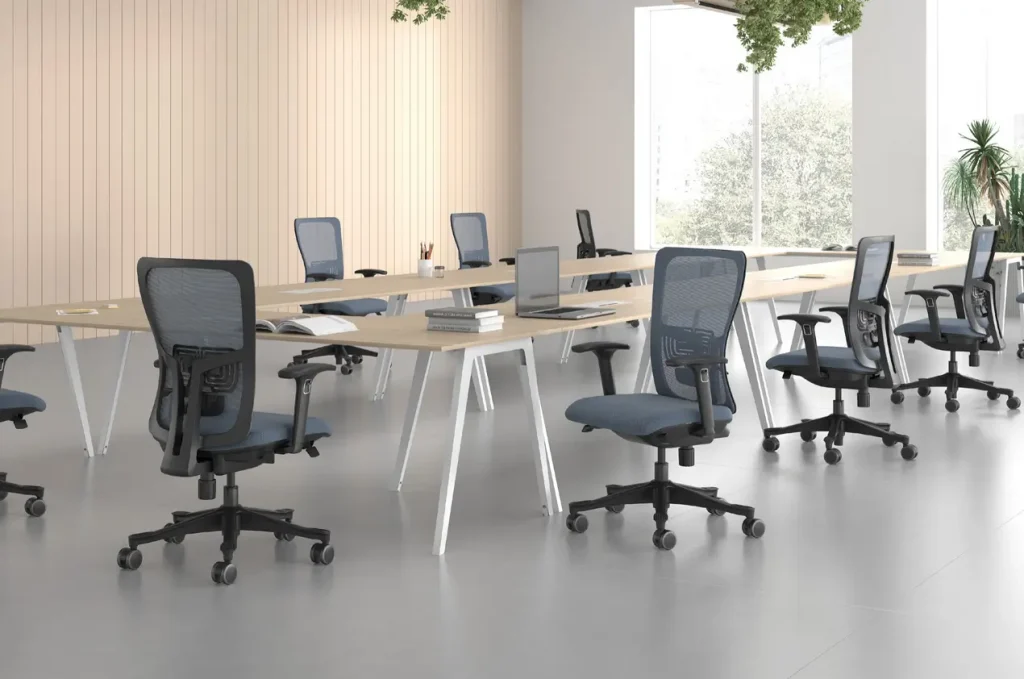
Multi-tilt mechanisms let the seat angle and the backrest angle move independently. You can tilt the seat forward 4–5 degrees for forward-leaning work, lock the back upright, and then reverse the setup when you switch tasks. This is the mechanism you see in drafting chairs, control-room seating, and high-end executive chairs.
The internal architecture is more complex: two separate spring/lock assemblies, a forward-tilt cam for the seat, and usually a paddle on each side instead of a single tension knob. More moving parts means more cost — typically 40–60% more than synchro-tilt at the OEM level.
Who actually benefits
- CAD operators and designers who alternate between leaning forward into a screen and reclining to review work
- Lab and inspection roles where forward seat tilt reduces lumbar load during close-up tasks
- Executives who use the chair for both deep work and meetings in the same seat
For general office staff doing email and spreadsheets eight hours a day? Multi-tilt is overkill. They’ll set it once and never touch the second paddle. Stick with synchro-tilt and put the savings into better lumbar support.
Self-Weighing Mechanisms: The Smart Automation Layer
Here’s the bold claim: self-weighing mechanisms are the most important development in task chair engineering in the last 20 years. They eliminate the single biggest failure mode of every other mechanism — the user who never adjusts the tension knob.
A self-weighing mechanism uses a calibrated cam, leaf spring, or weight-activated linkage to automatically tune recline resistance to the sitter’s body weight. Sit down at 55 kg and the chair recline feels light and easy. The next person sits down at 95 kg and the same chair feels firm and supportive. Nobody touched a knob.
How it’s actually engineered
Most implementations use a weight-sensing pivot under the seat pan. As body weight presses down, it pre-loads the recline spring proportionally. The geometry is calibrated so that the recline force always feels like roughly 30–40% of the user’s body weight — which research suggests is the sweet spot for natural-feeling motion.
The trade-offs
Self-weighing mechanisms are pricier and have a narrower “works for everyone” range — typically 45–135 kg. Outside that, performance drops off. They also tend to be free-float (no recline lock), which some users hate. For a 24/7 call center where the same chair is used by three shifts of different people, though, this is exactly the right trade. No tension-knob training, no per-shift adjustment, no complaints.
The Components Inside Every Mechanism
Regardless of type, every quality mechanism contains the same core parts. Knowing them helps you read a spec sheet — and spot where a cheap chair cut corners.
- Housing: Die-cast aluminum is best; stamped or welded steel is acceptable; stamped sheet metal is a red flag.
- Pivot pins: Hardened steel with grease channels. Cheap chairs use plain rods that wear oval within two years — that’s where squeaks come from. We dig into this in our piece on squeaky desk chair causes and fixes.
- Springs: High-carbon spring steel, shot-peened for fatigue resistance. Look for cycle test ratings above 200,000.
- Bushings/bearings: POM (acetal) bushings are standard; sealed bearings appear in premium units.
- Locking mechanism: Ratchet pawl or pin-and-slot. Pin-and-slot is more durable.
- Controls: Tension knob, paddles, or fully automatic depending on type.
One quick QC tip: lift a chair by its seat and let the mechanism hang. You should feel zero play in the pivots. If anything rattles or wiggles, the bushings are already loose — and that chair will squeak inside a year.
Matching Mechanism to Application
This is where spec-writing gets practical. Here’s how we steer clients at Vaseat based on the actual use case:
Open-plan task seating, 8-hour day
Synchro-tilt with a good tension range and a 3-position lock. Pair it with adjustable lumbar and you’ve covered 90% of office workers at the right price point.
24/7 operations, shared chairs
Self-weighing, every time. The economics of training three shifts of users on tension adjustment are terrible. Auto-tuning pays for itself in support tickets avoided.
Executive offices and boardrooms
Multi-tilt or premium synchro-tilt with deeper recline range (130°+). Executives use chairs for thinking time as much as typing, and the independent seat tilt matters here.
Hot-desking and coworking
Self-weighing. Different people sit in the same chair every few hours. Nothing else handles that gracefully.
Industrial and lab seating
Multi-tilt with forward seat tilt, often combined with foot ring options. The forward tilt is non-negotiable for bench work.
For project-scale buyers, we’d also point you toward our notes on what to look for in an office chair before finalizing any mechanism spec.
Common Failure Modes (and How to Spot Them Early)
Mechanisms don’t usually die suddenly. They die slowly, and there are warning signs months before the chair becomes unusable.
The four symptoms to watch
- Squeak on recline. Almost always dry pivot bushings. Add lithium grease at the pivot points; if the squeak returns within weeks, the bushings are oval and the mechanism is on borrowed time.
- Lopsided recline. One side reclines further than the other. The torsion spring on the lighter side has fatigued. Replace the mechanism — you can’t realistically rebuild it.
- Tension knob spins freely. The thread or detent has stripped. Common on chairs over five years old with heavy adjustment use.
- Chair sinks slowly. This is actually the pneumatic cylinder, not the mechanism — but buyers confuse the two constantly. Cylinder replacement is a $15 part and a 10-minute job.
For facility managers tracking replacement cycles, our piece on how long to replace office chairs covers the typical lifespan curves by component.
Certifications That Actually Mean Something
When a manufacturer claims their mechanism is “tested for durability,” ask which standard. The credible ones:
- BIFMA X5.1 — North American standard. The tilt mechanism test cycles the recline 300,000 times under load. Pass/fail.
- EN 1335-3 — European standard, covers safety and durability including mechanism fatigue.
- GB/T 3325 — Chinese national standard, often required for government procurement.
A mechanism that’s passed BIFMA at 300,000 cycles will realistically last 10+ years in normal office use (about 30,000 recline cycles per year per heavy user). One that’s only been tested at 80,000 — common in budget imports — is a five-year chair, full stop.
You can review the standards we test against on our certification page.
Putting It All Together
The mechanism is the chair. Everything else — armrests, mesh, lumbar, casters — is bolted to it. So when you’re specifying chairs for a project, start with the mechanism question: Who’s sitting in this chair, for how many hours, and how often will users change?
One user, eight hours, fixed seat? Synchro-tilt does the job for less money. Multiple users, multiple shifts, no time to train anyone? Self-weighing every time. Specialist tasks with forward-lean work? Multi-tilt earns its premium. And whatever you choose, insist on BIFMA or EN 1335 certification at the component level, not just the finished chair.
If you’d like help matching mechanism type to your specific project — whether it’s a 50-seat startup fit-out or a 5,000-seat call center — talk to the Vaseat team. We’ll spec the mechanism first, then build the chair around it.