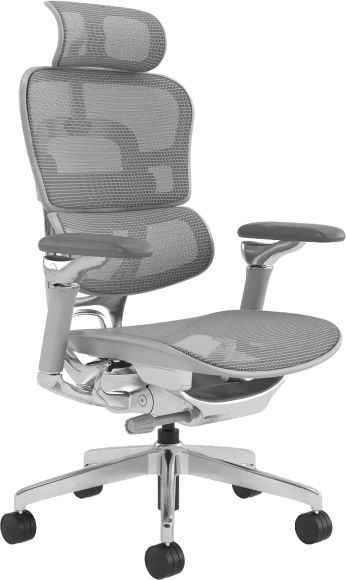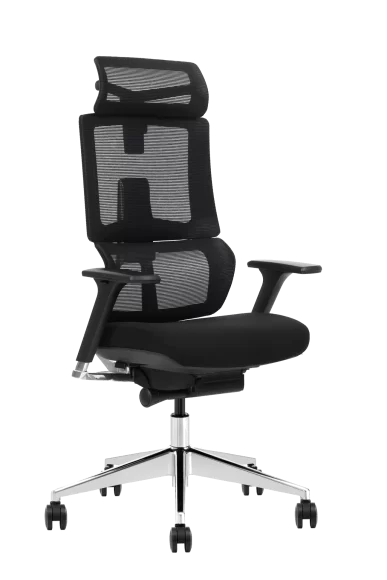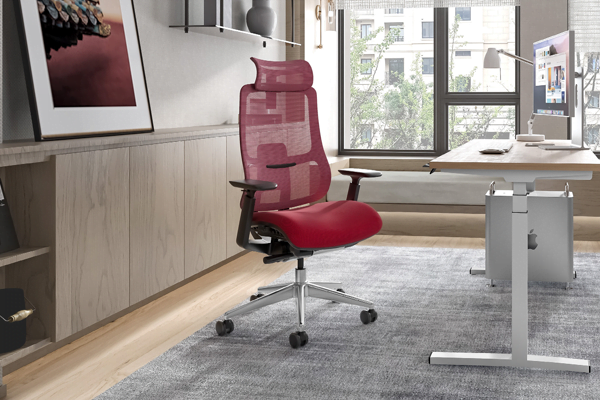
A high-density foam office chair may look similar to an ordinary cushioned chair, but the difference often becomes clear after months of daily use. Foam density, internal construction, cushion thickness and seat shape all influence how well the chair distributes pressure, retains its form and supports users during long working hours.
For wholesalers, office furniture brands and project buyers, evaluating the seat cushion is therefore just as important as checking the mechanism, gas lift, armrests or base. This guide explains how high-density molded foam works, what specifications buyers should request and how to identify a seat designed for lasting commercial use.
Buyers comparing different seating surfaces can also read our guide to mesh vs. foam office chairs.
Why Foam Quality Matters in an Office Chair
The seat cushion carries most of the user’s weight throughout the working day. When the foam is too low in density, unevenly formed or insufficiently supported, it may soften quickly and allow the user to feel the hard seat board beneath it.
Common problems associated with poorly specified cushions include:
- Localized compression around the hips
- Uneven support across the seat
- Early sagging or permanent deformation
- Insufficient thigh support
- A noticeable reduction in comfort after repeated use
A properly designed high-density foam seat spreads pressure across a larger surface instead of concentrating the load in one area. This helps the cushion maintain a more stable feel and makes it more suitable for offices, coworking spaces and other environments where chairs are used for many hours each day.
What Does High-Density Office Chair Foam Mean?
Foam density refers to the amount of foam material contained within a specific volume. It is commonly expressed in kilograms per cubic metre, such as 45 kg/m³ or 55 kg/m³.
Higher density generally means that more raw material is used in the foam structure. This can improve shape retention and durability, but density should not be confused with firmness. A high-density cushion can still be engineered to feel moderately soft, while a low-density cushion may initially feel firm but lose support more quickly.
For selected VASEAT ergonomic chair configurations, the molded seat foam reaches approximately 55 kg/m³. This provides a balance between responsive cushioning, stable support and resistance to long-term deformation.
However, buyers should not evaluate an office chair by density alone. The complete seat design should also be reviewed, including:
- Foam formulation
- Molding process
- Cushion thickness
- Internal structure
- Seat-board construction
- Ergonomic contour
- Upholstery material
- Relevant durability or compression testing
These factors work together to determine the final sitting experience.
Molded Foam vs. Cut-and-Assembled Foam
The production method has a major effect on cushion consistency.
One-Piece Molded Foam
Molded foam is produced by injecting the foam formulation into a shaped mold. The material expands and forms the complete cushion as a single component.
This process allows the manufacturer to control the cushion’s shape, thickness and support zones more precisely. It also makes it possible to create raised, recessed or curved areas that follow the intended ergonomic seat profile.
Advantages of a one-piece molded cushion may include:
- More consistent density across the seat
- Fewer weak points between separate foam layers
- Better fit with the seat shell
- More repeatable dimensions between production batches
- Greater freedom to create ergonomic contours
- Reduced risk of layer separation
VASEAT uses high-resilience molded foam in selected cushion fabric ergonomic office chairs intended for professional and commercial workspaces.
Cut and Bonded Foam
Another method is to cut foam sheets into approximate shapes and bond multiple sections together. This can be suitable for certain chair designs, but the result depends heavily on the quality of the foam, cutting accuracy, adhesive application and assembly process.
If a supplier reduces the foam volume, leaves oversized internal voids or relies on thin surface layers, the cushion may appear thick from the outside while offering less effective support in actual use.
Commercial buyers should therefore request a cross-section image, cut sample or production video rather than judging the cushion only by its upholstered appearance.
Solid Cushion Construction and Pressure Distribution
An apparently thick seat does not necessarily contain a full volume of foam. Some cost-reduced cushions use internal cavities or remove material from areas that are not visible after assembly.
Reducing the foam volume can lower material costs, but it may also change how pressure travels through the cushion. Instead of distributing the load across the complete foam body, the user’s weight may become concentrated around the remaining walls or upper surface.
A solid molded structure provides a more continuous support surface. When correctly formulated, it compresses gradually under the hips and thighs and then recovers after the user stands.
For bulk purchasing, buyers can compare the following points:
| Evaluation Point | Solid Molded Cushion | Cost-Reduced Hollow Cushion |
|---|---|---|
| Internal structure | Continuous foam body | Internal material may be removed |
| Pressure distribution | Spread across a larger area | May concentrate around thinner sections |
| Initial appearance | Full shaped profile | Can look similar after upholstery |
| Long-term performance | Designed for stable recovery | Greater risk of uneven compression |
| Material use | Higher foam volume | Lower material consumption |
The internal structure cannot always be identified from product photographs. Physical samples and technical documentation remain important during supplier evaluation.
How Cushion Thickness Affects Sitting Comfort
Thickness determines how much space the foam has to compress before the user begins to feel the seat board. However, simply adding more foam does not automatically create a better chair.
An effective cushion needs the right combination of thickness, density, resilience and contouring.
The T8 seat configuration described by VASEAT uses a cushion approximately 90 mm thick, which is designed to provide sufficient compression depth for prolonged sitting. The cushion is also shaped around the expected load areas rather than being produced as a completely flat foam block.
For commercial projects, buyers should check whether the quoted thickness refers to:
- The thickest point of the cushion
- The average foam thickness
- The front edge
- The central sitting area
- The complete upholstered seat
Clarifying the measurement method prevents misleading comparisons between suppliers.
Ergonomic Seat Shaping Is as Important as Density
A high-density cushion still needs to match the structure of the human body. A flat seat with unsuitable dimensions can remain uncomfortable even when premium foam is used.
An ergonomically shaped cushion may include:
- A slightly recessed hip area
- A supportive central zone
- A rounded or raised front profile
- Sufficient thigh-support length
- Softer transitions around the seat edges
These features help distribute the user’s weight while reducing abrupt pressure around the thighs. A contoured seat can also work together with seat-depth adjustment to accommodate users of different heights.
For chairs used by a varied workforce, consider combining molded cushioning with adjustable seat-depth office chairs. This allows users to position the cushion without placing excessive pressure behind the knees.
Adhesive Use and Cushion Assembly
Traditional cut-and-assembled cushions may require adhesive across several foam layers or between the foam and seat shell. A molded cushion can be produced closer to the final seat shape, reducing the amount of trimming, bonding and repositioning required during assembly.
Lower adhesive use may simplify production and reduce unnecessary material application. However, environmental performance should not be assumed from the manufacturing method alone.
Buyers should request supporting information covering:
- Upholstery chemical compliance
- Foam and fabric test reports
- Applicable VOC requirements
- Flame-retardancy requirements
- Restricted-substance testing
- Supplier quality-control procedures
Environmental or health claims should be supported by documentation for the exact foam, fabric and adhesive combination used in the ordered chair.
How Buyers Can Evaluate Office Chair Foam
Foam specifications are often simplified in quotations. A supplier may only state that the seat uses “high-density foam” without providing a measurable value or explaining the production method.
Before approving a sample, ask the manufacturer to confirm the following information.
1. Foam Density
Request the nominal density in kg/m³ and ask whether an acceptable production tolerance applies.
2. Foam Type
Confirm whether the cushion is molded polyurethane foam, cut foam, memory foam or another formulation.
3. Cushion Construction
Ask whether the seat uses a solid one-piece structure, bonded layers or internal cavities.
4. Thickness and Dimensions
Confirm where the thickness is measured and whether the specification refers to bare foam or the finished upholstered seat.
5. Recovery Performance
Check how quickly the foam recovers after compression and whether the supplier has performed repeated-load or deformation testing.
6. Production Consistency
For wholesale orders, request information about foam mixing, molding, curing and batch inspection. A good initial sample is not enough if mass-production density and shape vary between batches.
7. Complete Chair Testing
The cushion should be evaluated together with the seat board, mechanism, base and other structural components. Selected VASEAT ergonomic office chairs can be configured for BIFMA- and EN 1335-oriented project requirements, depending on the model and final specification.
When Is a High-Density Foam Seat a Good Choice?
High-density molded foam is particularly suitable when buyers need:
- A cushioned sitting feel
- Stable support during long working hours
- Upholstery colour and texture options
- Better resistance to early flattening
- Consistent seat shapes across bulk orders
- A professional appearance for staff or executive spaces
- Custom fabric, branding or private-label configurations
It can be used in staff chairs, executive chairs, meeting chairs and visitor seating. For example, VASEAT’s ergonomic office chair with headrest combines a 55 kg/m³ molded foam cushion with a breathable mesh back, creating a hybrid configuration for buyers who want both seat cushioning and backrest ventilation.
High-Density Foam Does Not Replace Good Chair Design
Seat foam is only one part of the complete ergonomic system. Long-term comfort also depends on whether the user can correctly position the chair.
A well-configured office chair should consider:
- Seat height
- Seat depth
- Lumbar-support position
- Backrest angle
- Armrest height
- Headrest position
- Mechanism stability
- User weight and body dimensions
A premium cushion cannot compensate for an unsuitable seat depth, unstable mechanism or incorrectly positioned lumbar support. Buyers should evaluate the chair as a complete structure rather than selecting components independently.
Frequently Asked Questions
Is higher-density foam always harder?
No. Density measures how much foam material is contained within a specific volume, while firmness describes how the cushion feels when compressed. A high-density cushion can be formulated to provide either a firmer or softer sitting feel.
What foam density is used in VASEAT office chairs?
Selected VASEAT models use high-resilience molded foam with a density of approximately 55 kg/m³. The exact specification should be confirmed for each chair model and order configuration.
Is molded foam better than cut foam?
Molded foam provides greater control over the cushion shape and can produce a consistent one-piece structure. Cut foam can also perform well when suitable materials and assembly methods are used. Buyers should compare the complete specification rather than relying only on the production method.
How can buyers tell whether an office chair has solid foam?
The internal structure may not be visible after upholstery. Buyers can request a foam cross-section, an unupholstered sample, production photographs or a factory video showing the molded cushion.
Can the foam density be customized for OEM orders?
Foam specifications may be adjusted depending on the chair model, mold, target sitting feel, order quantity and compliance requirements. Changes should be confirmed during sampling because increasing density can affect cost, weight, firmness and production parameters.
Source High-Density Foam Office Chairs from VASEAT
VASEAT develops and manufactures office chairs for distributors, furniture brands and commercial projects. Available customization options include molded seat structures, foam specifications, upholstery materials, colours, ergonomic functions, packaging and private-label branding.
Contact VASEAT to discuss foam density, chair models, samples and OEM or ODM requirements for your market.