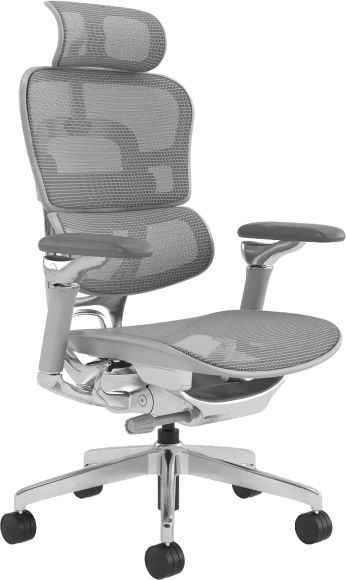
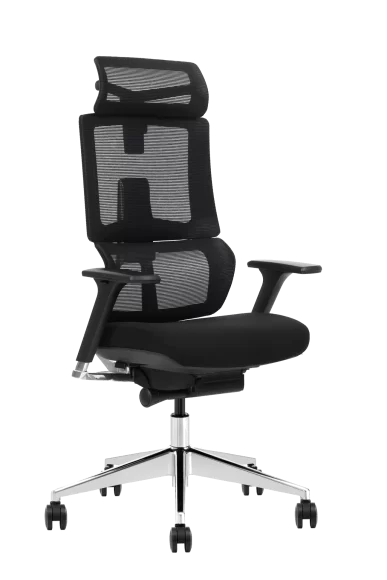
The gas lift is one of the least visible but most important structural components of an office chair. It connects the seat mechanism to the chair base, controls seat-height adjustment and carries the user’s weight during daily sitting, swiveling and movement.
A low-quality cylinder may initially operate normally but gradually develop problems such as slow sinking, unstable height adjustment, oil leakage or excessive movement between the seat and base. These issues affect more than convenience. They can also accelerate wear on the mechanism, base, castors and connecting hardware.
For distributors, furniture brands and commercial project buyers, specifying a reliable Class 4 gas lift for office chairs is therefore an important part of product configuration and quality control.
VASEAT equips its office chair ranges with Korean SHS Class 4 gas lifts to support stable height adjustment and long-term use. Buyers can explore the available ergonomic office chair models or review an ergonomic office chair with a Korean Class 4 SHS gas lift for a practical configuration example.
What Does an Office Chair Gas Lift Do?
An office chair gas lift, also called a gas cylinder or pneumatic cylinder, performs three main functions:
- It supports the seat and the user’s weight.
- It enables the seat to move up and down.
- It connects the chair mechanism to the five-star base.
Although the cylinder appears to be a relatively simple component, it is repeatedly exposed to vertical loads, rotation, compression and changes in sitting position. Its construction quality can influence how smoothly the chair adjusts and how stable it feels after years of use.
The gas lift should therefore be evaluated together with the chair mechanism, base, castors and seat structure rather than treated as an isolated accessory.
Class 2, Class 3 and Class 4 Gas Lifts
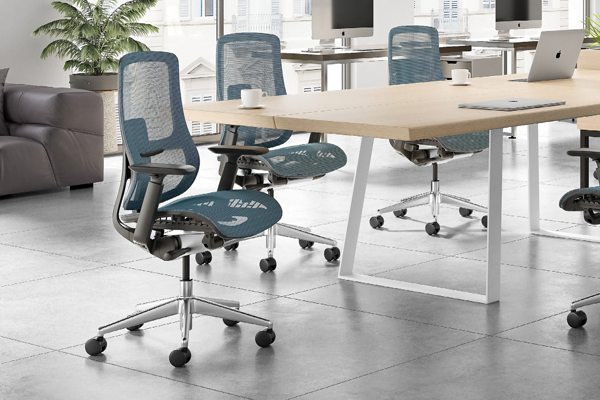
Office chair gas lifts are commonly supplied in different strength classes. Lower-grade cylinders may be suitable for lightweight or price-sensitive chair configurations, while higher-grade options are generally selected for products requiring greater structural strength and longer service life.
A Class 4 office chair gas lift is commonly chosen for:
- Ergonomic office chairs
- Executive chairs
- Heavy-duty seating
- Commercial office projects
- Chairs intended for frequent daily use
- Products designed for larger users
- Premium OEM and private-label chair ranges
However, the gas lift class should not be the only purchasing criterion. Buyers should also review the manufacturer, cylinder dimensions, surface treatment, internal sealing, production tolerances and available test documentation.
Descriptions such as “heavy duty” or “certified gas lift” are not sufficient unless the supplier can identify the cylinder specification and provide supporting information. Our guide to ergonomic chairs buyers should avoid explains why unverified gas lift cylinders are a warning sign when sourcing office seating.
Why VASEAT Uses Korean SHS Class 4 Gas Lifts
VASEAT uses Korean SHS Class 4 gas lifts across its office chair range rather than reserving them only for premium models.
The purpose is to provide a more consistent level of seat-height adjustment, structural stability and long-term performance across different product categories. Maintaining a stable supply of the same gas lift specification also helps improve production consistency and after-sales parts support.
According to the component specification, the cylinder is filled with nitrogen with a stated purity of 99.7%. High-purity inert gas helps limit internal oxidation and supports more stable pressure conditions inside the cylinder.
The reinforced cylinder structure is designed for higher loads than commonly used lower-grade alternatives. Final chair load capacity, however, must always be evaluated according to the complete chair configuration and the applicable product test—not from the gas lift specification alone.
QPQ Nitriding and the Black Piston Rod
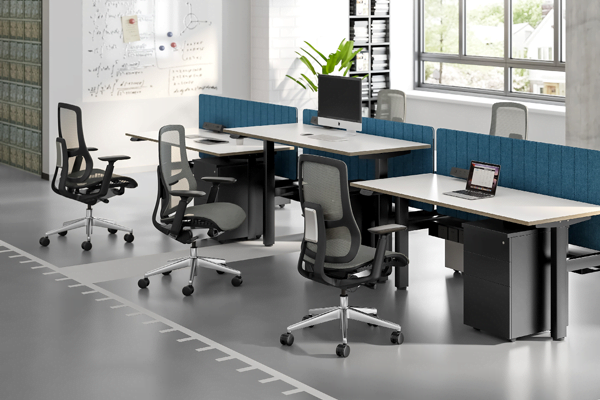
One visible feature of the SHS Class 4 gas lift is its black piston rod. This appearance comes from QPQ surface treatment rather than conventional bright electroplating.
QPQ is a surface-hardening process used to improve the surface properties of metal components. Applied to the gas lift piston rod, it creates a hardened outer layer intended to improve resistance to wear during repeated seat-height adjustment and chair rotation.
The treatment provides several practical benefits for office chair applications.
Improved Resistance to Long-Term Wear
Each time a user sits, stands, rotates or adjusts the chair, the gas lift experiences movement and load changes. Over time, insufficient surface hardness may contribute to wear between moving components.
A hardened piston rod is better suited to repeated operation and can help the cylinder maintain stable movement over a longer service period.
More Stable Chair Support
Movement in an office chair does not always originate from the gas lift. It can also come from the mechanism, base connection, screws or other structural parts.
However, wear or deformation within the cylinder assembly may increase play between the seat and base. A reinforced gas lift structure helps reduce this potential source of movement and supports a more stable sitting experience.
Cleaner Surface Appearance
A black-treated piston rod is also less visually sensitive to light dust and surface marks than a bright electroplated finish. This can help the lower part of the chair maintain a cleaner appearance, particularly in executive offices, shared workspaces and commercial environments.
How Gas Lift Quality Affects the Rest of the Chair
The gas cylinder works as part of a connected structural system. When excessive movement develops around the cylinder, the resulting uneven load may affect other chair components.
Five-Star Base
A stable gas lift transfers the user’s weight more evenly into the chair base. Excessive movement can cause uneven loading across the base legs, especially when the user frequently leans, rotates or moves across the floor.
Seat Mechanism and Fasteners
Repeated movement between the cylinder, mechanism and seat can place additional stress on connecting points. Over time, this may contribute to loose fasteners or increased movement in the chair structure.
Castors
When the chair is no longer vertically stable, weight distribution across the castors may become less consistent. This can increase wear on individual wheels or castor stems.
Overall Chair Lifespan
The gas lift is one of several components that determine how long an office chair remains functional. The foam, upholstery, tilt mechanism, base and castors must also be selected according to the intended use.
Read our guide on how long an office chair lasts to understand how these components interact over the product’s service life.
Can a Class 4 Gas Lift Support 150 kg?
The supplied SHS Class 4 gas lift specification is designed for heavy-duty office chair configurations and may be used in chairs intended for users around or above 150 kg.
However, the gas lift alone does not determine the chair’s approved load capacity.
A complete office chair includes:
- Seat frame
- Backrest structure
- Tilt mechanism
- Armrests
- Gas lift
- Five-star base
- Castors
- Fasteners and connection points
The chair’s stated weight capacity should therefore be supported by testing of the complete assembled product. Buyers should not assume that installing a high-strength gas lift automatically gives every chair the same load rating.
For heavy-duty or big-and-tall office chair projects, confirm the required user weight, usage frequency, applicable market standard and testing requirements before finalizing the configuration.
What Buyers Should Verify Before Ordering
When sourcing a Class 4 gas lift for office chairs or specifying it as part of an OEM chair project, buyers should confirm the following information.
Gas Lift Manufacturer
Ask for the cylinder manufacturer and product identification rather than accepting a generic Class 4 description.
Cylinder Dimensions
Confirm the outer tube diameter, piston rod dimensions, installation length, stroke and available seat-height range.
Surface Treatment
Identify whether the piston rod uses electroplating, QPQ treatment or another surface process.
Intended Chair Load
Clarify the target user weight and ensure the complete chair—not only the gas cylinder—is configured and tested for that load.
Height Adjustment Range
The gas lift stroke should match the seat, base, mechanism and intended desk height. A stronger cylinder is not useful if its dimensions produce an unsuitable seat-height range.
Test Documentation
Ask which tests apply to the gas lift and which apply to the complete chair. The scope and test conditions should be clearly distinguished.
Production Consistency
For repeat orders, confirm whether the same gas lift brand and specification will be maintained or whether substitutions may be made.
Class 4 Gas Lifts for OEM and Wholesale Office Chairs
For B2B buyers, gas lift selection should be addressed during the product configuration stage—not after samples have already been approved.
VASEAT can discuss gas lift specifications as part of an OEM or ODM office chair project, together with:
- Chair type and target market
- Expected user weight
- Seat-height range
- Mechanism functions
- Base material and diameter
- Castor type
- Upholstery and foam
- Required testing
- Branding and packaging
- Order quantity
Using a consistent Korean SHS Class 4 gas lift across different models can help brands simplify product positioning, spare-parts management and quality communication.
Frequently Asked Questions
Is a Class 4 gas lift better than a Class 3 gas lift?
A Class 4 gas lift is generally selected for office chairs requiring higher structural strength and heavy-duty performance. The final choice should still consider the complete chair design, intended user weight and available testing.
Why is the SHS gas lift piston rod black?
The black appearance comes from QPQ surface treatment. This process is used to harden the surface and improve resistance to wear during repeated chair adjustment and rotation.
Can a Class 4 gas lift stop an office chair from sinking?
A reliable gas lift with suitable seals and production tolerances reduces the likelihood of premature sinking. Slow sinking may still occur if the cylinder is damaged, worn or incorrectly operated.
Does a Class 4 gas lift make the entire chair safe for 150 kg?
Not automatically. The seat, mechanism, base, castors and connecting structure must also be designed and tested for the intended load.
Can the gas lift specification be customized?
Gas lift dimensions and stroke may be selected according to the chair structure and required seat-height range. Available options should be confirmed during product development and quotation.
Choose the Right Gas Lift for Your Office Chair Project
The gas lift may be hidden beneath the seat, but its performance directly affects chair height adjustment, stability and long-term reliability.
A Korean SHS Class 4 gas lift with a QPQ-treated piston rod provides a strong foundation for ergonomic, executive and heavy-duty office seating. It should still be matched with a suitable mechanism, reinforced base and complete chair structure to achieve the required performance.
For wholesale, OEM or private-label office chair projects, contact VASEAT to discuss the required chair type, load capacity, gas lift dimensions, testing standards and order quantity.