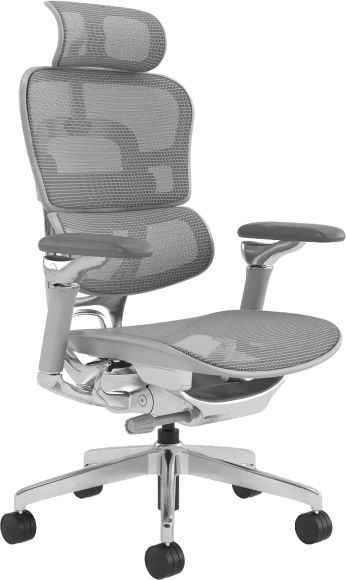
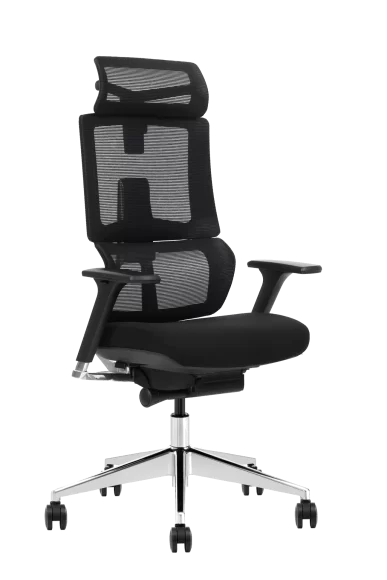
The right call center chair needs three non-negotiable qualities: a heavy-duty gas cylinder rated for continuous use, high-density foam (50 kg/m³ minimum) that won’t bottom out after six months, and a tilt mechanism tested to at least 150,000 cycles. Standard office chairs are engineered for one person, eight hours a day — call centers destroy them because three different people sit in the same seat across a 24-hour rotation, each with different weights, postures, and adjustment habits.
The sustained demands of 24/7 shift environments require seating built to commercial-grade standards — browse our full range at Vaseat, a dedicated China office chair factory supplying high-duty commercial seating globally.
Why Standard Office Chairs Fail in Call Centers
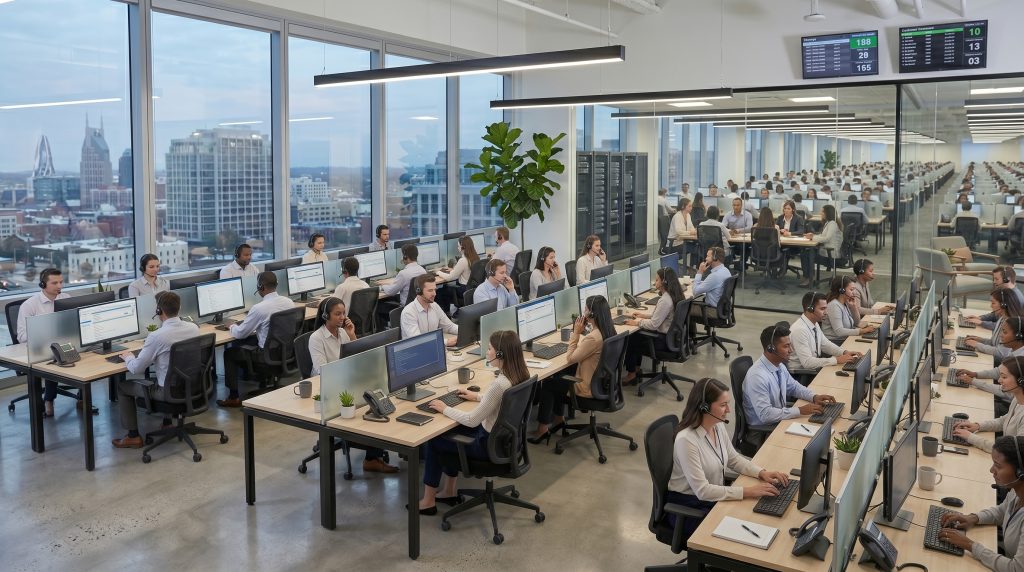
Here’s a number that should alarm any facilities manager: a single call center chair absorbs roughly 6,000 hours of seated use per year — three times what a typical office chair is designed for. That’s not just more hours; it’s more adjustment cycles, more body types, and more sweat exposure.
Standard chairs are built around the assumption that one person owns the seat. The foam molds to that person’s shape over time, the mechanism stays at one tension setting, and the gas cylinder handles a predictable load. In a call center running three shifts, every assumption breaks down:
- Foam compression: Low-density foam (under 45 kg/m³) permanently compresses when different body weights alternate daily. Within months, agents feel the plywood base through the cushion.
- Mechanism fatigue: Tilt mechanisms rated for 60,000 cycles can hit that number in under two years of multi-shift use. Once the mechanism loosens, the chair wobbles and becomes a safety risk.
- Cylinder failure: A standard Class 3 gas cylinder isn’t rated for the weight variance and constant height changes that come with shift rotation. Sinking chairs are the number-one complaint in call center environments.
The lesson is simple: don’t buy chairs rated for single-user office use and expect them to survive a call center. You’ll spend more on replacements than you would have on the right chair upfront.
The 24/7 Spec Sheet: Minimum Requirements for Shift-Use Chairs
Not every chair marketed as “heavy duty” actually qualifies for round-the-clock use. Here’s the spec sheet you should demand from any supplier before placing a bulk order:
Gas Cylinder: Class 4 Minimum
Class 4 gas cylinders have a larger diameter bore and thicker walls than Class 3. They handle higher weight loads (typically 150 kg+) and resist the constant up-down cycling that comes with shift changes. If your supplier can’t confirm the cylinder class, walk away.
Mechanism: 150,000+ Cycle Rating
The chair mechanism is the mechanical heart of any task chair. For 24/7 environments, look for synchro-tilt or multi-function mechanisms that have been tested to at least 150,000 cycles under load. BIFMA X5.1 testing is the industry standard — ask for the test report.
Foam Density: 50–65 kg/m³
This is the single biggest predictor of seat longevity. High-density molded foam at 50 kg/m³ or above retains its shape under alternating loads. Cold-cure molded foam is even better — it has a more uniform cell structure that resists the “pancake effect” you see in cheaper chairs.
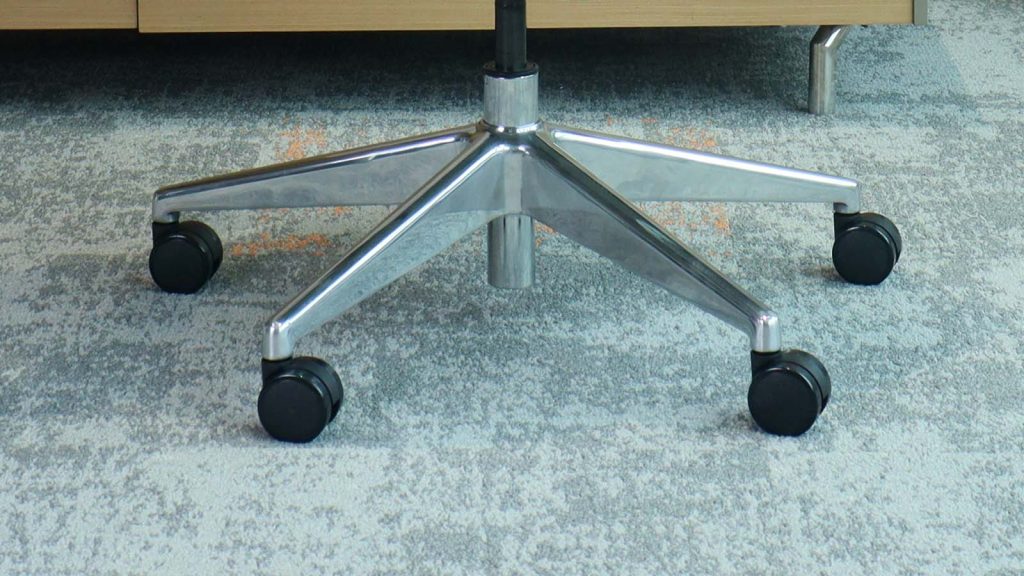
Base: Reinforced Nylon or Aluminum
A five-star base in standard nylon can crack under repeated stress. For 24/7 use, choose reinforced glass-fiber nylon (rated to at least 150 kg static load) or polished aluminum. Aluminum adds cost but is virtually indestructible in this application.
Weight Capacity: 135 kg (300 lbs) or Higher
When multiple users share a chair, you must design for the heaviest likely occupant, not the average. A generous weight limit also means the frame, casters, and mechanism are over-engineered — exactly what you want for durability.
Material Choices for 24/7 Office Chairs: Mesh vs Fabric vs PU Leather
Material choice in a call center isn’t just about aesthetics — it directly affects hygiene, heat management, and replacement costs. For call center projects requiring high-volume supply, see our breathable mesh office chairs available for OEM and bulk orders.
Mesh Backrests (Highly Recommended)
Mesh wins for call centers, period. It doesn’t absorb sweat, it’s easy to wipe down between shifts, and it provides consistent airflow in temperature-controlled environments where agents sit for 8+ hours. High-quality elastomeric mesh maintains tension for years without sagging.
Commercial-Grade Fabric Seats
For the seat pan, tightly woven commercial fabric with a Martindale abrasion rating above 100,000 cycles is the minimum. Anything below that will pill and wear through. Look for stain-resistant treatments — call center agents eat and drink at their desks regardless of policy.
PU Leather: Proceed With Caution
PU leather looks professional and wipes clean easily, but it has a critical weakness in shift environments: heat retention. Agents sitting for long periods in warm rooms will stick to PU leather, leading to discomfort and faster material degradation from sweat exposure. If you choose PU, ensure it’s breathable-grade PU with micro-perforations — standard PU will peel within 18 months of heavy use.
For a deeper dive into all your options, our guide to office chair materials covers the full spectrum of what’s available and how each performs under stress.
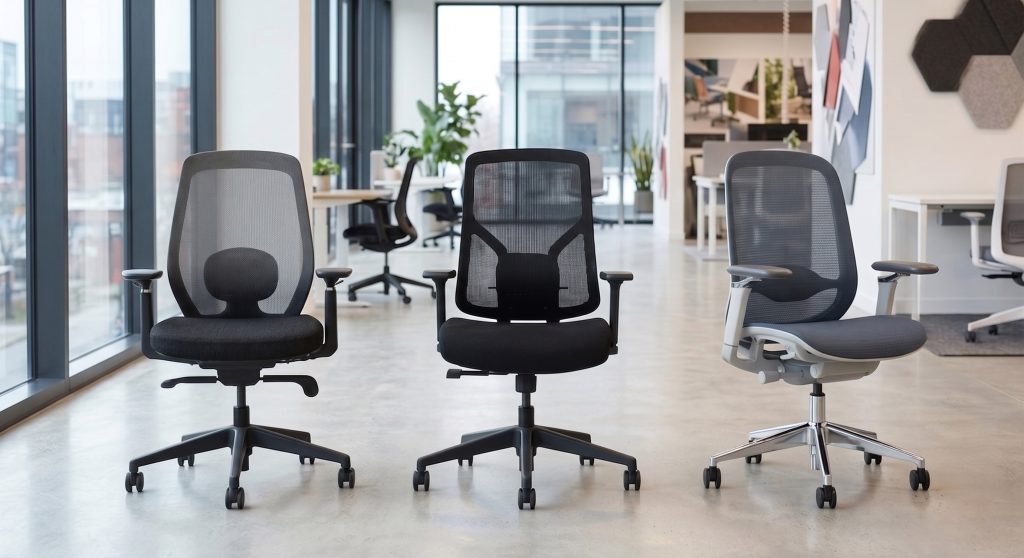
Ergonomic Adjustability: What Actually Matters When Multiple People Share a Chair
Most ergonomic features are designed with a single user in mind. In a shared-seat environment, some adjustments become critical while others become liabilities.
Must-Have Adjustments
- Seat height range: A minimum range of 40–54 cm accommodates the 5th to 95th percentile of adult heights. Wider is better for diverse workforces.
- Seat depth adjustment (seat slider): This is non-negotiable. A 5’2” agent and a 6’1” agent need very different seat depths. Without a slider, one of them will have circulation problems behind their knees.
- Lumbar support height adjustment: Fixed lumbar supports help almost no one in a shared chair because lumbar support needs to sit at different heights for different spines. Adjustable lumbar — either height-adjustable or depth-adjustable — is essential.
- Armrest height and width: 4D armrests (height, width, depth, pivot) are ideal but at minimum you need height-adjustable arms. Agents who can’t rest their forearms properly develop shoulder and neck tension within weeks.
Adjustments That Cause Problems
Tension-adjustable tilt mechanisms are great in theory, but in practice call center agents rarely re-set the tilt tension when they take over a chair from someone 30 kg lighter or heavier. The result: chairs that feel like they’re about to tip backward. Consider auto-adjusting weight-responsive mechanisms — they cost more per unit but eliminate the problem entirely.
Real-World Example: A 500-Seat BPO Operation Gets It Right
A business process outsourcing (BPO) company in the Philippines operating 500 agent stations across three shifts learned the hard way. Their initial procurement was a mid-range task chair rated for 8-hour single-user use. Within 14 months, 40% of the chairs had sinking cylinders, 25% had torn upholstery, and agent complaints about back pain had spiked — contributing to a 12% increase in absenteeism.
Their second procurement focused on 24/7-rated chairs with Class 4 cylinders, 55 kg/m³ molded foam seats, mesh backrests, and synchro-tilt mechanisms rated to 200,000 cycles. The upfront cost was roughly 35% higher per chair. But three years later, fewer than 5% of chairs needed any component replacement, and the company estimated it saved over $80,000 in avoided replacements and reduced sick days.
The takeaway? The “expensive” chair is almost always the cheaper chair when you calculate total cost of ownership over a five-year cycle. Facilities managers who present the math to procurement — not just the unit price — win this argument every time.
Hygiene and Maintenance: Designing for Easy Cleaning Between Shifts
A chair shared by three people daily needs to be cleaned. If it can’t be wiped down in under 60 seconds, it won’t be — no matter what your cleaning protocol says.
Design Features That Simplify Hygiene
- Removable seat covers: Zip-off fabric seat covers that can be machine-washed weekly are a game-changer for large deployments.
- Smooth, non-porous armrest pads: PU-skinned armrests wipe clean with disinfectant. Fabric-covered armrests absorb oils and bacteria.
- Mesh backrests: Again, mesh wins — a quick spray-and-wipe between shifts keeps it fresh. Fabric backrests trap odor and require steam cleaning.
- Minimal crevices: Chairs with complex sculpted shells and deep seams collect crumbs, dust, and skin cells. Simpler designs are easier to maintain.
Post-pandemic, many call centers have formalized inter-shift cleaning protocols. The chair you choose should make compliance easy, not aspirational.
Certifications and Testing Standards to Demand
Don’t take a supplier’s word for “heavy duty.” Demand documentation. Here are the standards that matter for 24/7 seating:
- BIFMA X5.1 (USA): The most widely referenced standard for office chairs. Specifically ask for 24/7 or “intensive use” test results — the standard includes separate, more rigorous criteria for multi-shift environments.
- EN 1335 (Europe): Covers safety, dimensions, and durability for office work chairs. Class A (the highest) is what you want for call centers.
- ANSI/BIFMA e3 Sustainability: Not directly about durability, but chairs certified under this standard tend to use higher-quality, longer-lasting materials.
Reputable manufacturers like Vaseat maintain active certifications and can provide test reports on request. If a supplier hesitates when you ask for documentation, that tells you everything you need to know.
Casters and Flooring: The Detail Everyone Overlooks
Casters are the most-replaced component on any office chair, and in a call center they take an absolute beating. Agents roll constantly — reaching for headsets, leaning toward monitors, scooting to talk to a neighbor.
Hard Floor vs. Carpet
Most call centers use low-pile commercial carpet or vinyl tile. Match your casters accordingly:
- Carpet: Hard nylon twin-wheel casters with a 60mm diameter minimum. Smaller casters dig into carpet fibers and require more force to move, accelerating wear on both the caster and the carpet.
- Hard floors: Soft polyurethane-tread casters prevent scratching and roll quietly. In a 24/7 environment where night-shift noise matters, this is a meaningful quality-of-life upgrade.
Locking Casters for Safety
Consider chairs with brake-loaded casters that lock when unoccupied and release under body weight. This prevents chairs from rolling away during shift changes and reduces the “empty chair drift” that clutters aisles in large call center floors.
Budgeting: How to Calculate True Cost Per Seat-Hour
Stop comparing chairs by unit price. Start comparing them by cost per seat-hour — it completely changes the math.
Here’s the formula:
Cost per seat-hour = (Chair price + estimated maintenance cost) ÷ (expected lifespan in years × annual use hours)
Example Calculation
A $200 standard chair lasting 2 years in a 24/7 environment (8,760 hours/year):
($200 + $50 maintenance) ÷ (2 × 8,760) = $0.014 per seat-hour
A $350 24/7-rated chair lasting 6 years:
($350 + $30 maintenance) ÷ (6 × 8,760) = $0.007 per seat-hour
The “expensive” chair costs exactly half as much per hour of actual use. Scale that across 300 or 500 seats and you’re looking at tens of thousands in savings. Present this calculation to your CFO — it speaks their language.
For a broader perspective on what separates a worthwhile ergonomic investment from a wasted one, our breakdown of office chairs vs. ergonomic chairs digs into the value equation in detail.
Making the Right Choice for Your Call Center Fleet
Choosing call center seating isn’t a furniture decision — it’s an operational one. The wrong chair increases absenteeism, accelerates turnover, and generates a constant stream of maintenance tickets. The right chair quietly does its job for years while your agents do theirs.
To recap the non-negotiables:
- Class 4 gas cylinder
- 50+ kg/m³ molded foam
- Mechanism tested to 150,000+ cycles
- Mesh backrest for breathability and hygiene
- Seat slider and adjustable lumbar for shared use
- Reinforced base rated above your heaviest user
- Certifications you can verify, not just claims
At Vaseat, we design and manufacture ergonomic seating specifically engineered for demanding commercial environments — including 24/7 call center operations. Explore our full product range or reach out to discuss bulk specifications tailored to your operation. Your agents sit for a living. Give them something worth sitting in.