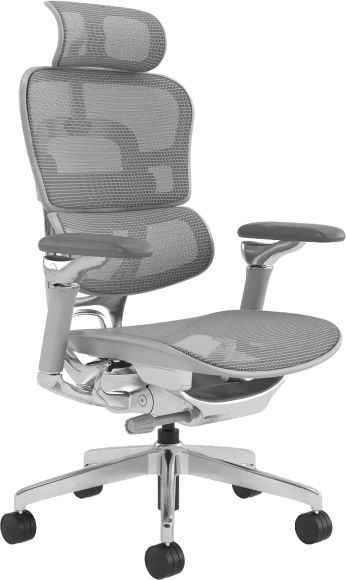
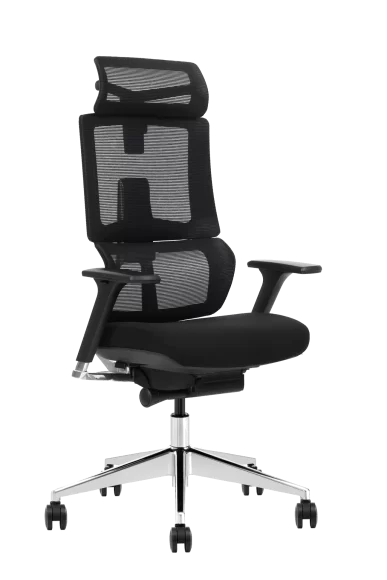
Choosing ergonomic office chairs for wholesale involves more than selecting attractive models and requesting a price.
A chair intended for online retail may require strong visual differentiation, multiple adjustable features and marketable product highlights. A chair intended for office projects, tenders or commercial installations may place greater emphasis on structural consistency, test documentation, packaging and long-term supply.
Before comparing quotations, buyers should define the target sales channel and then select the headrest, lumbar support, armrests, seat, mechanism and base as one complete configuration.
This guide explains how distributors, importers, private-label brands and project buyers can build practical ergonomic chair ranges for different markets.
Start With the Intended Sales Channel
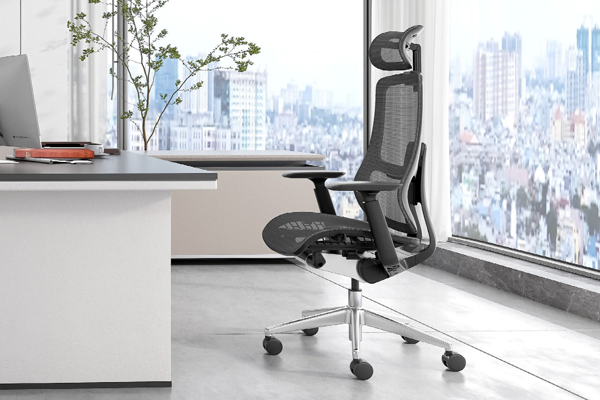
The same chair configuration may not perform equally well in every sales channel.
Ergonomic Chairs for Online and Retail Sales
Retail-oriented chairs normally need features that consumers can immediately see, understand and compare.
Common priorities include:
- A modern high-back appearance
- An adjustable headrest
- Visible lumbar support
- Multi-directional armrests
- Recline and tilt-lock functions
- Black, grey or other marketable color options
- Clear product images and demonstration videos
- Different configurations for entry, mid-range and premium SKUs
Retail buyers may benefit from offering several versions of the same basic design. For example, an entry-level SKU may use a simpler headrest and armrest, while the premium version adds seat-depth adjustment, more advanced lumbar support and a higher-grade mechanism.
Buyers developing a retail collection can begin by reviewing VASEAT’s ergonomic office chair range.
Ergonomic Chairs for Projects and Tenders
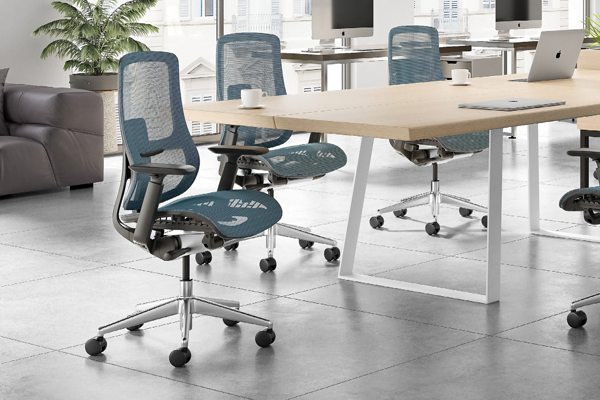
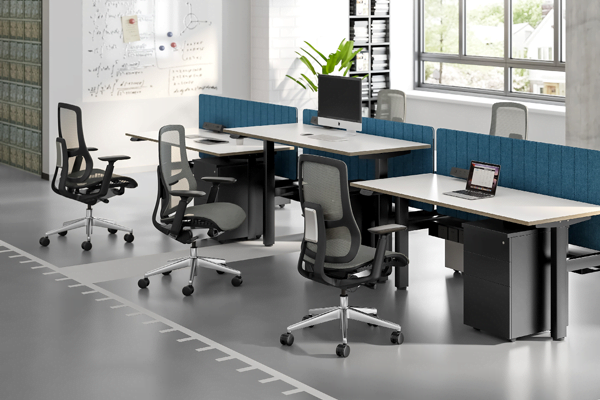
Project-oriented chairs are normally selected for offices, workstations, corporate buildings, shared spaces or institutional purchasing.
The main priorities are often:
- Consistent specifications across the entire order
- Commercial durability
- Easy adjustment for different users
- Stable component supply
- Appropriate test reports and documentation
- Efficient individual or project packaging
- Replacement-part availability
- Predictable delivery schedules
A project chair does not always require the highest number of adjustments. Its controls should be intuitive, durable and suitable for repeated use by different employees.
Before preparing a quotation, buyers should therefore clarify whether the order is intended for retail distribution, private-label sales, workspace projects or a combination of these channels.
Compare Headrest Adjustment Levels
A headrest can become an important selling point, but the term “adjustable headrest” is not specific enough for product comparison.
Buyers should confirm exactly which directions can be adjusted.
2D Headrests
A 2D headrest usually provides two adjustment directions, such as:
- Height and angle
- Forward/backward position and angle
This configuration can be suitable for entry-level and cost-sensitive ergonomic chairs, provided the adjustment range matches the intended users.
3D Headrests
A 3D headrest commonly adds another movement direction, allowing adjustment in height, angle and forward/backward position.
This wider range helps the chair accommodate users of different heights and different reclining positions. It also gives distributors a clear upgrade point for a mid-range or premium SKU.
Higher-Adjustment Headrests
Some premium chair designs offer additional headrest movement or a more flexible supporting structure. These configurations may suit high-end retail collections, executive seating or buyers seeking stronger product differentiation.
However, the number of adjustment directions should not be the only consideration. Buyers should also check:
- Whether the headrest supports the neck without pushing the head forward
- Whether it remains stable after adjustment
- Whether the controls are easy to understand
- Whether the headrest fits both upright and reclined positions
More examples can be found in VASEAT’s collection of office chairs with adjustable headrests.
Define the Required Lumbar Support
Lumbar support is one of the most important differences between a basic office chair and a more adaptable ergonomic chair.
For wholesale sourcing, buyers should avoid relying only on general descriptions such as “ergonomic lumbar design.” The quotation should state how the lumbar system actually moves.
Depth-Adjustable Lumbar Support
Forward and backward adjustment changes how firmly the lumbar unit contacts the lower back.
This is useful because different users prefer different support depths. A fixed lumbar pad may feel adequate for one user but too weak or too aggressive for another.
Height-Adjustable Lumbar Support
Height adjustment allows the supporting point to align with users of different body sizes.
It can be especially valuable in shared offices, hot-desking environments and retail products intended for a broad customer group.
Dynamic Lumbar Support
Dynamic systems respond to movement or reclining, helping the support remain in contact with the lower back as the user changes posture.
These systems may create a more distinctive sitting experience, but buyers should evaluate mechanism stability, durability and cost before positioning them as a premium feature.
VASEAT’s ergonomic mesh office chairs with lumbar support provide examples of configurations designed around lower-back support.
Select Armrests According to the User’s Tasks
Armrests should support the forearms without forcing the shoulders upward or limiting access to the desk.
Different adjustment levels can be used to separate product tiers.
2D and 3D Armrests
These armrests generally cover essential movements such as height, pad rotation or forward and backward adjustment.
They can provide a practical balance between ergonomics, cost and ease of use for entry-level and mid-range office chairs.
4D and 5D Armrests
More advanced armrests may add width adjustment, a wider rotation range or movement that follows the chair during reclining.
These features can be valuable for:
- Long-duration computer work
- Users who frequently change posture
- Premium retail products
- Executive workstations
- Products requiring stronger visual differentiation
Higher adjustment numbers do not automatically mean that an armrest is better. Buyers should also examine pad comfort, joint stability, operating noise and whether the armrest remains firmly positioned during daily use.
Additional configuration information is available on the office chair adjustable armrests page.
Choose Between Foam, Mesh and Hybrid Seats
The backrest and seat do not need to use the same material.
Many commercial ergonomic chairs combine a breathable mesh backrest with a molded foam seat. This hybrid configuration provides airflow around the back while maintaining a softer sitting surface.
Molded Foam Seats
A molded foam cushion may be suitable when the market prefers:
- A softer and more familiar sitting feel
- Greater fabric and color flexibility
- Clear separation between the seat and backrest
- A more cushioned retail presentation
The buyer should confirm foam density, resilience, seat shape and long-term deformation performance rather than comparing seat thickness alone.
Full-Mesh Seats
Full-mesh chairs can provide better ventilation, particularly in warm or humid markets.
However, buyers should assess mesh tension, edge pressure, frame structure and whether the seat remains comfortable for the intended sitting duration.
For a more detailed comparison, review the office chair materials guide and VASEAT’s mesh office chair collection.
Consider Adjustable Seat Depth
Seat-depth adjustment is especially useful when one chair must fit users with different leg lengths.
A sliding seat allows users to move the cushion forward or backward so that the thighs are supported without excessive pressure behind the knees.
This feature can add value for:
- Taller users
- Shared workstations
- Premium retail SKUs
- Long-duration office work
- Project environments with different employee body sizes
When comparing sliding-seat designs, buyers should check the usable adjustment range, rail stability and whether the seat remains secure after locking.
See VASEAT’s office chairs with adjustable seat depth for relevant configurations.
Match the Base Material to the Product Positioning
The chair base affects appearance, stability, shipping cost and product positioning.
Reinforced Nylon Bases
Nylon bases are commonly selected for cost-sensitive and high-volume products. A properly engineered nylon base can provide stable daily performance while keeping the chair weight and cost under control.
Chrome-Plated Metal Bases
A chrome-plated five-star base creates a brighter, heavier and more traditional premium appearance.
It may suit markets where buyers associate metal components with durability or higher product value. Buyers should confirm plating quality, weld consistency, corrosion resistance and applicable structural testing.
Aluminum Bases
Aluminum bases are often used for premium chairs that require a refined metallic appearance with lower weight than some steel structures.
The final decision should not be made based on appearance alone. Base diameter, caster compatibility, material strength and complete-chair testing are more important than the material name by itself.
Build a Three-Level Product Range
Instead of requesting one configuration for every market, buyers can create an entry, mid-range and premium product structure.
| Configuration | Entry Level | Mid-Range | Premium |
|---|---|---|---|
| Headrest | 2D adjustment | 3D adjustment | 3D or higher adjustment |
| Lumbar support | Depth adjustment | Height and depth adjustment | Dynamic or multi-directional support |
| Armrests | 2D or 3D | 3D or 4D | 4D, 5D or model-specific advanced arms |
| Seat | Molded foam or basic mesh | High-resilience foam with optional sliding seat | Sliding seat with premium foam or mesh |
| Recline | Basic tilt and lock | Synchronized tilt with multiple locks | Advanced synchronized or responsive mechanism |
| Base | Reinforced nylon or chrome-plated metal | Chrome-plated metal or upgraded nylon | Aluminum or premium metal base |
| Best suited for | Entry retail and volume sales | Main retail range and general offices | Premium retail, executive and high-spec projects |
The exact configuration should still be based on the target price, local market preferences, expected order volume and required testing.
Information to Include in an Office Chair RFQ
A detailed request for quotation helps the manufacturer recommend suitable models and reduces repeated confirmation.
Buyers should provide:
- Target market and sales channel
- Intended retail or project price level
- Required headrest adjustment
- Required lumbar adjustment
- Armrest adjustment level
- Foam, mesh or hybrid seat preference
- Seat-depth adjustment requirement
- Recline and locking requirements
- Preferred base material and finish
- Color options
- Logo, label and packaging requirements
- Expected order quantity
- Container-loading plan
- Required standards or test documents
- Sample requirements
- Product image and video requirements
Avoid requesting only “your best ergonomic chair price.” Without a confirmed configuration, quotations from different suppliers may refer to completely different products and cannot be compared accurately.
Evaluate the Complete Supply Program
Product configuration is only one part of wholesale office chair sourcing.
Distributors and project buyers should also evaluate:
- Whether specifications can remain consistent across repeat orders
- Whether colors and components can be customized
- Whether the supplier supports OEM and private-label packaging
- Whether product images and videos are available
- Whether samples can be arranged before bulk production
- Whether model-specific test documentation can be provided
- Whether spare parts and after-sales support are available
- Whether the factory can support future product-range expansion
VASEAT has manufactured office seating since 2007 and supports OEM, ODM, wholesale and commercial project requirements. Buyers can learn more about its office chair manufacturing capabilities before beginning a sourcing program.
Configure the Chair Around the Market
There is no single ergonomic office chair configuration that is ideal for every buyer.
A retail-focused chair may need visible adjustments and a clear premium upgrade path. A project chair may require simpler controls, commercial durability and stable long-term supply. A distributor serving both markets may need several coordinated configurations rather than one universal model.
By defining the sales channel first and then confirming the headrest, lumbar support, armrests, seat, mechanism and base, buyers can compare quotations more accurately and build a more competitive product range.
To discuss chair configurations, order quantities, customization or project requirements, contact VASEAT for a quotation.