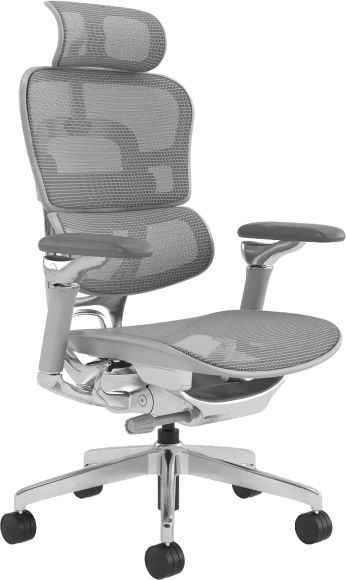
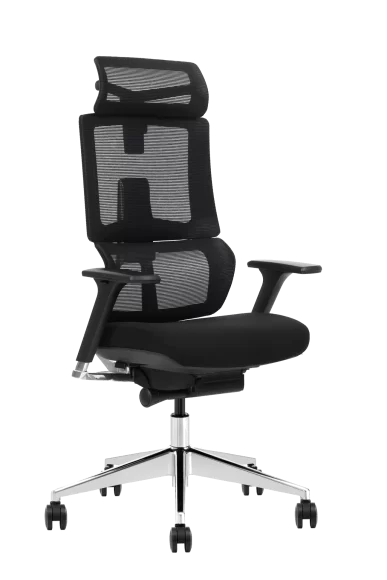
Coworking chairs win or lose on three seating decisions made together — not separately. The chair has to be comfortable enough for a freelancer to work eight hours without back discomfort, durable enough to handle thousands of different bodies over five years, and visually on-brand enough to photograph well for Instagram. Get one wrong and you either get bad reviews, costly replacements, or a space that looks generic. The good news: there’s a repeatable framework operators use to nail all three.
Why Coworking Seating Is Harder Than Standard Office Seating
A corporate office assigns one chair to one person for years. A coworking space does the opposite — the same chair may host 15 different bodies in a single week, ranging from a 5’2″ designer to a 6’4″ developer. That changes the spec sheet completely.
In a traditional office, you can dial in armrest height, lumbar depth, and tilt tension once. In coworking, every user resets those settings. So the controls need to be intuitive (no laminated instruction cards), the adjustment range needs to be wide, and the mechanisms need to survive being yanked and twisted thousands of times.
Then there’s the brand layer. A WeWork-style operator competes on aesthetic as much as price-per-desk. The chair is part of the product. A generic black task chair signals “budget” — even if it’s secretly a great chair underneath.
The Three-Zone Seating Strategy Operators Actually Use
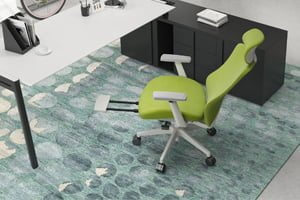
Smart operators don’t buy one chair — they buy three categories matched to three zones. Trying to use one chair everywhere is the most common spec mistake we see.
Zone 1: Hot Desks and Open Work Areas
This is where 70% of the seating budget goes. You need full-mesh or hybrid task chairs with synchro-tilt mechanisms, adjustable lumbar, and 4D armrests. Members spend the most hours here, and bad chairs surface as one-star reviews within weeks.
Zone 2: Private Offices and Dedicated Desks
Premium members pay more, so the chair should feel more substantial. Mid-back executive chairs with leather or premium fabric upholstery work well — they look the part during sales tours and reward the upgrade.
Zone 3: Phone Booths, Lounges, and Café Areas
Short-stay seating. Comfort still matters, but durability and cleanability take priority over adjustability. A wipeable vinyl lounge chair beats a fancy ergonomic one here every time.
If you’re weighing the trade-offs between materials in each zone, our breakdown of leather chair vs. mesh chair is a good starting point.
Durability Benchmarks That Actually Matter
Most chair spec sheets are full of vague claims. Here are the numbers that predict whether a chair survives five years of coworking abuse:
- BIFMA X5.1 cycle testing: Aim for chairs tested to at least 100,000 cycles for hot-desk zones. Most consumer-grade chairs stop at 30,000.
- Gas lift Class 4: Class 3 lifts (common in budget chairs) fail under repeated weight-shifting. Class 4 is the commercial minimum.
- Caster load rating: Look for 60kg per caster minimum. Soft-floor casters wear faster on the polished concrete most coworking spaces favor.
- Upholstery abrasion (Martindale): 100,000+ rubs for fabric. Mesh should be double-knit, not single-layer.
- Weight capacity: 136 kg (300 lb) minimum, not the marketing-friendly 110 kg figure.
For a deeper look at what’s worth paying attention to on a spec sheet, see our guide on what to look for in an office chair and the role of certification in commercial procurement.
Comfort for Bodies You Haven’t Met Yet
Here’s the uncomfortable truth: the “most ergonomic” chair on the market isn’t necessarily the best choice for coworking. Why? Because it usually requires the user to know how to adjust it. In a hot-desk environment, 80% of members will sit down, ignore the levers, and judge the chair on its default posture.
That means coworking chairs need to be comfortable before any adjustment. Look for:
- Auto-weight tilt tension (no knob to crank)
- Self-adjusting lumbar that follows spinal curve
- Seat depth that suits the 5th–95th percentile without sliding
- Soft-edge waterfall seats to reduce thigh pressure
For instance, one boutique coworking operator in Singapore swapped a popular ergonomic chair that scored well on reviewer tests for a simpler auto-tilt model. Their member-satisfaction score on seating jumped 22% in one quarter — purely because members weren’t fighting the adjustments. The takeaway: a chair that’s 80% perfect for everyone beats one that’s 100% perfect only for users who read the manual.
If lower-back complaints are already a problem, our guide to chairs for lower back pain covers the specific features to prioritize.
Brand Image: Why the Chair Is the Most Photographed Object
Walk into any coworking space and look at the marketing photos on the website. The chair appears in nearly every frame. It’s the silent brand ambassador.
This is why aesthetic decisions matter more here than in a traditional office. A few principles operators follow:
Color Continuity, Not Uniformity
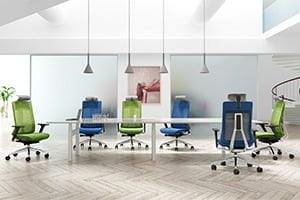
All chairs in one zone should share a palette — but not necessarily an identical SKU. Mixing two upholstery colors within a zone (say, charcoal and warm grey) adds visual rhythm without looking chaotic.
Match the Architecture
Industrial-loft spaces benefit from chairs with exposed metal frames and leather accents. Bright, Scandinavian-styled spaces want lighter mesh and softer curves. The chair should feel like it belongs in the building.
The Lounge Test
Take a phone photo of your space at 4 PM. If the chairs disappear visually into the desks, you’ve under-specified the design. If they scream for attention, you’ve over-specified. The sweet spot is “noticed but not loud.”
The Cleaning and Maintenance Reality
Coworking chairs get spilled on. A lot. Coffee, kombucha, sushi soy sauce — every fluid eventually ends up on a chair. Mesh hides stains better than fabric, but fabric feels warmer and more residential. The compromise: choose fabrics with a stain-resistant coating rated for at least 50 cleaning cycles.
Operators also underestimate cleaning labor. A typical 200-seat coworking space spends 4–6 hours per week on chair upkeep. Reduce that by:
- Specifying removable seat covers on private-office chairs
- Choosing mesh backs that can be wiped, not vacuumed
- Avoiding deep tufting or stitched seams where crumbs collect
For a refresher on cleaning protocols that don’t damage the chair, our piece on cleaning office chairs without damaging materials is worth bookmarking for your operations team. The right upholstery fabric choice also makes a major difference in cleaning frequency.
Procurement Math: What Operators Actually Pay
Coworking buyers operate on a price-per-seat budget, typically $250–$650 per chair depending on zone. Here’s how that breaks down in practice:
- Hot-desk task chairs: $280–$450 — sweet spot for durability and comfort
- Private office executive chairs: $450–$650 — premium feel for paying members
- Lounge and breakout seating: $180–$350 — lower hours, higher style premium
Operators almost always negotiate a 5-year warranty (not the standard 2-year) when ordering 100+ units. That’s the single most valuable concession to push for — replacement costs and downtime over five years easily exceed the warranty’s nominal value.
Bulk programs also unlock customization: stitched logo accents, custom upholstery colors, branded base caps. For mid-size operators ordering 200+ chairs, these are usually free or low-cost adds. Vaseat’s cooperation program is built around this kind of project-scale specification.
Common Mistakes That Cost Operators Money
After working with coworking operators across multiple markets, these are the recurring mistakes that show up in year-two regret:
Buying One Chair for Every Zone
It seems efficient. It isn’t. The chair that’s perfect for hot-desking is overkill for a phone booth and underwhelming for a $1,200/month private office.
Skipping the Sit Test
Operators order based on photos and spec sheets, then discover the seat foam is too firm or the armrests hit the desk. Always request samples and have at least three different body types sit for 30+ minutes.
Ignoring Replacement Parts
Casters and gas lifts will fail before the chair does. Lock in a parts contract at purchase. A $25 caster replacement is fine. Discovering the manufacturer doesn’t stock your model anymore in year four is not.
Choosing Style Over Standards
That gorgeous Italian-designed lounge chair without BIFMA certification will look great in launch photos and start squeaking by month nine. If a chair lacks commercial certification, treat it as residential — fine for low-use lounges only.
How Forward-Thinking Operators Are Specifying for 2026
A few trends are reshaping how coworking operators buy chairs this year:
- Circular procurement: Operators are demanding chairs with replaceable components — armrests, casters, mesh panels — instead of disposing of whole units.
- Recycled material content: Members increasingly notice. Chairs with 30%+ recycled plastic frames are becoming the new baseline for ESG-conscious operators.
- Hybrid task-lounge designs: Single chairs that work at a desk and in a soft-seating zone, reducing total SKU count.
- Faster lead times: Operators expanding into new markets need 60-day delivery, not 120. This is where manufacturer relationships matter most.
The operators who win the next cycle aren’t just buying chairs — they’re building procurement systems that flex with the space.
Putting It All Together
Seating in coworking is a triangle problem: comfort, durability, and brand image all pull in different directions, and the operators who succeed treat them as a single integrated decision. Spec by zone, not by space. Push for commercial certifications and 5-year warranties. Choose chairs that feel right at default settings, and that photograph well in your marketing. Lock in parts contracts before you need them.
If you’re planning a new coworking launch or refreshing an existing space, Vaseat works directly with operators on multi-zone seating programs — from sample sit-tests to custom branding to ongoing parts support. Take a look at our ergonomic seating range or get in touch through our cooperation page to start a conversation about your project.