A gas lift can pass incoming inspection and still operate poorly once it meets the wrong seat mechanism. That is why office chair quality control needs several checkpoints during production. VASEAT checks incoming parts, verifies fit during trial assembly, tests the functions on applicable mechanisms, and separates suspect units before packing. Each check catches a different kind of problem.
Quality Checks by Production Stage
The useful question at each station is what would make an operator stop the batch. A mismatched component, an uneven seat-to-back fit, and an intermittent lever can all cause a complaint, but each needs a different inspection.
| Stage | What to check | What the check can reveal |
|---|---|---|
| Incoming parts | Verify the component against the order and applicable part specification before release. | A wrong caster, fastener, or other supplied part before it reaches assembly. |
| In-process inspection | Compare the assembly with the model’s work instruction. Check screw fit, sliding parts, component matching, and visible finish. | An operation that was missed, a part that binds, or a mismatch between similar variants. |
| Trial assembly | Assemble a sampled unit in the intended sequence. Check fit, appearance, and basic operation. | Interference, uneven fit, or an adjustment that fails only after parts are joined. |
| Mechanism function check | On applicable cable-operated mechanisms, operate the lift, tilt lock, and seat slider where fitted. Listen for unusual noise. | A sticky release, a lock that does not engage cleanly, or noise that the production floor can mask. |
| Cleaning and packing handoff | Review visible surfaces and assembly condition while the unit is still accessible. Confirm the parts for the order. | Scratches, stains, uneven fit, or a missing component before carton closure. |
Follow the Mechanism Through Assembly
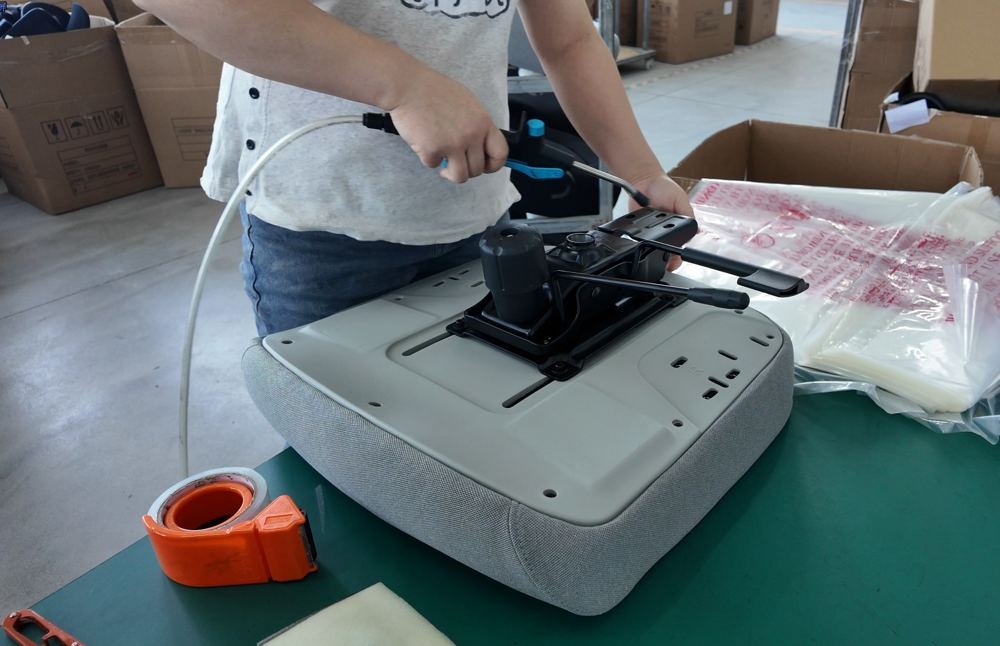
A seat mechanism offers a useful example because its fit affects several adjustments. On relevant in-house mechanisms, the factory grinds and corrects the mounting surface after welding, then machines and checks the tapered opening that seats the gas cylinder. The mounting surface affects how the mechanism sits against the seat assembly. The opening affects how deeply the cylinder seats and where its actuator meets the mechanism.
At the next station, the model-specific work instruction gives the operator a reference for the components and assembly sequence. A trial chair lets the team operate the assembled parts together. For example, if a seat slides smoothly before the assembly is tightened but binds after assembly, the inspector can check the assembled fit and part match while the unit is still accessible.
VASEAT checks applicable cable-operated mechanisms in a quieter inspection space. Cycling the height, tilt lock, and slider in that setting can reveal an intermittent sound or a hesitant release. The exact checks depend on which functions the model has.
Read the Lab Test Correctly
A chair-base load fixture evaluates the base under a defined setup. Backrest static loading and armrest testing use different equipment because they apply force to different parts of the chair. The base photo below shows the component under the fixture. Ask which base, chair model, and configuration the record covers when comparing it with your order.
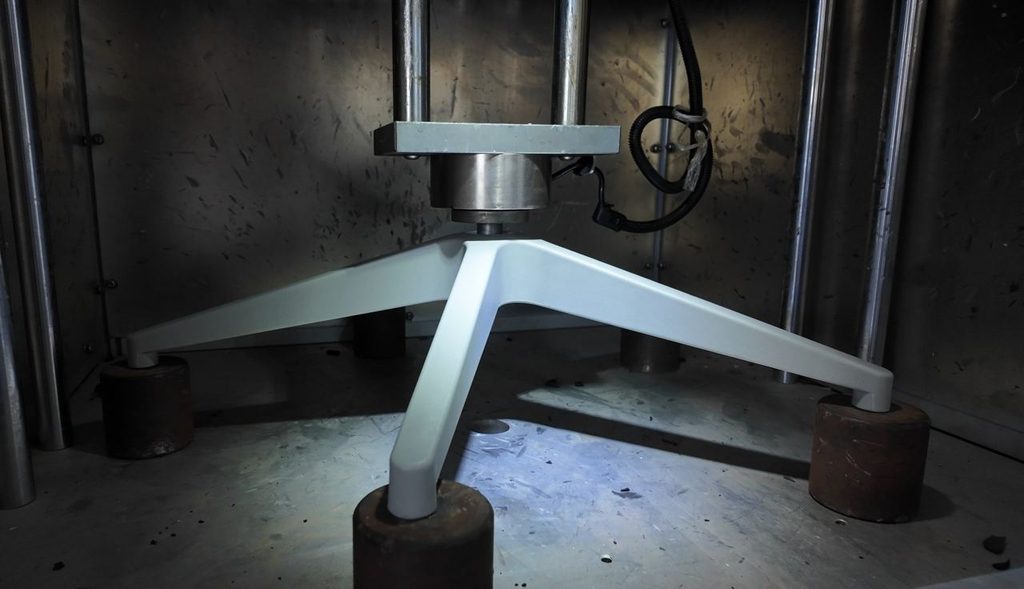
A production function check answers whether an adjustment operates on the unit being inspected. A model-specific lab report answers a different question about the configuration tested under a defined method. If your order calls for performance documentation, match the model and relevant options on the report to the order specification. VASEAT’s certification library is a starting point for reviewing available records.
Trace a Failed Check
At VASEAT, staff mark suspect pieces and separate them from normal flow. A traveling work-order label and scan records help identify the relevant order, batch, and operation, depending on what was captured. For example, when a sampled chair has an armrest that does not seat flush, the team can compare the armrest and fasteners with the model instruction, identify the batch on the work-order label, and send the suspect assembly back for review.
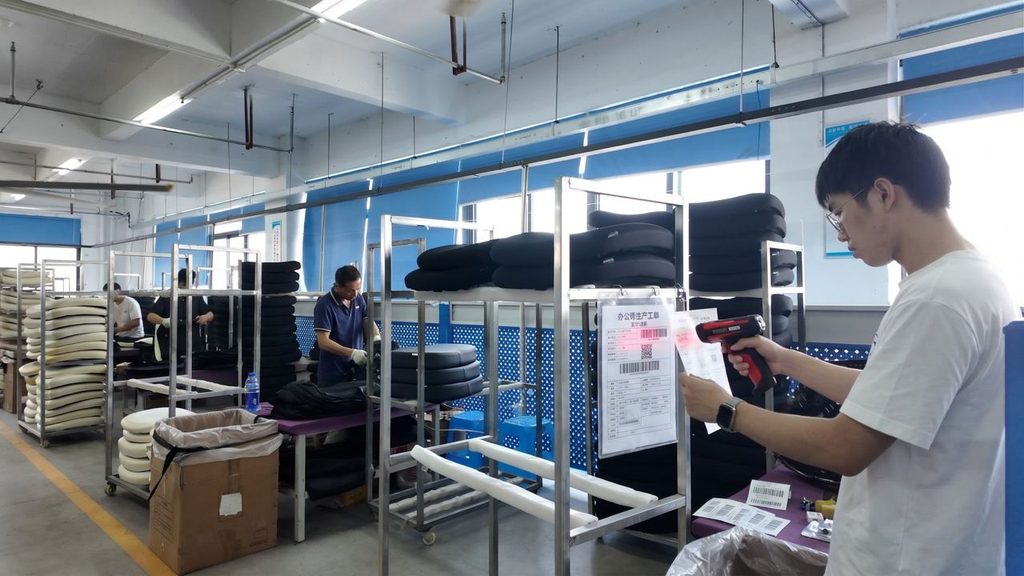
For a production visit, follow one configuration from its work instruction to a trial assembly. Ask to see what the operator checks, what happens if it fails, and how the work-order label narrows the batch for review.
For the wider sequence, see VASEAT’s office chair factory overview. On a new order, agree which functions need checking and which model-specific test documents you expect before production starts.