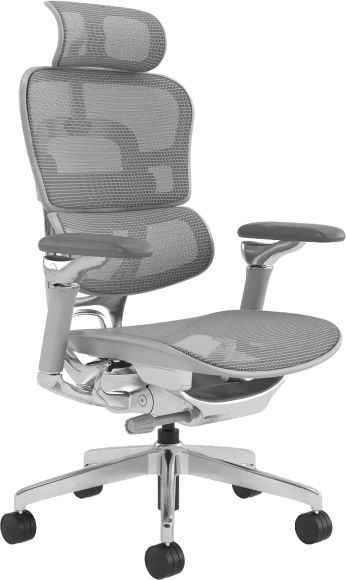
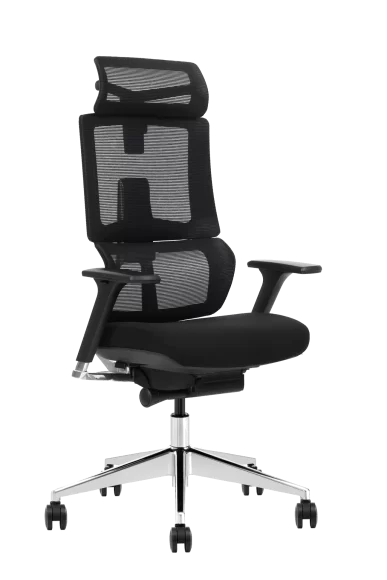
How to buy office chairs in bulk is an important question for distributors, furniture retailers and commercial project suppliers entering a new market. Buyers must evaluate more than appearance and unit price. Sales channels, chair configurations, packaging, replacement parts and after-sales support can all affect the success of an order.
Starting with a carefully planned trial order allows buyers to test product quality, assembly, customer response and market demand before making a larger purchasing commitment. This guide explains how to buy office chairs in bulk while reducing inventory and supplier risks.
Why Start with an Office Chair Trial Order?
A product that performs well in one market or sales channel may not automatically suit another.
Online buyers may prioritize appearance, adjustable functions, compact packaging and clear product demonstrations. Commercial project customers may place greater emphasis on price consistency, standardized configurations, durability and the ability to supply the same model across a large workspace.
A trial order helps buyers evaluate:
- Which chair styles receive the strongest customer interest
- Whether the selected price levels suit the local market
- How easily each model can be assembled
- Whether the packaging protects the chair during transport
- Which colors and configurations sell more quickly
- How the supplier handles questions, spare parts and product issues
The purpose is not simply to purchase fewer chairs. It is to collect enough practical information to make the next bulk order more accurate.
Define Your Sales Channels Before Selecting Models
The first step is to identify how the chairs will reach the end user.
Office Chairs for Online Retail
Online retail customers usually make decisions through product images, videos, descriptions and reviews. Chairs selected for e-commerce should therefore have features that can be explained visually and understood quickly.
Useful characteristics may include:
- Adjustable headrests and lumbar support
- Clearly demonstrated recline or tilt-lock functions
- Adjustable armrests
- Multiple color options
- Compact or separated packaging
- Straightforward assembly
- Replaceable components
Models with visible ergonomic adjustments are often easier to present through product videos and comparison graphics. However, every additional function can affect cost, packaging and assembly, so the configuration should remain appropriate for the intended selling price.
Buyers developing an online product range can review VASEAT’s ergonomic office chair collection for different adjustment and positioning options.
Office Chairs for Commercial Projects
Project customers may purchase chairs for offices, meeting rooms, training spaces, co-working facilities or corporate fit-outs. These buyers normally require a more standardized solution.
Important project considerations include:
- Consistent appearance across multiple workstations
- Suitable dimensions for the intended users and desks
- Stable material and color availability
- Practical adjustment functions
- Easy maintenance and component replacement
- Documentation and testing requirements
- Repeat-order availability
A chair selected for a project does not always need the maximum number of functions. A simpler configuration may be more suitable when many users share the same seating or when the project has a fixed budget.
The guide to office chair types for commercial workspaces provides additional information about matching chair categories to different applications.
Build a Balanced Trial Product Range
A common mistake is filling a trial order with models that look different but occupy almost the same price and functional position.
A more useful trial range normally contains several clearly separated product levels.
Entry-Level Models
Entry-level chairs can serve price-sensitive online customers, general staff seating and projects with controlled budgets.
These models may use:
- Basic height adjustment
- A conventional tilt mechanism
- Fixed or height-adjustable armrests
- A mesh back with a foam seat
- A reinforced nylon base
The objective is not to choose the cheapest available chair. The product should still provide stable construction, acceptable comfort and a configuration that can be supplied consistently.
Mid-Range Ergonomic Models
Mid-range models usually provide the widest potential customer coverage. They can be positioned for home offices, online retail, professional workstations and many general commercial projects.
Typical options include:
- Adjustable lumbar support
- Two-dimensional or three-dimensional armrests
- Multiple recline-locking positions
- Adjustable headrests
- Optional seat-depth adjustment
- Mesh or cushioned seat choices
These models allow buyers to test which functions customers are willing to pay for without immediately entering the premium segment.
Premium or Display Models
A smaller number of premium chairs can help show the upper limit of the product range. They may be used in showrooms, executive offices, design-led projects or higher-value online listings.
Premium positioning may involve:
- Advanced mechanisms
- Multi-directional armrests
- Aluminum components
- Higher-grade mesh or upholstery
- More extensive adjustment ranges
- Distinctive industrial design
Premium models should have a clear role in the range. Adding expensive functions without a defined target customer can make the product difficult to position.
Compare Configurations, Not Only Model Names
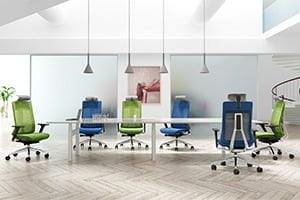
The same office chair frame may be available with several mechanisms, armrests, bases, seat materials and packaging options. Two quotations for the same model may therefore represent substantially different products.
Before confirming a trial order, create a configuration sheet for every selected chair.
Mesh Seat or Foam Seat
Mesh and foam create different seating experiences.
Mesh provides airflow and a firmer tensioned surface, making it suitable for warm climates and users who prefer a more ventilated chair. Foam provides a softer cushioned feel and may be easier to position for customers who associate thicker padding with comfort.
Neither option should be selected only by appearance. Buyers should evaluate:
- Mesh elasticity and edge construction
- Foam density, resilience and thickness
- Upholstery quality
- Seat shape and front-edge support
- Cleaning and maintenance requirements
- Local climate and customer preferences
See the detailed mesh versus foam office chair comparison and the office chair materials guide before confirming the seat specification.
Armrest Configuration
Armrests can significantly affect both the quotation and the way a chair is marketed.
Common options include:
- Fixed armrests
- Height-adjustable armrests
- Two-dimensional armrests
- Three-dimensional armrests
- Four-dimensional or more advanced armrests
More adjustment directions do not automatically make an armrest more suitable. Project buyers may prefer a simple, durable design, while online retail customers may respond better to adjustable features that can be demonstrated in a video.
The armrest pad size, movement smoothness, structural stability and adjustment range should also be evaluated. Buyers can compare more options through the office chair adjustable arms range.
Headrest and Lumbar Support
A headrest should match the backrest height and intended user range. Check whether it adjusts vertically, changes angle or moves forward and backward.
Lumbar systems may be fixed, height-adjustable, depth-adjustable, flexible or spring-supported. Buyers should test whether the lumbar support remains correctly positioned for users of different heights rather than judging it only by how large it looks.
Mechanism and Seat-Depth Adjustment
Mechanism options can include basic tilt, multiple locking positions, self-weight adjustment and cable-controlled operation.
When comparing mechanisms, confirm:
- Available locking positions
- Tilt-tension control
- Ease of operation
- Seat-height adjustment
- Seat-depth or sliding-seat availability
- Compatibility with the chosen chair frame
- Effect on price and packaging
Seat-depth adjustment can increase the user range of a chair, but it should only be added when the intended customers understand and value the function.
Base, Casters and Gas Lift
A chair should be evaluated as a complete structure rather than through one isolated load-capacity number.
Confirm the specification of:
- Nylon or aluminum base
- Base diameter
- Caster material and floor suitability
- Gas-lift class and supplier
- Mechanism construction
- Frame connections
- Available test documentation
Ask the supplier which exact chair configuration was tested. A component test or a test completed on another version of the chair may not represent the model being purchased.
Check Packaging for Online and Wholesale Distribution
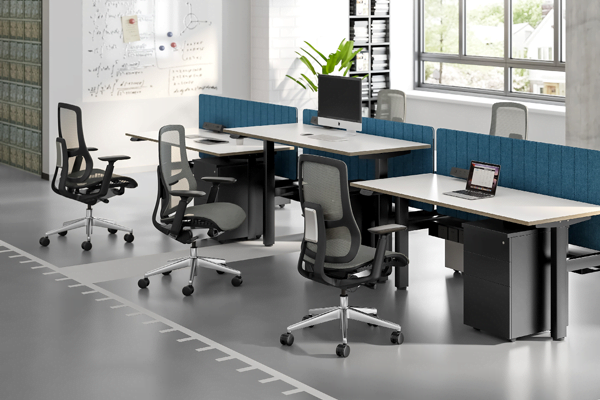
Packaging is particularly important for online retail because the chair may pass through several logistics stages before reaching the final customer.
The trial order should be used to check:
- Carton dimensions and gross weight
- Number of chairs loaded per container
- Internal protection around the base and mechanism
- Whether components can move inside the carton
- Assembly instructions
- Hardware identification
- Branding and label positions
- Condition after representative transport handling
A design that looks attractive in a showroom may become less competitive if its carton is unusually large or difficult to handle.
For e-commerce models, ask whether split-back, removable-headrest or other packaging structures are available. For project orders, calculate total shipping efficiency rather than comparing only the chair price.
Evaluate Samples Before Expanding the Order
A photograph or short showroom demonstration cannot fully represent long-term comfort and assembly quality.
Where practical, evaluate an assembled sample or a small quantity from the production configuration. Check:
- Assembly time
- Screw and hole alignment
- Stability after assembly
- Movement noise
- Recline operation
- Armrest movement
- Headrest range
- Lumbar-support position
- Seat comfort over an extended period
- Color and material consistency
The sample should match the proposed bulk-order specification. Testing a premium sample and later purchasing a lower-cost configuration can produce misleading results.
Agree on Spare Parts and After-Sales Procedures
After-sales support should be discussed before the order rather than after a customer reports a problem.
Ask the supplier to clarify:
- Which spare parts are included
- Whether additional components can be purchased
- How product issues should be documented
- Whether photographs or videos are required
- How replacement parts will be supplied
- Which issues are covered by the warranty
- Whether parts remain available for repeat orders
Frequently requested components may include casters, armrests, gas lifts, mechanisms, headrests and hardware packages.
The trial order also allows the buyer to evaluate response speed and technical communication. A suitable supplier should be able to identify the affected component and provide a practical solution rather than requiring the complete chair to be replaced.
Record Market Feedback by Model and Configuration
After the trial products enter the market, track results separately for each model.
Useful information includes:
- Units sold
- Selling price
- Customer inquiries
- Most requested colors
- Most valued functions
- Assembly complaints
- Return reasons
- Replacement-part requests
- Feedback from project customers
- Repeat-purchase interest
Do not evaluate the entire trial order only by total sales. One model may attract many inquiries but convert poorly because of price, while another may sell steadily with fewer customer questions.
Configuration data is equally important. Customers may like the chair design but prefer a different seat material, armrest or color. In this case, the next order may require adjustment rather than replacement of the entire model.
When Should a Trial Order Become a Bulk Order?
A larger order should be based on repeatable evidence rather than one or two positive comments.
Before increasing the quantity, confirm that:
- The target customer is clearly defined
- The product can be sold at a sustainable price
- The preferred configuration is identified
- Packaging has performed satisfactorily
- Assembly instructions are clear
- Common customer questions can be answered
- Spare-part procedures are established
- The supplier can maintain the approved specification
The strongest-performing models can then receive a larger share of the next order, while slower products can be adjusted, repositioned or removed.
Frequently Asked Questions
Should I request a sample before buying office chairs in bulk?
An assembled sample or small trial quantity is recommended when working with a new model, configuration or supplier. It allows you to evaluate comfort, assembly, materials and functional adjustments before committing to a larger order.
How many office chair models should be included in a trial order?
There is no universal number. Select enough models to test clearly different price levels, functions and customer groups without creating excessive inventory. Avoid ordering many chairs that occupy almost identical market positions.
Which office chair configuration is best for online retail?
Online models should be visually distinctive, easy to explain, suitable for parcel or local delivery and straightforward to assemble. Adjustable ergonomic features can support marketing, but they must match the target price.
Which chairs are suitable for B2B office projects?
Project chairs should provide consistent specifications, practical adjustability, durable materials, suitable dimensions and repeat-order availability. The exact configuration should reflect the workspace, users, budget and required documentation.
Plan Your Office Chair Trial Order with VASEAT
A successful trial order connects product selection with sales channels, customer groups, packaging, after-sales support and measurable market feedback.
Instead of comparing office chairs only by appearance and unit price, define the intended use and confirm every major configuration before ordering.
VASEAT supports distributors, furniture brands and commercial project buyers with ergonomic office chair selection, OEM and ODM configuration, material options, branding and bulk-order planning.
Contact VASEAT to discuss your target market, preferred product level and trial-order requirements.