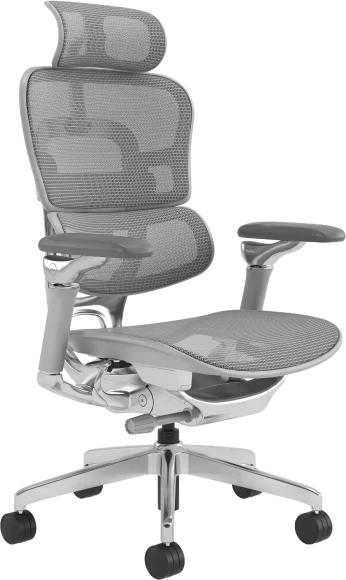
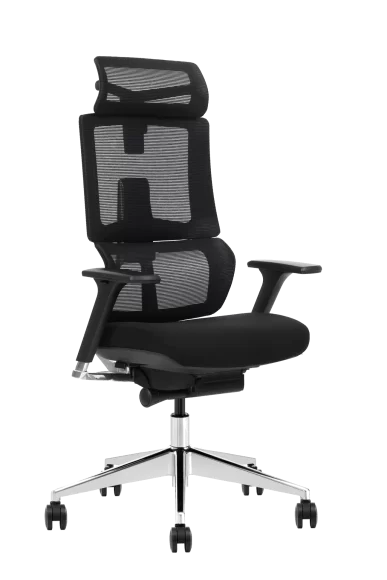
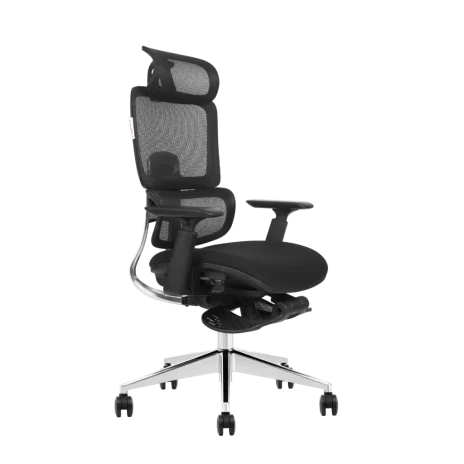
Universities and public institutions lose money and durability when they spec training room and classroom seating using the same criteria they’d apply to corporate task chairs. The core difference: institutional seating gets used by dozens of different bodies per day, needs to stack or nest for room reconfiguration, and has to survive years of abuse with near-zero maintenance — so procurement should prioritize structural durability, stackability, and cleaning ease over the ergonomic adjustability that dominates office chair specs.
Why Office Chair Logic Doesn’t Transfer to Classrooms
A synchro-tilt mechanism with 4D armrests is wasted money in a lecture hall. Nobody’s sitting in that chair for eight hours straight — they’re in it for 50 minutes, then someone else sits down for the next class.
Office chair procurement optimizes for a single occupant using one chair daily, often for years. Classroom and training room seating optimizes for the opposite: dozens of different occupants per week, minimal individual adjustment time, and zero personalization. A student walking into a lecture hall isn’t going to fiddle with seat depth or tilt tension before class starts — they just sit down. That means the adjustability that justifies a premium task chair spec is largely irrelevant here, and buyers who pay for it are wasting budget that should go toward frame durability instead.
Stackability and Nesting Aren’t Optional Features — They’re the Spec
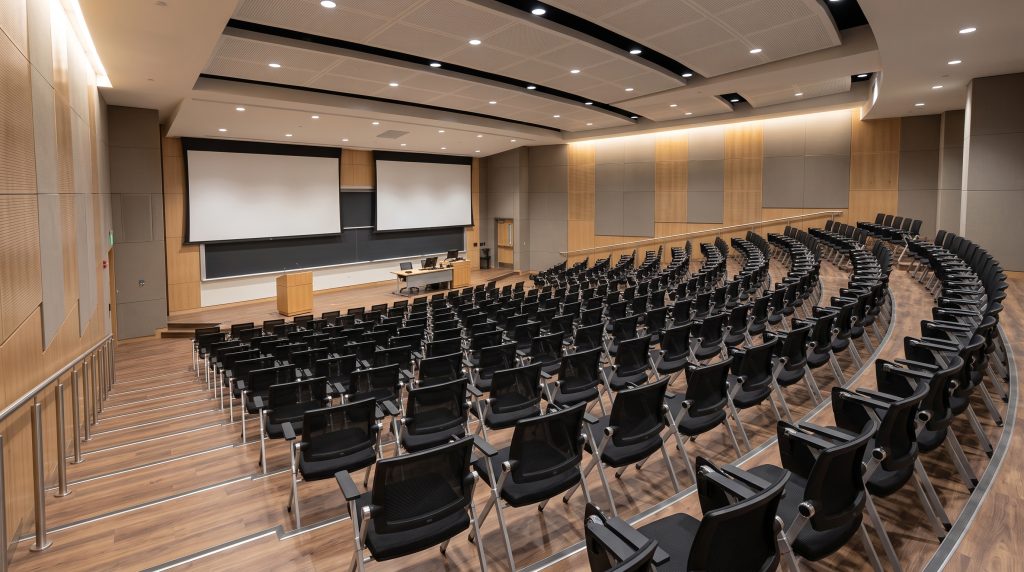
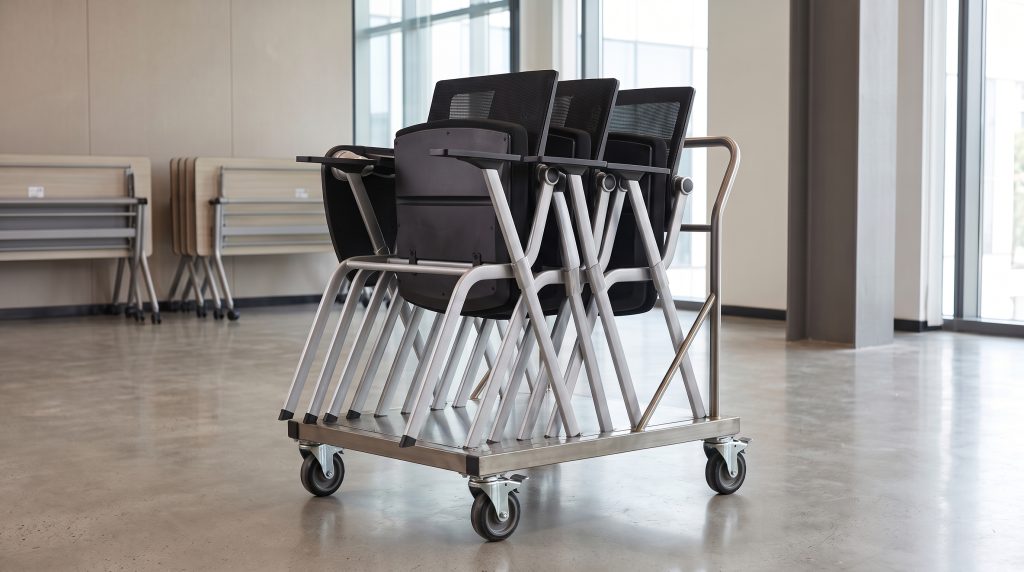
If a training room chair can’t stack at least 6-8 high without wobbling, don’t buy it. Public institutions constantly reconfigure rooms — a lecture hall becomes an exam hall, a training center becomes an event space overnight.
Look for chairs with a stacking dolly or cart compatibility rating, not just a stackable frame. A facilities team moving 200 chairs between a conference layout and classroom rows needs this to happen in under 20 minutes, not two hours. Ganging clips (which link chairs into rows for fire-code compliance in auditoriums) matter too — this is a feature almost never discussed in standard office chair type guides because it simply doesn’t apply to desk seating.
Real-world example
A state university replacing 400 seats across three lecture halls specified glide-foot stacking chairs rated for 8-chair stacks with steel ganging brackets. Their old chairs — repurposed office task chairs with casters — had been rolling into aisles and getting damaged during exam reconfigurations. The switch cut room-turnover time by roughly 40%.
Casters Are Often the Wrong Choice
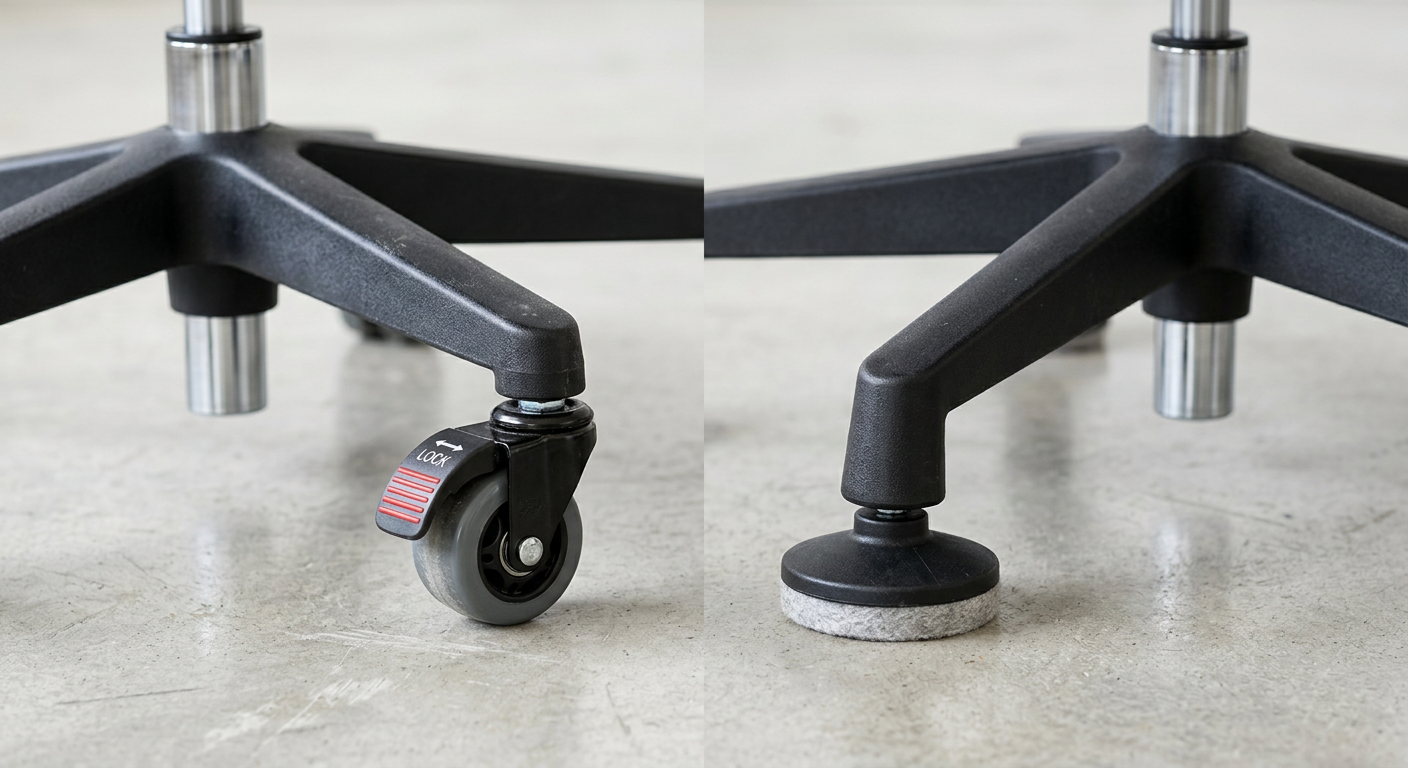
Casters make sense at a desk. In a 150-seat auditorium, they’re a liability — chairs sliding during exams, rolling into walkways, creating a tripping hazard during fire drills.
Glide feet (nylon or felt-tipped) are the standard for fixed-row training seating. For flexible training rooms that need occasional rearrangement, a small four-caster base with a locking mechanism works better than free-rolling casters. This decision alone changes the entire base and mechanism spec, and it’s a detail that gets missed when institutional buyers copy specs from an office chair project instead of building a classroom-specific one.
Weight Capacity Needs a Higher Safety Margin Than Offices Assume
A 120kg-rated chair that’s fine for a single office employee will fail faster under classroom conditions, where the same chair is sat in, stood up from, and dropped into dozens of times a day by different body types. Cycling frequency accelerates wear on welds, gas lift seals, and frame joints far faster than static daily use.
Public institution specs should push toward 150kg minimum weight capacity ratings, even in student-focused environments, precisely because of that high-frequency cycling. BIFMA and EN 1335 durability testing accounts for cycle counts, not just static load — worth asking any manufacturer for cycle-test data, not just a weight number on a spec sheet.
Cleaning and Material Choice: Public Seating Gets Dirtier, Faster
A shared training room chair gets touched by more hands and more skin contact per week than any private office chair ever will. That changes the material calculus entirely.
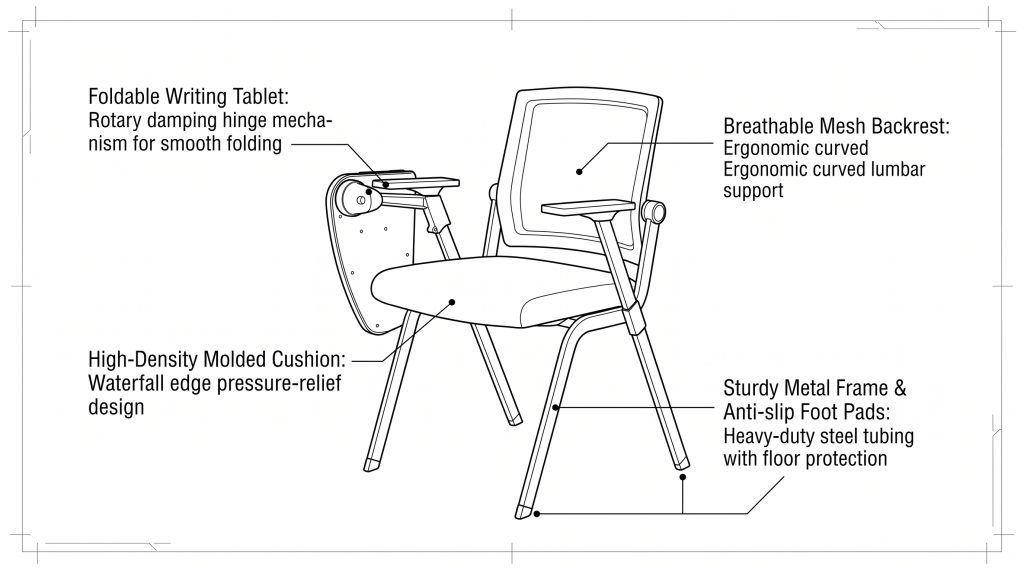
Mesh backs, while great for airflow in single-user task chairs, are harder to sanitize thoroughly and can snag or tear under repeated public use. Many institutions are shifting toward molded plastic backs, wipeable vinyl, or tightly woven fabric with antimicrobial treatment for training rooms — even though mesh remains the better choice for corporate office seating. If mesh is used, it needs to be a denser, tear-resistant weave rated for commercial-institutional use, not the thinner mesh common in retail task chairs. See our breakdown on mesh versus foam materials for how durability differs by use case.
Fixed Dimensions vs. Adjustable: Pick a Middle Ground
Fully fixed-height chairs are cheap but ignore the reality that a lecture hall serves 18-year-old freshmen and adult continuing-education students in the same room. Fully adjustable chairs, on the other hand, invite the wrong kind of wear — gas lifts get abused, adjustment levers snap off within a year in high-traffic public settings.
The practical middle ground: a limited-range seat height adjustment (roughly 4-6cm of travel) using a simple, low-torque lever, without tilt or armrest adjustment. This gets close enough to accommodate a range of body sizes without giving students unnecessary mechanisms to break. For institutions setting general seat height standards across departments, our chair height guide is a useful reference point, even though classroom specs should stay simpler than office specs.
Library and Study Area Seating Needs Its Own Category Entirely
Don’t lump library seating in with lecture hall or training room specs — the use case is completely different. Students in libraries sit for 2-4 hours at a stretch, doing focused solo work, which is much closer to office-chair territory than classroom seating.
For these spaces, more adjustability and better lumbar support actually pays off, since the sitting duration justifies it. We cover this distinction in more depth in our guide to selecting the right chair for library and study areas — worth reviewing separately if your institution is speccing multiple room types under one RFP.
Procurement Mistake: Buying One Chair Model for the Entire Campus
Standardizing on a single chair SKU across a whole campus sounds efficient on paper. In practice, it means lecture halls get chairs too complex for their needs, and libraries or faculty offices get chairs too basic for extended sitting.
A smarter approach: define 2-3 seating tiers by room function — lecture/training rooms, study/library spaces, and administrative offices — and spec each tier separately. This avoids the common space planning mistakes that come from treating all seating as interchangeable, and it usually reduces total cost since you’re not overpaying for adjustability nobody in the lecture hall will use.